

马来西亚第二家园
Updated June 10, 2026
KUALA LUMPUR — The Malaysia My Second Home (MM2H) program, once a beacon for long-term foreign residents, is poised for a significant overhaul. As of June 10, 2026, high-level discussions within Malaysian government circles signal a potential easing of the stringent requirements that have largely stalled the program since 2021, breathing new life into the prospect of a more accessible MM2H visa for those looking to make Malaysia their second home.
This development comes as the Ministry of Tourism, Arts and Culture (MOTAC) continues its comprehensive review, aiming to strike a delicate balance between national security concerns and the substantial economic benefits that a revitalized MM2H program could bring. Stakeholders, from prospective applicants to real estate developers, are now holding their breath, awaiting official announcements that could redefine the landscape for foreign residents in Malaysia.
主要收获
- Malaysia’s government is actively reviewing the MM2H program, with strong indications of relaxed requirements.
- The current review by MOTAC aims to balance economic benefits with national security, addressing past criticisms.
- Potential changes could include lower income thresholds, reduced fixed deposit requirements, and a more streamlined application process.
- A revitalized MM2H program is expected to boost Malaysia’s tourism, real estate, and retail sectors.
- The MM2H visa remains a key pathway for long-term residency, with the current review offering a chance for renewed global interest.
What’s Driving the MM2H Program Review?
The current review of the MM2H program is primarily driven by a recognition of its diminished appeal under the stricter 2021 criteria and the economic imperative to attract high-net-worth individuals and retirees back to Malaysia. The government aims to recalibrate the program to be more competitive regionally while safeguarding national interests, acknowledging the program’s significant contribution to the national economy prior to the stricter rules.
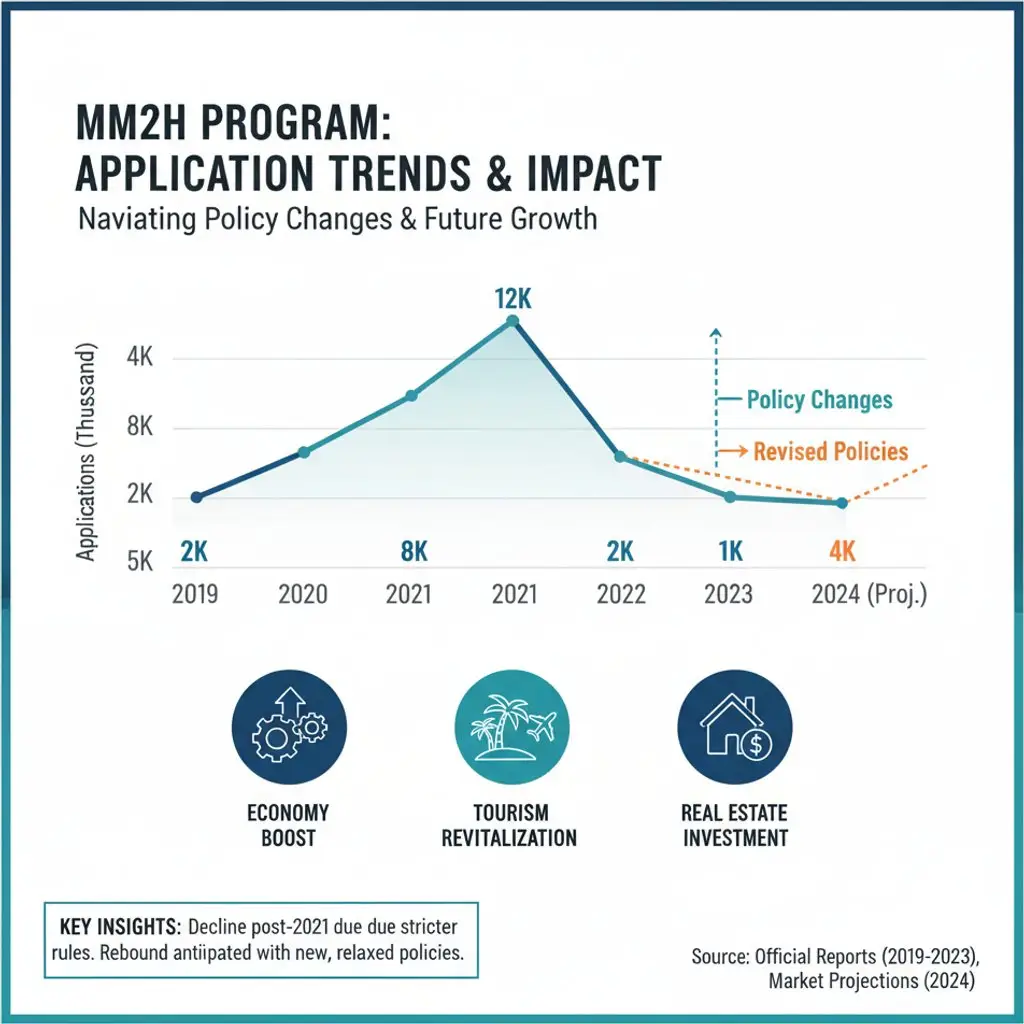
When the government tightened the MM2H rules in August 2021, the program, which had attracted over 57,000 participants from 130 countries since its inception in 2002, saw application numbers plummet. For instance, applications dropped by 90% in 2022 compared to pre-2021 levels, according to data from the Immigration Department. The stricter conditions, including a 15-fold increase in the offshore income requirement from RM10,000 to RM40,000 per month and a mandatory fixed deposit of RM1 million, effectively priced out many potential applicants. The current review seeks to reverse this trend, making the MM2H visa an attractive proposition once more.
How Might the MM2H Visa Requirements Change?
Anticipated changes to the MM2H visa requirements are expected to focus on making the program more accessible and competitive, particularly by adjusting financial thresholds and potentially introducing tiered options. Industry insiders and government sources suggest a move towards more flexible criteria that cater to a broader range of applicants while still ensuring financial stability.
One of the most talked-about adjustments is the potential reduction of the fixed deposit requirement. The current RM1 million (approximately USD 212,000) is seen as a major deterrent. Analysts from Knight Frank Malaysia noted in their 2023 report that regional competitors like Thailand and Portugal offer more flexible investment options, often below Malaysia’s current threshold. There’s also strong speculation about lowering the monthly offshore income requirement, perhaps to a tiered structure, or introducing alternative asset-based qualifications. Furthermore, the requirement for participants to reside in Malaysia for at least 90 days a year, introduced in 2021, might also be re-evaluated to offer greater flexibility, especially for those who split their time between multiple countries. MM2H Malaysia, a leading facilitator, has been actively advocating for these changes, emphasizing the need for a balanced approach.
What Are the Proposed Tiers for the MM2H Program?
Recent reports, particularly from the New Straits Times in May 2026, indicate that MOTAC is considering a multi-tiered structure for the MM2H program, potentially categorizing applicants into ‘Silver’, ‘Gold’, and ‘Platinum’ tiers. This tiered approach aims to offer flexibility and cater to different financial capacities and commitment levels of prospective long-term residents, moving away from the one-size-fits-all approach that proved restrictive.
Each proposed tier would come with distinct financial requirements, benefits, and potentially different visa durations. For example, a ‘Silver’ tier might feature lower fixed deposit and income requirements, appealing to a wider demographic, while a ‘Platinum’ tier could demand higher investments but offer enhanced privileges, such as longer visa validity or easier path to permanent residency. This strategy mirrors successful long-stay visa programs in other countries, which often use tiered systems to maximize economic impact across various segments. The goal is to make the MM2H program more inclusive without compromising its integrity or the quality of applicants.
Comparing Current MM2H vs. Proposed Tiers (Speculative)
While official details are pending, here’s a speculative comparison based on industry discussions and reports, contrasting the current stringent MM2H requirements with potential tiered options:
| 要求 | Current MM2H (Since 2021) | Proposed ‘Silver’ Tier (Speculative) | Proposed ‘Gold’ Tier (Speculative) | Proposed ‘Platinum’ Tier (Speculative) |
|---|---|---|---|---|
| Age | 35岁及以上 | 30岁及以上 | 35岁及以上 | 40 years and above |
| 月度海外收入 | RM40,000 | RM10,000 – RM20,000 | RM25,000 – RM40,000 | RM50,000+ |
| 定期存款 | 1,000,000 马来西亚林吉特 | RM300,000 – RM500,000 | RM750,000 – RM1,000,000 | RM1,500,000+ |
| Liquidity (Savings/Assets) | RM1,500,000 | RM500,000 – RM750,000 | RM1,000,000 – RM1,500,000 | RM2,000,000+ |
| 签证有效期 | 5年(可续签) | 5年(可续签) | 十年(可续签) | 10 years (renewable, with potential for PR pathway) |
| 强制逗留 | 每年90天 | Flexible | Flexible | Flexible |
Why is Revitalizing Program MM2H Crucial for Malaysia?
Revitalizing Program MM2H is crucial for Malaysia’s economic recovery and long-term growth, as the influx of foreign residents directly stimulates key sectors like real estate, tourism, and retail. The program historically brought in billions in foreign exchange and supported local businesses, making its stagnation a significant missed opportunity for the nation.
Before the 2021 policy changes, the MM2H program contributed an estimated RM11.89 billion (approximately USD 2.5 billion) to Malaysia’s economy between 2002 and 2019, according to MOTAC data. This included significant investments in property, vehicle purchases, and daily expenditures. The drastic drop in applications post-2021, with only 1,905 applications approved between 2021 and 2023 compared to an average of 4,000 approvals annually before, has left a noticeable void. A renewed MM2H program would not only inject fresh capital but also bring in diverse skills and expertise, enriching Malaysia’s cultural and economic landscape. The real estate sector, in particular, stands to gain, with property developers eager for a revival of foreign demand, which historically accounted for a significant portion of high-end property sales in urban centers like Kuala Lumpur and Penang.
What Are the Broader Implications for MM2H to Malaysia?
The broader implications of a revitalized MM2H to Malaysia extend beyond immediate economic benefits, encompassing improved international relations, enhanced cultural exchange, and a boost to the nation’s global standing as an attractive destination for long-term living. A more accessible program would signal Malaysia’s openness to the global community, fostering a more diverse and dynamic society.
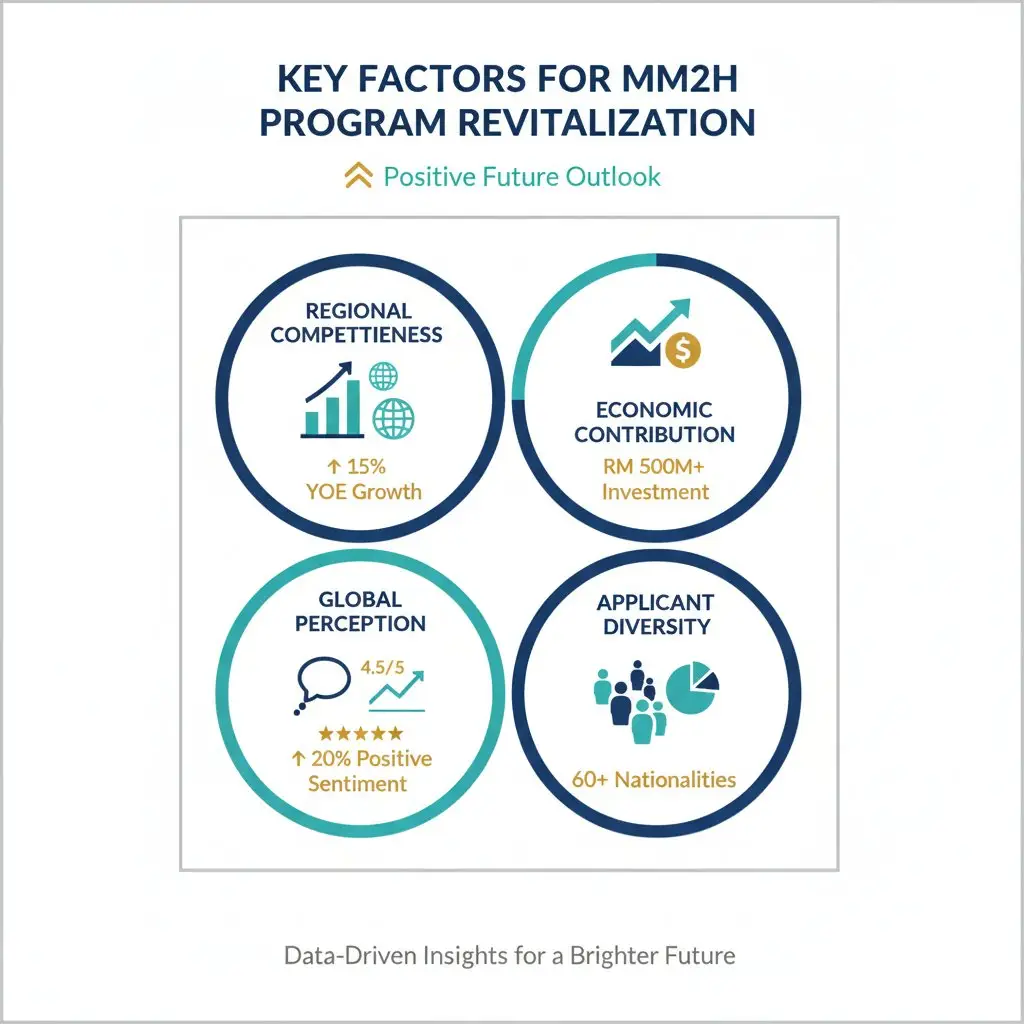
The current policy review is not just about numbers; it’s about perception. When Malaysia tightened its MM2H rules, it sent a signal of increased restrictiveness, leading some potential applicants to consider neighboring countries like Thailand, the Philippines, or even Portugal for their long-stay visas. By recalibrating, Malaysia can reassert its position as a top choice for expatriates and retirees, known for its affordable cost of living, excellent healthcare (ranked among the best in Asia by International Living in 2024), and vibrant cultural tapestry. The move would also help address the demographic challenges faced by many developed nations, attracting younger retirees and professionals who can contribute actively to the local economy and community. MM2H Malaysia believes this strategic pivot is essential for the country’s future competitiveness.
What’s Next for Prospective MM2H Applicants?
For prospective MM2H applicants, the immediate next step is to closely monitor official announcements from the Malaysian government, as these will detail the new requirements and application procedures. While waiting, individuals can begin preparing necessary documentation and assessing their financial readiness against the anticipated revised criteria.
Industry experts, including those at MM2H Malaysia, advise potential applicants to consult with reputable agencies that specialize in the program. These agencies can provide the most up-to-date information and guidance once the new policies are enacted. It’s also prudent to review personal financial situations, considering the potential tiered options, and to gather documents such as proof of income, bank statements, and medical certificates, which are standard requirements for any long-term visa application. The expectation is that once the new rules are announced, there will be a surge in interest and applications, making early preparation beneficial.
常见问题
MM2H 计划是什么?
The MM2H (Malaysia My Second Home) program is a long-term social visit pass designed to allow foreigners who meet certain criteria to live in Malaysia for an extended period. It offers a renewable visa and various incentives for participants and their dependents.
Who is eligible for the MM2H visa?
Under the current (2021) rules, applicants generally need to be 35 years or older, demonstrate a monthly offshore income of RM40,000, and have a fixed deposit of RM1 million, among other financial and residency requirements. These criteria are currently under review.
When will the new MM2H rules be announced?
As of June 10, 2026, the exact date for the announcement of new MM2H rules has not been confirmed. However, government officials have indicated that a decision is imminent, with stakeholders anticipating an update within the coming months.
Can I apply for MM2H if I don’t meet the current high financial requirements?
The ongoing policy review is specifically aimed at making the MM2H program more accessible, potentially through tiered options with lower financial thresholds. If these proposed changes are implemented, individuals who do not meet the current stringent requirements may become eligible.
MM2H计划的好处是什么?
Benefits of the MM2H program include a renewable long-term visa, the ability to purchase property (subject to local regulations), bringing dependents, certain tax incentives, and the opportunity to experience Malaysia’s high quality of life and affordable living.
Will the new MM2H rules affect existing participants?
Typically, policy changes for long-stay programs like MM2H do not retroactively affect existing participants who were approved under previous rules. However, details regarding renewals or transitions to new tiers for current visa holders will likely be clarified in the official announcement.
Where can I get official information about the MM2H program?
Official information regarding the MM2H program, including any new policy announcements, will be published by the Ministry of Tourism, Arts and Culture (MOTAC) and the Malaysian Immigration Department. Reputable MM2H agencies, such as MM2H Malaysia, also provide updated information and guidance.
Last updated: June 10, 2026
 Chinese (China)
  English
  Chinese (Taiwan)