
By MM2H Malaysia
Updated July 29, 2026
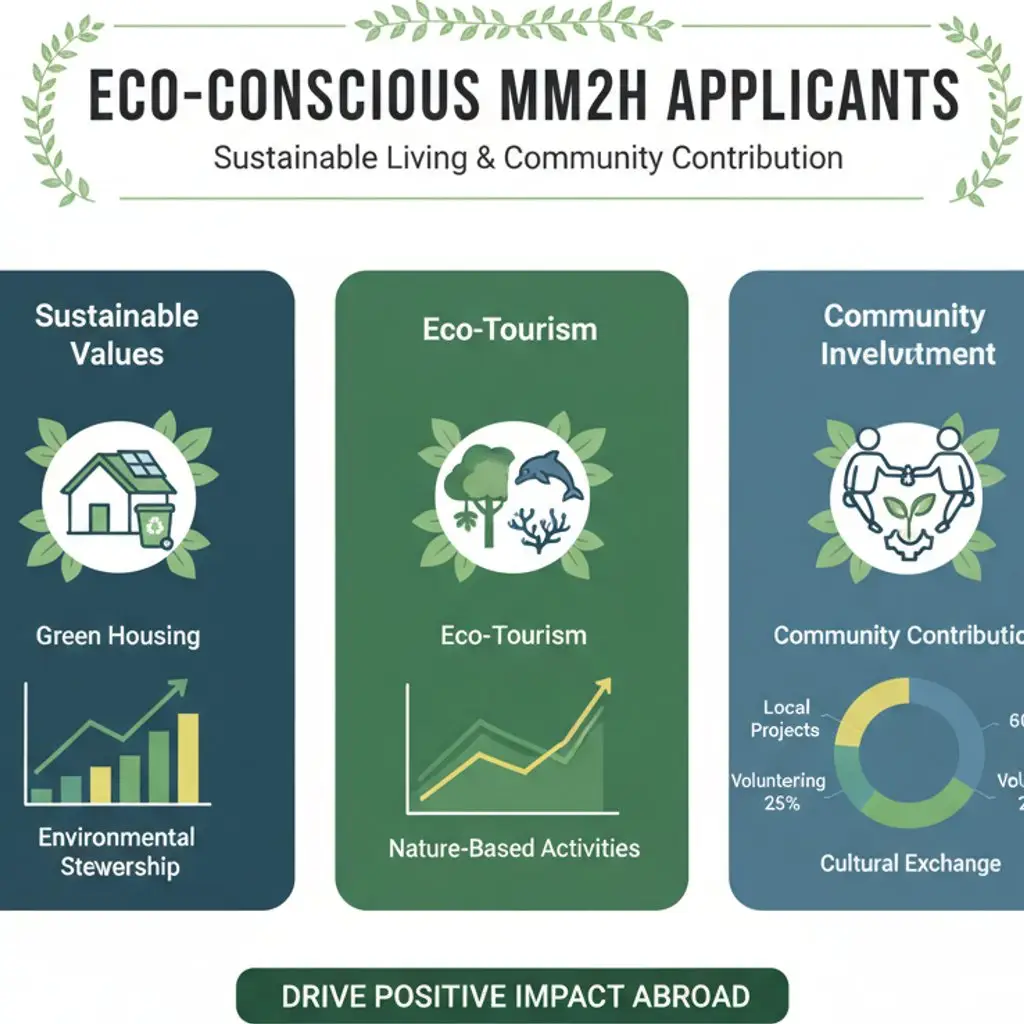
KUALA LUMPUR – Malaysia, a nation renowned for its vibrant culture and stunning natural beauty, is strategically enhancing its appeal to a new demographic: eco-conscious global citizens. The country is actively reshaping its popular Malaysia My Second Home (MM2H) program to align with a robust national agenda for green initiatives. This strategic pivot, effective as of July 29, 2026, involves significant investments in environmental protection, renewable energy subsidies, and expanded national park protections. The goal is to attract individuals and families who prioritize sustainable living, moving beyond traditional economic contributions to foster a community committed to a greener future.
Key Takeaways
- Malaysia’s green policies are actively attracting eco-conscious individuals to the MM2H program.
- The government is investing heavily in environmental protection, green technology, and sustainable tourism.
- MM2H applicants are increasingly prioritizing countries that align with their sustainable values.
- New incentives within the MM2H framework are emerging to support green investments and lifestyles.
- Malaysia aims to be a regional leader in conservation, enhancing its appeal as a sustainable second home.
- The MM2H program generated RM3.87 billion (approximately $990 million) in economic contributions by the end of 2025.
- Malaysia has pledged to achieve carbon neutrality as early as 2050.
Why Is Malaysia Prioritizing Green Initiatives for MM2H?
Malaysia is prioritizing green initiatives for the MM2H program to align with its broader national sustainable development goals and to attract a new, high-value demographic. The country recognizes that environmental stewardship is not just an ecological imperative but also a powerful economic differentiator in the global competition for talent and investment. This isn’t merely about picturesque landscapes, though Malaysia certainly has those in abundance.
You might be wondering why this shift is happening now. The honest answer is that the world has changed. People, especially those with the means to choose where they live, are increasingly looking beyond just financial benefits or a pleasant climate. They want to live in places that reflect their values, places that are actively working towards a more sustainable future. Malaysia’s government, through various ministries like the Ministry of Tourism, Arts and Culture, and the Ministry of Natural Resources and Environmental Sustainability, has clearly identified this trend. They’re making a concerted effort to position Malaysia as a leader in green initiatives and eco-tourism, and the MM2H program is a key part of that strategy.
The Broader National Commitment to Sustainability
Malaysia’s commitment to environmental sustainability isn’t new, but it’s certainly intensifying. The nation adopted the 2030 Agenda for Sustainable Development in 2015, committing to the 17 Sustainable Development Goals (SDGs) and 169 targets. While progress has been mixed, with Malaysia achieving a desirable SDG level for only one goal, ‘No Poverty,’ in 2023, the government is pushing hard to improve. Initiatives like the National Energy Transition Roadmap (NETR) and the New Industrial Master Plan (NIMP) 2030 are designed to drive Malaysia’s transition towards a low-carbon, high-value economy.
This commitment extends to protecting its natural heritage. Malaysia has pledged to retain at least 50% of its land mass under forest cover, and as of 2022, it maintained 54% forest cover. This is a significant achievement, even if some critics argue the definition of ‘forest’ could be more stringent, sometimes including plantations. However, it shows a clear direction, a dedication to preserving the very natural beauty that draws people here. According to the Malaysian Timber Council (2017), Malaysia has a total forested area of 18.27 million hectares, which is 55.3% of the total land area.
Who Are These Eco-Conscious MM2H Applicants?
These new eco-conscious MM2H applicants are typically well-travelled, globally aware, and often come from developed nations where environmental concerns are front and center. They aren’t just looking for a warm climate or a lower cost of living; they’re seeking a lifestyle that aligns with their values. From what we’ve seen in our years covering this sector, this demographic includes a mix of retired professionals, digital nomads, and families with young children. They are often highly educated, with a strong sense of social responsibility.
These applicants are asking different questions during the application process. They inquire not just about fixed deposits or property prices, but about access to organic markets, green building standards, community gardens, and opportunities to volunteer for conservation efforts. They want to know about renewable energy adoption and waste management initiatives. This represents a refreshing change from the purely financial inquiries of the past, indicating a deeper engagement with their potential new home.
How Does Malaysia Support Green Living for MM2H Participants?
Malaysia is implementing several key initiatives to support green living, making it easier and more attractive for all residents, including MM2H participants, to adopt sustainable practices. These efforts span various sectors, from energy to waste management and conservation. The government aims to achieve 70% renewable energy in installed capacity by 2050, with an interim target of 40% by 2035.
Green Housing and Renewable Energy
One of the most impactful areas is renewable energy. The government’s ‘Net Energy Metering (NEM) 3.0’ program, for example, allowed homeowners to generate their own electricity using solar panels and sell any excess back to the grid. This effectively reduced utility bills and carbon footprints, which was a huge draw for eco-conscious individuals. While NEM 3.0 ran until June 30, 2025, or until all quotas were allocated, discussions about potential future programs are ongoing. Additionally, green infrastructure investments, including solar-powered accommodations and water harvesting systems, are being integrated into eco-resorts and nature lodges.
According to the Malaysian Investment Development Authority (MIDA), the National Energy Transition Roadmap (NETR) sets ambitious targets for Malaysia, aiming to achieve net-zero emissions by 2050. The plan outlines a gradual increase in renewable energy shares, targeting 31% by 2025, 40% by 2035, and an impressive 70% by 2050. Malaysia has already exceeded its 2025 target, reaching 32% installed renewable energy capacity.
Sustainable Tourism and Conservation
Malaysia actively promotes eco-tourism by developing and marketing its natural attractions, such as national parks, rainforests, and marine reserves, with an emphasis on responsible travel and conservation education. The National Ecotourism Plan 2016–2025 provides a framework for developing the country’s ecotourism potential, ensuring that tourism benefits local communities and contributes to conservation. This isn’t just about preserving nature; it’s about creating immersive, low-impact experiences that resonate with those who value sustainability. The ecotourism market in Malaysia reached USD 1,032.5 million in 2025 and is projected to grow to USD 2,611.0 million by 2034, exhibiting a compound annual growth rate (CAGR) of 10.53% during 2026-2034.
The upcoming Visit Malaysia Year 2026 (VMY2026) campaign also prioritizes sustainable tourism, highlighting lesser-known regions and targeting high-yield visitors through niche experiences like eco-tourism. This strategy aims to attract 47 million visitors and generate RM329 billion (approximately USD 70 billion) in tourism receipts. According to the US-ASEAN Business Council, the VMY2026 campaign targets 35.6 million tourist arrivals and aims to generate RM147.1 billion (approximately USD 327 million) in tourism receipts. These initiatives are expected to significantly contribute to Malaysia’s GDP, with the tourism sector contributing 15.1% to GDP in 2024.
MM2H Program Requirements: A Snapshot for Eco-Minded Applicants
The MM2H program offers three main tiers – Silver, Gold, and Platinum – along with a Special Economic Zone (SEZ) pathway, each with varying financial requirements and visa durations. While there isn’t a specific ‘Green MM2H’ visa category, the program’s flexibility allows eco-conscious applicants to align their investments and lifestyle choices with their environmental values.
For instance, applicants can direct their required property purchases towards eco-friendly developments or invest in Malaysian companies focused on renewable energy or sustainable agriculture, thereby meeting financial criteria while supporting their principles. The program requires a fixed deposit and a mandatory property purchase across all categories (excluding Sarawak MM2H).
Here’s a comparison of the main MM2H tiers, as of July 2026:
| MM2H Tier | Visa Duration (Renewable) | Fixed Deposit (Approx. USD) | Minimum Property Purchase (Approx. RM) | Minimum Stay (per year) | Minimum Age |
|---|---|---|---|---|---|
| Silver | 5 years | $150,000 | RM 600,000 | 90 cumulative days | 25 years old |
| Gold | 15 years | $500,000 | RM 1,000,000 | 90 cumulative days | 25 years old |
| Platinum | 20 years | $1,000,000 | RM 2,000,000 | 90 cumulative days | 25 years old |
| SEZ (Special Economic Zone) | 10 years | $32,000 – $65,000 (age-dependent) | RM 500,000 (Forest City only) | 90 cumulative days | 21 years old |
| Sarawak MM2H (S-MM2H) | 10 years | RM 500,000 (approx. $106,000) | No property purchase required | 15 days | No minimum age restriction |
Note: Fixed deposit and property purchase amounts are approximate and subject to exchange rate fluctuations. Always verify the latest requirements with an authorized MM2H agent or the official Malaysian government channels.
The revised MM2H program, which took effect in June 2024, has seen a significant uptake. By the end of 2025, it generated RM3.87 billion (approximately $990 million) in economic contributions, with fixed deposits accounting for RM2.35 billion and real estate for RM1.51 billion. This demonstrates the program’s continued economic impact, now with an added layer of environmental consideration. According to the Ministry of Tourism, Arts and Culture, since the implementation of the revised policy in June 2024, the program has recorded 14,535 applications, comprising 5,239 principals and 9,296 dependants.
What is the Long-Term Impact on Malaysia’s Sustainable Development Goals?
The long-term impact of attracting eco-conscious MM2H applicants is multifaceted, extending far beyond immediate economic contributions. It fosters a national identity centered on environmental stewardship and brings in individuals who are likely to contribute positively to local environmental efforts, volunteer their time, and invest in green businesses. This creates a virtuous cycle, reinforcing Malaysia’s commitment to a greener future.
We believe this is where the real story is. It’s not just about numbers on a spreadsheet; it’s about the qualitative shift. These are people who aren’t just consuming resources; they’re often bringing expertise, awareness, and a genuine desire to contribute to the communities they join. This can only accelerate Malaysia’s progress towards its SDGs, especially those related to sustainable cities and communities, responsible consumption and production, and climate action. The Department of Statistics Malaysia (DOSM) has noted positive developments in the availability of SDG indicators, increasing from 41% in 2018 to 79% in 2022, and further to 81% in 2023. By 2024, Malaysia reported 82% availability of SDG indicators.
Are There Any Challenges to This Green Shift?
Of course, no significant policy shift comes without its challenges. While Malaysia is making strides, the path to comprehensive sustainability is complex. For example, while the country has maintained over 50% forest cover, the definition of ‘forest’ includes plantations, which don’t offer the same biodiversity benefits as natural forests. There are also ongoing concerns about balancing rapid development, such as the growth of data centers, with resource protection and community needs.
The key will be implementation. As one expert put it, the effectiveness of Malaysia’s new approach will ultimately depend on implementation rather than regulation alone. This means ensuring that green policies are not just on paper but are actively enforced and supported at all levels of government and society. It’s a big undertaking, but one that Malaysia seems genuinely committed to. According to Honeywell, Malaysia’s per capita emission was 8.23 tons CO2 equivalent in 2022, which is above the global average of 6.76.
Comparative Table: Malaysia’s Green Targets and Progress
| Green Initiative/Target | Target Year | Target Value | Current Status/Progress (as of 2025/2026) | Source |
|---|---|---|---|---|
| Carbon Neutrality | As early as 2050 | Net-zero emissions | Strategic roadmap in place (NETR, NIMP 2030) | |
| Renewable Energy (RE) Capacity | 2025 | 31% of installed capacity | 32% achieved, surpassing target | |
| Renewable Energy (RE) Capacity | 2035 | 40% of installed capacity | On track with NETR | |
| Renewable Energy (RE) Capacity | 2050 | 70% of installed capacity | Long-term goal under NETR | |
| Forest Cover | Ongoing (pledged 1992) | At least 50% of land mass | 54% maintained (as of 2022) | |
| SDG Indicators Availability | 2024 | 82% available | 82% achieved |
Frequently Asked Questions About MM2H and Green Living
Is there a specific ‘Green MM2H’ visa category?
No, as of July 29, 2026, there isn’t a distinct ‘Green MM2H’ visa category. However, Malaysia’s broader national green initiatives and incentives for sustainable living indirectly make the existing MM2H program highly attractive to eco-conscious individuals, allowing them to align their residency with their environmental values.
Can MM2H applicants invest in green businesses in Malaysia?
Yes, while there isn’t a direct ‘green investment’ visa category, eco-conscious applicants are increasingly directing their required financial investments (such as property purchases or other approved investments) towards Malaysian companies focused on renewable energy, sustainable agriculture, or green technology startups. This allows them to meet MM2H financial criteria while simultaneously supporting their environmental principles.
What kind of eco-friendly housing options are available for MM2H participants?
Malaysia is seeing a rise in eco-friendly developments, particularly in urban and suburban areas. These can include properties with solar panel installations, rainwater harvesting systems, and designs optimized for natural ventilation and lighting. The government’s Net Energy Metering (NEM) 3.0 program, which ran until June 2025, supported homeowners generating their own electricity, and discussions for future programs are ongoing.
How does Malaysia promote eco-tourism?
Malaysia actively promotes eco-tourism by developing and marketing its natural attractions, such as national parks, rainforests, and marine reserves, with an emphasis on responsible travel and conservation education. This includes supporting local communities involved in eco-tourism and ensuring sustainable practices are followed by operators. The Visit Malaysia Year 2026 campaign further emphasizes sustainable and high-value tourism.
Are there opportunities for MM2H participants to get involved in local environmental efforts?
Absolutely. Many eco-conscious MM2H applicants seek opportunities to contribute to local environmental efforts, volunteer their time, or even invest in green businesses. Malaysia’s growing focus on community-based conservation and sustainable development provides avenues for such engagement, fostering a sense of belonging and contribution among residents.
What are the minimum stay requirements for the MM2H program?
For the Silver, Gold, and Platinum tiers of the MM2H program, applicants (or their dependents) must stay at least 90 cumulative days per year in Malaysia. The Sarawak MM2H (S-MM2H) program has a lower requirement of 15 days per year in Sarawak.
Does the MM2H program lead to permanent residency or citizenship?
No, the MM2H program is a long-term social visit pass and does not grant permanent residency or citizenship. It allows qualified foreign nationals to live in Malaysia on a renewable basis, with durations ranging from 5 to 20 years depending on the tier.
Last updated: July 29, 2026
 English
  Chinese (Taiwan)
  Chinese (China)