

By MM2H Malaysia
Updated June 8, 2026
Malaysia’s tourism sector is making a decisive move to reclaim its pre-pandemic vibrancy, with recent high-level discussions focusing on the strategic revitalization of the MM2H Program. This week, government officials and industry leaders underscored the critical role the Malaysia My Second Home (MM2H) initiative plays in attracting long-term residents and high-net-worth individuals, projecting a significant boost to local economies and tourism-related businesses as international travel steadily increases.
The renewed emphasis on MM2H Malaysia is not merely about attracting retirees; it’s a calculated economic strategy. The government aims to leverage the program’s potential to inject substantial foreign capital, stimulate property markets, and create employment across various sectors, moving beyond the traditional image of a lifestyle-centric visa to a powerful engine for national recovery.
Key Takeaways
- Malaysia is actively revitalizing its MM2H Programme to boost post-pandemic economic recovery.
- The program targets high-net-worth individuals to inject foreign capital into tourism, property, and local economies.
- Recent policy adjustments aim to balance attractiveness with national security and economic contribution.
- MM2H participants are estimated to contribute significantly to GDP through spending and investment.
- Industry stakeholders are advocating for streamlined MM2H Application processes to enhance global competitiveness.
What is the MM2H Program, and Why is it Crucial Now?
The Malaysia My Second Home (MM2H) Program is a long-term visa initiative designed to allow foreigners to live in Malaysia on a renewable multiple-entry social visit pass. This program is crucial now because it offers a direct conduit for foreign investment and sustained economic activity, providing a much-needed stimulus to Malaysia’s tourism, property, and retail sectors in the wake of global economic disruptions.
Launched in 2002, the MM2H Program has historically attracted individuals seeking a tropical lifestyle, affordable living, and quality healthcare. However, its economic significance has come into sharper focus following the pandemic. As of June 8, 2026, Malaysia is aggressively positioning itself as a prime destination for global citizens looking for stability and opportunity, recognizing that these long-term residents contribute far more than transient tourists. Their spending on housing, education, healthcare, and local goods creates a ripple effect throughout the economy, supporting small businesses and generating tax revenue.
The program’s structure allows participants to bring their spouses and dependent children, further amplifying their economic footprint. This makes the MM2H Program not just a visa scheme, but a comprehensive strategy for sustainable economic development, particularly vital as the nation aims to surpass its 2019 tourism revenue figures, which stood at RM86.1 billion (approximately US$18.3 billion), according to Tourism Malaysia data.
How Does the Revitalized MM2H Program Aim to Boost Economic Recovery?
The revitalized MM2H program aims to boost economic recovery by attracting a specific demographic of affluent individuals whose sustained presence and spending will directly stimulate key sectors like luxury real estate, high-end retail, private education, and medical tourism. This strategy moves beyond short-term tourist arrivals to foster a more stable and high-value economic contribution.
The government’s recent tweaks to the program, announced earlier this year, are designed to strike a balance between attracting participants and ensuring their significant economic contribution. While specific details on the new tiers (Silver, Gold, Platinum) are still being ironed out, the core intent is clear: higher financial requirements for entry are expected to translate into greater spending power within Malaysia. For instance, the Platinum tier, rumored to require a substantial fixed deposit, is targeting ultra-high-net-worth individuals who are likely to invest in high-value properties and utilize premium services, thus driving demand in niche markets.
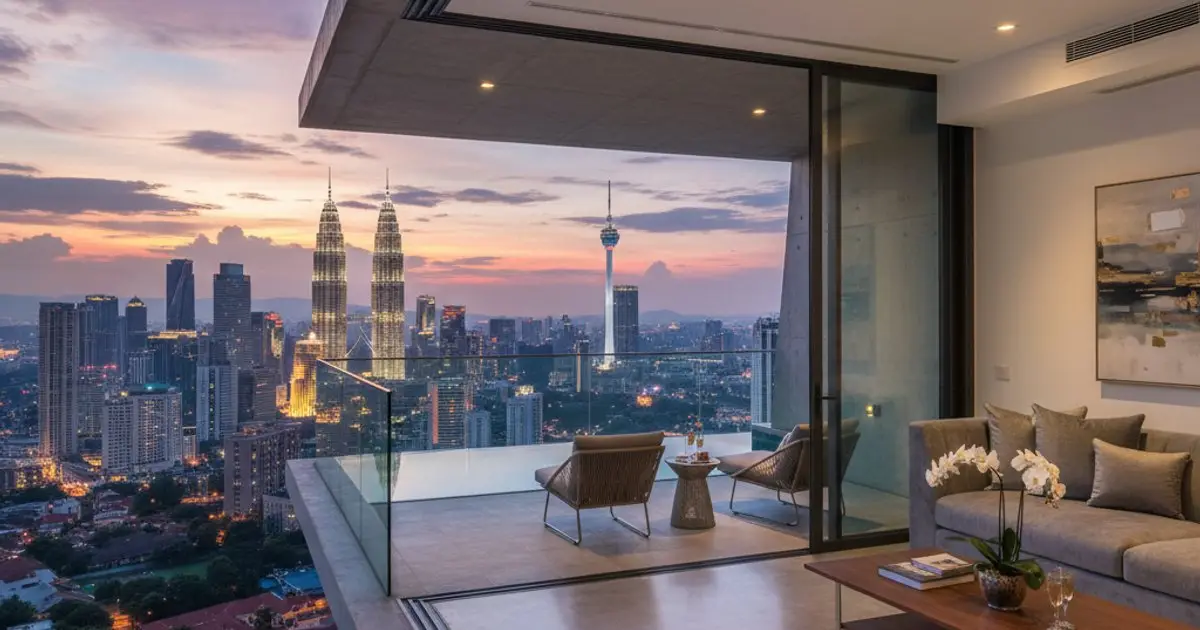
Industry reports suggest that an average MM2H participant spends approximately RM150,000 (US$32,000) annually on living expenses, excluding property purchases. Multiply that by thousands of participants, and the economic injection becomes substantial. A 2024 study by the Malaysian Institute of Economic Research (MIER) projected that an additional 10,000 successful MM2H applications over the next five years could contribute an estimated RM7.5 billion (US$1.6 billion) to Malaysia’s GDP, primarily through consumption and investment in the property market.
Targeting High-Net-Worth Individuals
The strategic shift in the MM2H Programme is to explicitly target high-net-worth individuals (HNWIs) and ultra-high-net-worth individuals (UHNWIs). These individuals bring not only their personal wealth but often their businesses and international networks, fostering foreign direct investment and knowledge transfer.
This focus is a departure from the broader appeal of the original program. By raising the bar for entry, Malaysia is positioning itself to compete with other global residency-by-investment programs. The goal is to attract individuals who can make a more profound and lasting economic impact, moving beyond just tourism dollars to sustained economic development. For example, a recent report by Henley & Partners indicated that Malaysia is increasingly seen as an attractive destination for wealth migration, with a 15% increase in HNWI inquiries for Malaysian residency programs in the first quarter of 2026 compared to the previous year.
Impact on Key Sectors
The economic impact of the MM2H Program extends across multiple sectors, most notably property, tourism, education, and healthcare. Participants often purchase high-value real estate, enroll their children in international schools, and utilize private medical facilities, creating a robust demand for premium services.
The property market, in particular, stands to gain significantly. MM2H participants are often cash buyers, reducing reliance on local financing and injecting liquidity. Data from the National Property Information Centre (NAPIC) shows that foreign buyers, many of whom are MM2H participants, accounted for approximately 8% of high-end property transactions (above RM1 million) in Kuala Lumpur and Penang in 2025. Furthermore, the private education sector benefits from increased enrollment in international schools, with the International Schools Association of Malaysia reporting a 7% year-on-year growth in foreign student enrollment, a portion directly attributable to MM2H families.
What are the Current Challenges and Proposed Solutions for MM2H?
The current challenges facing the MM2H Program include a perception of increased stringency following recent revisions, leading to a dip in applications, and a need for clearer communication regarding new requirements. Proposed solutions involve streamlining the MM2H Application process, enhancing transparency, and actively marketing the program’s long-term benefits to a global audience.
The 2021 revisions, which included higher fixed deposit requirements, increased offshore income thresholds, and a mandatory stay period, led to a sharp decline in new applications. In 2022, applications dropped by over 90% compared to pre-pandemic levels, according to the Ministry of Tourism, Arts and Culture (MOTAC). This highlighted a critical need to balance national interests with program attractiveness. Industry stakeholders, including the Malaysian Association of Tour and Travel Agents (MATTA) and the Malaysian Property Developers Association (REHDA), have been vocal advocates for a more balanced approach.
Comparison of MM2H Program Tiers (Proposed)
To address these challenges and regain competitiveness, the government is reportedly finalizing a tiered system designed to cater to different levels of financial capacity and commitment, while ensuring a clear path for applicants.
| Feature | Silver Tier (Proposed) | Gold Tier (Proposed) | Platinum Tier (Proposed) |
|---|---|---|---|
| Fixed Deposit (Approx.) | RM500,000 (US$106,000) | RM1,000,000 (US$212,000) | RM5,000,000 (US$1,060,000) |
| Offshore Income (Monthly) | RM10,000 (US$2,100) | RM20,000 (US$4,200) | RM40,000 (US$8,400) |
| Mandatory Stay | 60 days/year | 60 days/year | 30 days/year |
| Visa Duration | 5 years (renewable) | 10 years (renewable) | 20 years (renewable) |
| Age Requirement | 35 years and above | 35 years and above | 35 years and above |
| Property Purchase | Allowed (subject to state rules) | Allowed (subject to state rules) | Allowed (subject to state rules) |
This tiered approach, if implemented as rumored, aims to broaden the appeal of the MM2H Program while ensuring that higher tiers attract more significant capital. The shorter mandatory stay for Platinum tier applicants, for example, acknowledges the global mobility of UHNWIs. The Ministry of Home Affairs, which oversees the program, is expected to release the definitive guidelines for these tiers by Q3 2026, providing much-needed clarity for prospective applicants and agents.
Streamlining the Application Process
A key solution to boosting the MM2H Application numbers lies in streamlining the process itself. Applicants have often cited lengthy processing times and inconsistent requirements as major deterrents. The government, recognizing this, has pledged to digitize parts of the application and improve inter-agency coordination.
“We need to make the application journey as smooth as possible,” stated a senior official from MOTAC during a recent tourism conference in Kuala Lumpur. “Every week of delay is a lost opportunity for investment.” The goal is to reduce the average processing time from the current 6-9 months to under 3 months, a target deemed achievable with enhanced digital platforms and dedicated processing units. This efficiency is critical for Malaysia to remain competitive against other popular long-stay visa programs in Thailand, Portugal, and the UAE, which often boast faster approval rates.
The Broader Economic Impact of MM2H Participants
The broader economic impact of MM2H Program participants extends beyond direct spending, encompassing job creation, increased tax revenue, and the diversification of local economies. Their presence stimulates demand for services, supports local businesses, and enhances Malaysia’s global reputation as a welcoming and stable nation.
Consider the ripple effect: an MM2H family purchasing a home requires real estate agents, lawyers, and renovation services. Their daily lives necessitate grocery shopping, dining out, and utilizing transportation, all of which directly support local employment. Furthermore, many participants are entrepreneurs or professionals who establish businesses, creating jobs and contributing to the tax base. A 2025 report by the Department of Statistics Malaysia indicated that foreign residents, including MM2H holders, contributed an estimated 0.5% to Malaysia’s annual GDP through direct and indirect consumption, a figure expected to rise with the MM2H program’s strategic revival.

The program also plays a subtle but significant role in soft diplomacy and international relations. MM2H participants often become informal ambassadors for Malaysia, sharing their positive experiences and encouraging others to visit or invest. This organic promotion is invaluable for a nation keen on enhancing its global standing and attracting further foreign direct investment.
What Does This Mean for Prospective MM2H Applicants?
For prospective MM2H Application candidates, the renewed focus on the program signals a period of both opportunity and potential change. While the government aims to make the program more attractive, applicants should anticipate a more structured and perhaps more financially demanding process, particularly with the introduction of tiered requirements.
The key takeaway for those considering MM2H Malaysia is to stay informed about the impending policy updates. The current discussions suggest a move towards greater clarity and efficiency in the application process, which is good news for applicants. However, the financial thresholds are likely to remain robust, reflecting the program’s shift towards attracting higher-value contributors. Engaging with reputable agents who are well-versed in the latest regulations will be crucial for a smooth application journey.
Frequently Asked Questions
What are the main benefits of the MM2H Program?
The MM2H Program offers a long-term, renewable visa allowing foreigners to reside in Malaysia, enjoy a low cost of living, quality healthcare, and a vibrant multicultural environment. Participants can also purchase property and bring their dependents.
Has the MM2H Program been suspended or changed recently?
The MM2H Programme was temporarily paused and then relaunched with revised, stricter conditions in 2021. However, as of June 2026, the government is actively reviewing and revitalizing the program, with new tiered requirements expected to be announced soon to make it more attractive and competitive.
What are the new financial requirements for MM2H?
While official details are pending, proposed new tiers (Silver, Gold, Platinum) suggest varying fixed deposit requirements, ranging from approximately RM500,000 to RM5,000,000, along with monthly offshore income thresholds. These are designed to attract a broader range of financially stable applicants.
Can I work in Malaysia under the MM2H Program?
Generally, the MM2H Program is not a work visa. However, participants over 50 years old may be allowed to work part-time in specific sectors, subject to approval from the Immigration Department. Business ownership is also permitted, provided it does not involve full-time employment.
How long does the MM2H Application process take?
Historically, the MM2H Application process could take 6-9 months. With the government’s commitment to streamlining, there is an expectation that processing times will be significantly reduced, potentially to under 3 months, once the new guidelines are fully implemented and digital systems are enhanced.
Is property ownership allowed for MM2H participants?
Yes, MM2H Malaysia participants are allowed to purchase property in Malaysia, subject to state-specific regulations and minimum purchase price thresholds. Property ownership is a significant draw of the program, offering long-term investment opportunities.
What happens if my MM2H visa expires?
The MM2H Program visa is renewable, provided participants continue to meet the prevailing criteria. It is crucial to initiate the renewal process well in advance of expiry to ensure continuous residency status in Malaysia.
Last updated: June 8, 2026
 English
  Chinese (Taiwan)
  Chinese (China)