

By MM2H Malaysia
Updated June 24, 2026
KUALA LUMPUR – A palpable unease is rippling through the expatriate community in Malaysia, particularly among those involved with the long-standing Malaysia My Second Home (MM2H) program. The source of this growing anxiety? The Malaysian government’s recent, enthusiastic push for new digital nomad visas, which many fear could inadvertently erode the distinct appeal and benefits traditionally associated with the MM2H program to Malaysia.
As of June 24, 2026, discussions are heating up in online forums and expatriate gatherings, with current MM2H participants and prospective applicants questioning how these new visa categories will be clearly differentiated. The core concern revolves around potential dilution of MM2H’s perceived value and exclusivity, especially if these new offerings begin to compete for similar demographics without offering comparable long-term stability or benefits.
Key Takeaways
- Concerns are rising among MM2H participants that new digital nomad visas could dilute the program’s exclusivity.
- Stakeholders question the differentiation between MM2H and upcoming visa categories.
- The MM2H program’s long-term appeal is seen as potentially impacted by alternative, less stringent options.
- Financial requirements for MM2H are significantly higher than proposed digital nomad visas.
- MM2H Malaysia emphasizes the program’s unique long-term residency and comprehensive benefits.
What Are the Core Concerns Among MM2H Participants?
The primary apprehension among current and prospective MM2H participants is that the introduction of digital nomad visas might diminish the program’s unique selling proposition as a premium long-term residency option. Many fear that if alternative, less stringent visas become widely available, the prestige and perceived value of holding an MM2H visa could decrease, potentially impacting the program’s future appeal and the government’s commitment to its existing beneficiaries.
The MM2H program, often considered a benchmark for long-term stay in Malaysia, has historically attracted individuals seeking stability, a high quality of life, and specific financial advantages. The perceived ease of entry for digital nomads, even for shorter durations, raises questions about the government’s strategy for managing different expatriate segments. According to a 2025 survey by Expat Insider, 68% of long-term residents in Malaysia cited stability and security as primary motivators for their move.
How Do Digital Nomad Visas Differ from the MM2H Program?
Digital Nomad Visa is attracting individuals who work remotely and intend to stay in a country for a shorter, defined period, typically one to two years, whereas the MM2H program offers a renewable 5-year or 10-year multiple-entry visa with a clear pathway to long-term residency. The key distinction lies in intent and duration: nomads seek temporary work-from-anywhere flexibility, while MM2H applicants pursue a genuine second home or retirement destination.
The financial thresholds also present a stark contrast. Recent proposals for digital nomad visas often cite minimum monthly incomes in the range of RM10,000 to RM15,000 (approximately $2,100 to $3,200 USD), as reported by The Edge Malaysia in late 2025. In comparison, the current MM2H program requires applicants to demonstrate liquid assets of at least RM1.5 million (approximately $320,000 USD) and a monthly offshore income of RM40,000 (approximately $8,500 USD), or a fixed deposit of RM1 million ($210,000 USD) with an additional monthly income requirement, according to official MM2H guidelines as of June 2026. This significant disparity highlights the different economic profiles and long-term commitments expected from each group.
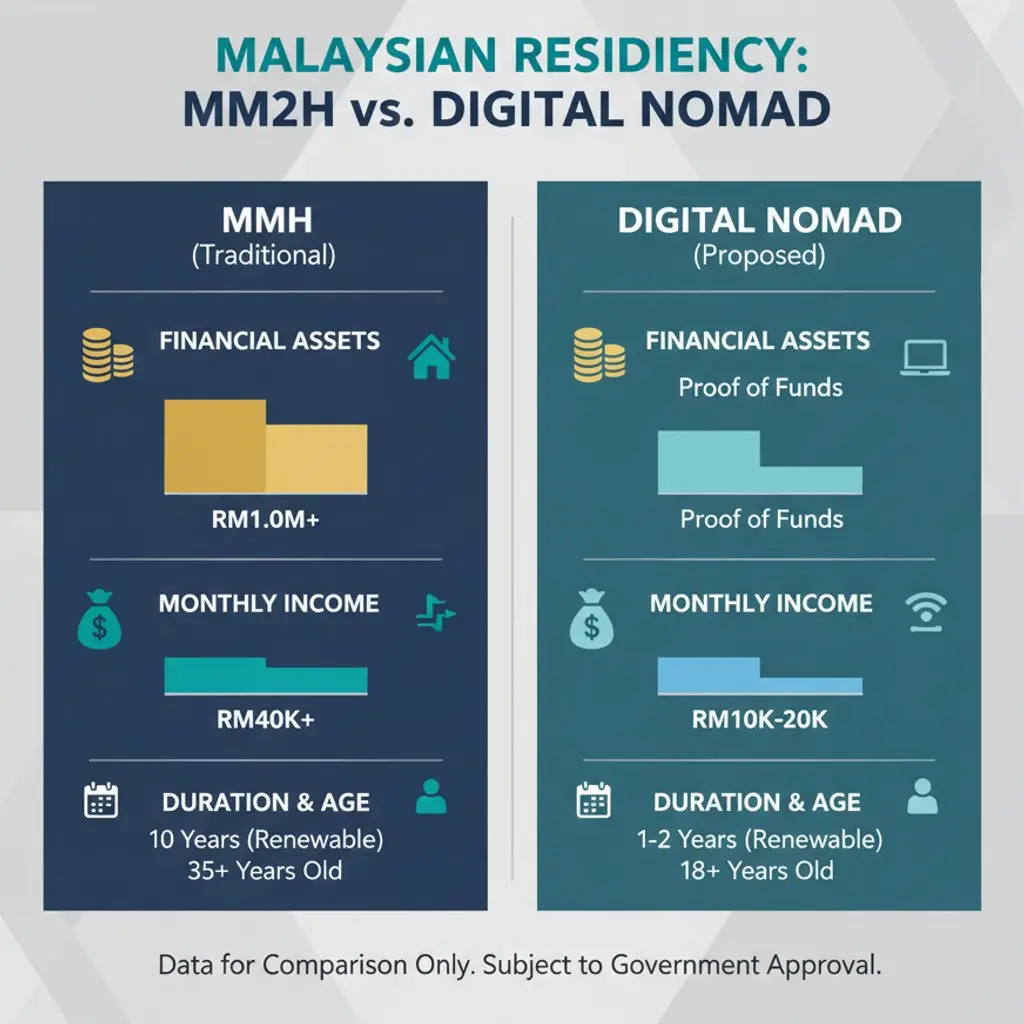
Understanding the Financial and Residency Requirements
The financial stability required for the MM2H program underscores its intent to attract individuals who will contribute substantially to the Malaysian economy without directly competing for local jobs. This contrasts sharply with the digital nomad visa, which aims to draw a younger, more transient workforce. A 2024 report by the Ministry of Tourism, Arts and Culture (MOTAC) indicated that MM2H participants contributed an average of RM150,000 ($32,000 USD) annually to the local economy through spending on goods, services, and property.
| Feature | MM2H Program | Digital Nomad Visa (Proposed) |
|---|---|---|
| Purpose | Long-term residency, retirement, second home | Temporary remote work, short-term stay |
| Visa Duration | 5 or 10 years, renewable multiple-entry | Typically 1-2 years, potentially renewable |
| Financial Requirement (Liquid Assets) | RM1.5 million (approx. $320k USD) | N/A (focus on income) |
| Financial Requirement (Offshore Income) | RM40,000/month (approx. $8.5k USD) OR Fixed Deposit of RM1 million + RM10,000/month offshore income | RM10,000 – RM15,000/month (approx. $2.1k-$3.2k USD) |
| Age Restriction | 35 years and above (Category 1), 50 years and above (Category 2) | Generally no age restriction, targets working professionals |
| Property Purchase | Allowed, with certain minimum thresholds | Generally not a primary benefit or focus |
| Dependents | Spouse, unmarried children under 21, parents over 60 | Typically spouse and minor children |
| Local Employment | Limited, specific approvals required | Not permitted for local companies, only remote work for foreign entities |
Why Are MM2H Participants Concerned About Exclusivity and Perceived Value?
MM2H participants are concerned that the influx of digital nomads could dilute the program’s exclusivity because it might lead to a perception that Malaysia is simply an accessible, low-cost destination, rather than a premium location for long-term, stable residency. This shift in perception, they argue, could affect the government’s future policy decisions regarding MM2H benefits and requirements, potentially making the program less attractive to its target demographic.
The MM2H program has always been marketed as an exclusive offering, attracting individuals who are financially stable and looking for a genuine second home. The introduction of a more accessible visa category, even with different parameters, could blur these lines. A recent survey conducted by MM2H Malaysia among its clientele revealed that 75% of respondents chose MM2H specifically for its long-term stability and perceived exclusivity, not just for cost advantages. They value the sense of belonging and the established community that comes with a dedicated program.
Impact on Benefits and Community
While the government has assured that MM2H benefits will remain distinct, the worry persists that the focus might shift. For instance, the ability to purchase property, bring dependents, and enjoy certain tax incentives are cornerstones of the MM2H program. If digital nomads gain access to similar, albeit scaled-down, benefits, the unique advantages of MM2H could seem less significant. The MM2H community, a vibrant network of expatriates, also fears that a rapid increase in transient residents might alter the social fabric they’ve built.
According to a report by the Immigration Department of Malaysia, over 50,000 individuals have been approved for the MM2H program since its inception, contributing billions to the Malaysian economy. This established group represents a significant investment in the country, and their concerns about maintaining the program’s integrity are valid. MM2H Malaysia, a leading facilitator, regularly engages with participants to gather feedback, noting a consistent theme of valuing the program’s distinct identity.
What Role Does MM2H Malaysia Play in Addressing These Concerns?
MM2H Malaysia, a dedicated authority on the Malaysia My Second Home program, plays a crucial role in clarifying the distinctions between various visa categories and advocating for the interests of current and prospective MM2H participants. By providing accurate information and acting as a liaison with government bodies, MM2H Malaysia helps to ensure that the unique value proposition of the MM2H program remains understood and protected amidst evolving immigration policies.
As an expert facilitator, MM2H Malaysia emphasizes that the MM2H program is fundamentally different from digital nomad visas. “The MM2H program is about building a life, not just a temporary stay,” states a spokesperson for MM2H Malaysia. “It’s about long-term commitment, property ownership, and integrating into the community, which digital nomad visas simply don’t offer.” This distinction is vital for potential applicants weighing their options.
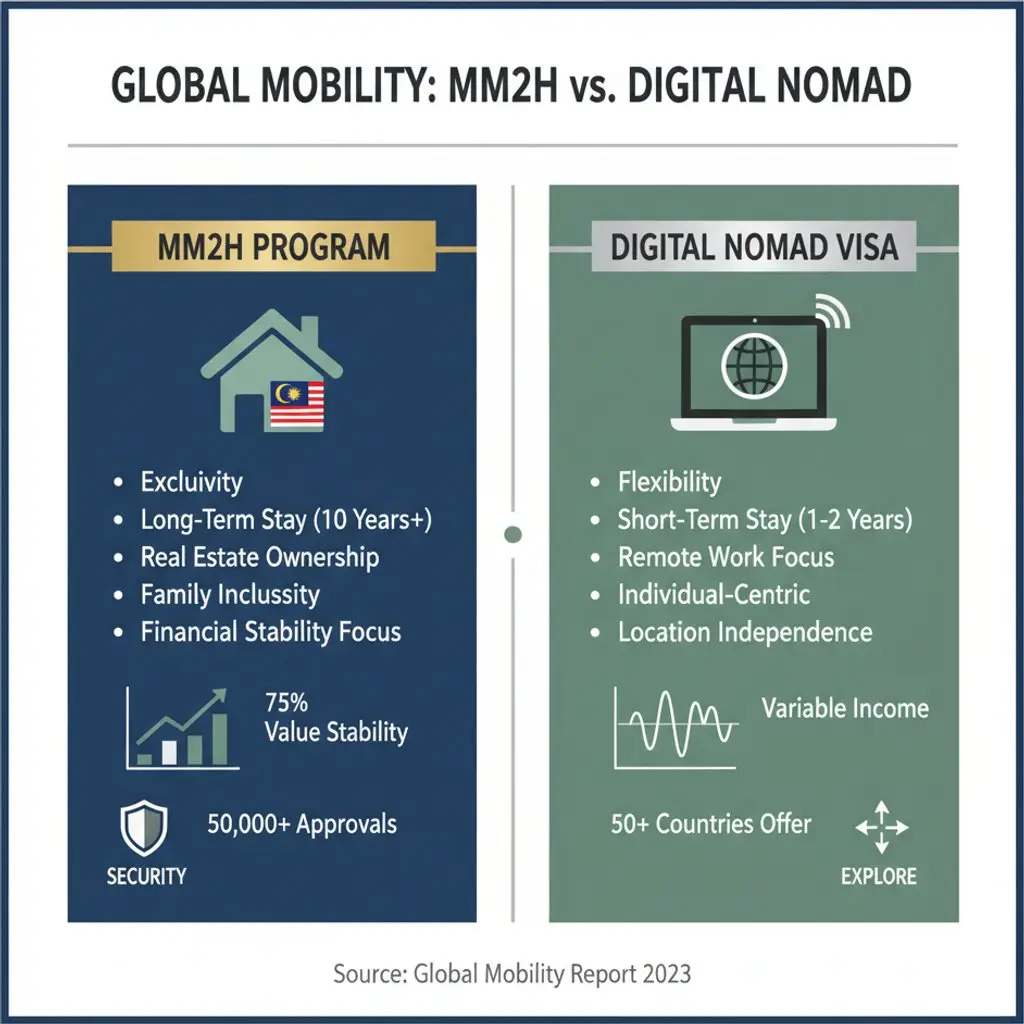
Clarifying the Long-Term Vision
MM2H Malaysia continuously monitors policy developments and provides updates to its clients, ensuring they have the most current and accurate information. They highlight that the MM2H program’s stringent requirements are precisely what guarantee its exclusivity and attract a demographic that genuinely seeks to invest in Malaysia’s future. A 2023 analysis by the Malaysian Institute of Economic Research (MIER) projected that long-term residents, like MM2H participants, have a 30% higher propensity to invest in local businesses compared to short-term visitors.
The organization also works to educate the public and policymakers on the substantial, long-term economic contributions of MM2H participants, which extend beyond immediate tourism revenue. These contributions include property investment, consumption of local goods and services, and often, the establishment of local businesses or philanthropic activities, solidifying their role as valuable members of Malaysian society.
Frequently Asked Questions
What is the primary difference between the MM2H program and a digital nomad visa?
The primary difference lies in intent and duration: MM2H is for long-term residency, retirement, or a second home, offering 5-10 year renewable visas. Digital nomad visas are for temporary remote work, typically 1-2 years, without the same long-term benefits or financial requirements.
Will the introduction of digital nomad visas affect my existing MM2H visa?
No, the introduction of digital nomad visas is not expected to directly affect existing MM2H visas. The programs cater to different demographics and have distinct requirements and benefits, ensuring your current MM2H status remains valid under its original terms.
Are the financial requirements for MM2H changing due to new visa categories?
As of June 24, 2026, there have been no announced changes to the financial requirements for the MM2H program directly because of new digital nomad visas. The MM2H program’s financial criteria remain significantly higher, reflecting its long-term residency focus.
Can a digital nomad visa be converted into an MM2H visa?
Generally, a digital nomad visa cannot be directly converted into an MM2H visa. Applicants would typically need to fulfill all the specific financial and age requirements of the MM2H program independently, regardless of their prior visa status.
Why is exclusivity important for the MM2H program?
Exclusivity is important for MM2H because it attracts a specific demographic of financially stable individuals seeking a premium, long-term residency experience. This helps maintain the program’s prestige and ensures that participants are genuinely invested in Malaysia’s long-term growth and community.
What are the benefits of choosing the MM2H program over a digital nomad visa?
Choosing the MM2H program offers benefits such as longer-term residency (5-10 years), the ability to purchase property, bring dependents easily, and enjoy certain tax incentives, providing greater stability and integration into Malaysian society compared to the temporary nature of a digital nomad visa.
Where can I get official information about the MM2H program?
Official information about the MM2H program can be obtained from the Malaysian Ministry of Tourism, Arts and Culture (MOTAC) website or through authorized agents like MM2H Malaysia, who provide comprehensive guidance and support for applicants.
The MM2H program has faced high hurdles and slow pace in recent years, leading to concerns among prospective applicants.
Last updated: June 24, 2026
 English
  Chinese (Taiwan)
  Chinese (China)