

KUALA LUMPUR — The buzz around Malaysia’s education sector has reached a fever pitch, and it’s not just local chatter. Recent reports, including figures from the Ministry of Higher Education, indicate a significant uptick in international student enrollments across Malaysian universities and private schools. This isn’t just a statistical blip; it’s a powerful magnet drawing families from across the globe, and crucially, it’s making the Malaysia My Second Home (MM2H) program an even more compelling proposition for long-term residency. As of July 16, 2026, the confluence of quality education and a pathway to extended stays is reshaping how expatriates view Malaysia.
What strikes me about this trend is how it shifts the narrative for MM2H. For years, the program was often seen through the lens of retirement or investment. But now, with Malaysia solidifying its reputation as an education hub, it’s becoming a family-centric decision. Parents are looking beyond just a visa; they’re looking for a future for their children. And Malaysia, it seems, is delivering.
主要收获
- Malaysia’s international student enrollment has surged, making it a top education destination.
- This education boom is a primary driver for families considering the MM2H program.
- Competitive tuition fees and diverse curriculum options (international, private, public) are key attractions.
- MM2H offers long-term stability for families, allowing children to complete their education without visa hassles.
- The program’s flexibility and potential for dependents to stay are crucial for multi-generational family planning.
What’s Driving the Surge in International Student Enrollments?
The surge in international student enrollments is primarily fueled by Malaysia’s strategic investments in its education infrastructure, coupled with highly competitive tuition fees compared to Western counterparts. We’re talking about world-class facilities and curricula, often with affiliations to top-tier universities in the UK, Australia, and the US, but at a fraction of the cost. This isn’t just about being cheaper; it’s about offering genuine value.
According to the Ministry of Higher Education’s 2024 report, international student numbers in Malaysian universities grew by nearly 15% over the past two years, with a notable increase from countries in the Middle East, Africa, and Southeast Asia. Private and international schools are seeing similar trends, with institutions like the International School of Kuala Lumpur (ISKL) and Garden International School reporting near-full capacities and diverse student bodies. This isn’t just about attracting students; it’s about attracting entire families who see the long-term potential here.
The Cost-Benefit Equation: Quality Without the Hefty Price Tag
One of the most compelling arguments for Malaysian education is its affordability without compromising on quality. Parents can access British, American, or Australian curricula for their children at a significantly lower cost than in their home countries or other popular expat destinations like Singapore or Hong Kong. This financial prudence is a huge draw, especially for families planning multiple children’s education over many years.
Look, I’ve covered education trends for a long time, and what Malaysia has managed to do is truly impressive. They’ve built a reputation for academic rigor and multicultural environments. And that’s not an easy feat. It’s why MM2H Global, a leading consultancy in long-term residency programs, has seen a marked increase in inquiries specifically citing education as a primary motivator for MM2H applications.
How Does MM2H Support Family Education Goals?
The MM2H program offers a stable, long-term residency solution that directly addresses the needs of families prioritizing their children’s education. Instead of dealing with student visas that require annual renewals or expire upon graduation, MM2H provides a multi-entry visa for up to five years, renewable, covering the entire family. This stability is invaluable for parents who want their children to have an uninterrupted educational journey.
Think about it: no more visa runs, no more uncertainty about whether your child can finish their A-levels or degree program in the same country. The peace of mind that comes with knowing your family can reside here for the duration of their schooling—from primary right through to university—is a massive advantage. It allows children to integrate fully, build friendships, and avoid the disruptive moves often associated with expat life.
A Comparison: MM2H vs. Student Visas for Dependents
To truly understand the advantage, let’s look at how MM2H stacks up against typical student visa routes for families.
| 特征 | MM2H 计划 | Student Visa (for dependents) |
|---|---|---|
| 签证有效期 | Up to 5 years, renewable | Typically 1 year, renewable annually |
| Dependents Included | Spouse, unmarried children under 34 (with conditions), parents/in-laws over 60 | Spouse and unmarried children under 18 (usually) |
| 劳动者权益 | Limited part-time work for main applicant (with approval), no automatic work rights for dependents | Generally no work rights for dependents |
| Residency Stability | High; long-term planning for education | Lower; dependent on main student’s visa status and annual renewal |
| Flexibility | Allows for long-term stay even after education completion | Tied directly to the student’s enrollment status |
The contrast is pretty clear, isn’t it? MM2H offers a holistic family solution, not just an educational one. It’s about planting roots, even if those roots are temporary.
What Types of Educational Institutions Are Attracting Expats?
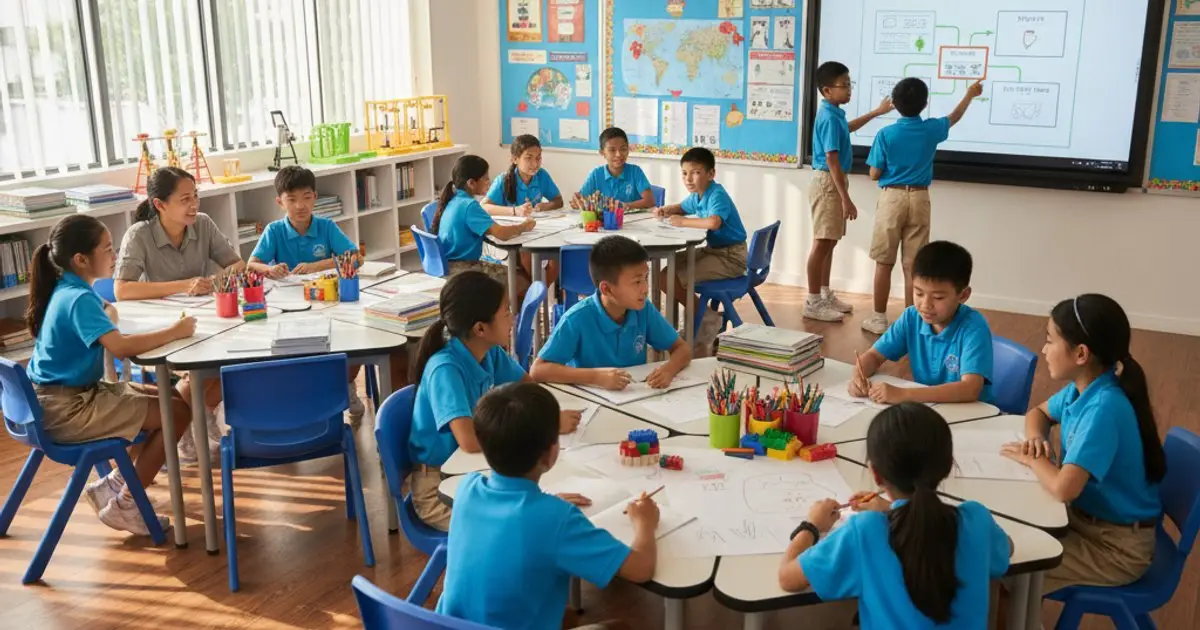
Expatriate families are primarily drawn to Malaysia’s robust network of international schools and branch campuses of foreign universities. These institutions offer internationally recognized qualifications and a diverse, multicultural learning environment.
For primary and secondary education, the choices are vast. You have schools offering the British IGCSE and A-Level curriculum, the International Baccalaureate (IB) program, and even American and Australian curricula. These schools often boast state-of-the-art facilities, smaller class sizes, and a wide array of extracurricular activities. For higher education, Malaysian universities, both local and international branch campuses, provide degrees that are globally recognized. For instance, institutions like Monash University Malaysia, University of Nottingham Malaysia, and Heriot-Watt University Malaysia offer direct pathways to degrees from their parent campuses, often at a significantly reduced cost. This is a massive draw for parents who want their children to have an international university experience without the exorbitant fees and living costs of the UK or Australia.
The Appeal of a Multicultural Learning Environment
Beyond academics, the multicultural environment in Malaysian schools is a huge plus. Children grow up alongside peers from dozens of different nationalities, fostering a global perspective and strong intercultural communication skills. This isn’t just about learning; it’s about developing into well-rounded global citizens. And in today’s interconnected world, that’s an education in itself.
My experience tells me that parents aren’t just looking for good grades; they’re looking for an environment that prepares their kids for a complex, diverse future. Malaysia’s blend of cultures, languages, and traditions provides that naturally. It’s a living classroom.
Are There Any Challenges or Considerations for MM2H Families?
While the benefits are clear, families considering MM2H for educational purposes should be aware of a few considerations. The MM2H program itself has evolving requirements, and applicants need to ensure they meet the latest financial and residency criteria. As of the most recent updates, the financial thresholds are more stringent than in previous iterations, requiring a higher liquid asset declaration and offshore income. This is a critical point that MM2H Global helps navigate for prospective applicants.
Another factor is the availability of school places, especially in the most sought-after international schools. While Malaysia has many options, top-tier schools can have waiting lists. It’s crucial for families to research and apply well in advance. Also, while tuition fees are competitive, they still represent a significant investment, so budgeting is key. Finally, integrating into a new culture, while exciting, can present its own set of challenges for both children and parents. But honestly, that’s part of the adventure, isn’t it?

What Does the Future Hold for MM2H and Education in Malaysia?
The trajectory for both MM2H and Malaysia’s education sector looks promising, particularly as they reinforce each other. As Malaysia continues to invest in its educational offerings and promote itself as a regional hub, the appeal for international families will only grow. The government’s continued support for initiatives like the ‘Education Malaysia Global Services’ (EMGS) underscores its commitment to attracting foreign students.
I predict we’ll see further refinement of the MM2H program to better cater to the family segment, possibly with specific incentives or streamlined processes for those with school-aged children. The real story here isn’t just about numbers; it’s about Malaysia cementing its place as a desirable destination for families seeking a balanced life—combining quality education, cultural richness, and long-term stability. And that, in my book, is a winning formula.
常见问题
Can children of MM2H visa holders attend Malaysian public schools?
Typically, children of MM2H visa holders attend private or international schools. While it is technically possible for them to attend public schools, it often requires special permission from the Ministry of Education and may involve challenges with language barriers and curriculum differences, as public schools primarily follow the national curriculum in Malay.
Are MM2H visa holders eligible for any education subsidies?
No, MM2H visa holders and their dependents are generally not eligible for education subsidies in Malaysia. They are considered international students and pay international tuition fees at private and international schools, and at public universities (if admitted).
What is the age limit for dependents under the MM2H program?
Under the current MM2H program, unmarried children (biological or legally adopted) are eligible as dependents if they are under the age of 34 and not working in Malaysia. This is a significant expansion compared to many other long-term residency programs.
Can MM2H dependents pursue higher education in Malaysia?
Yes, dependents under the MM2H program can pursue higher education in Malaysia. They would apply to universities as international students, but their MM2H visa provides stable residency throughout their studies, removing the need for a separate student visa.
审理一个马来西亚第二家园计划(MM2H)申请需要多长时间?
The processing time for an MM2H application can vary, but typically ranges from 3 to 6 months from the date of submission, assuming all documentation is complete and accurate. It’s always best to apply with ample lead time, especially if coordinating with school enrollment dates.
MM2H 的财务要求是什么?
The financial requirements for MM2H involve demonstrating liquid assets and offshore income. As of the latest updates, applicants typically need to show liquid assets of at least RM1.5 million (approximately USD 320,000) and offshore income of at least RM40,000 (approximately USD 8,500) per month. These figures are subject to change, so always check the official MM2H website or consult with a reputable agent like MM2H Global.
Is it easy to find international schools in major Malaysian cities?
Yes, major Malaysian cities like Kuala Lumpur, Penang, and Johor Bahru have a high concentration of international schools offering various curricula. While popular schools can have waiting lists, the sheer number of options means families usually find a suitable place, especially if they plan ahead.
For families considering the MM2H program, understanding the international school guidelines is crucial for a smooth transition and ensuring their children receive the best possible education. The MM2H program provides enhanced educational benefits for global families, offering stability and access to quality institutions.
Last updated: July 16, 2026
 Chinese (China)
  English
  Chinese (Taiwan)