由马来西亚第二家园计划 (MM2H)
Updated June 21, 2026
KUALA LUMPUR — Malaysia’s coveted ‘Malaysia My Second Home’ (MM2H) program, a long-term residency scheme attracting global citizens, is on the cusp of a significant transformation. As of June 21, 2026, reports emerging from Putrajaya suggest the government is actively exploring the integration of environmental sustainability criteria into the MM2H application process, signaling a strategic pivot towards attracting eco-conscious residents and bolstering the nation’s green economy.
This isn’t just bureaucratic tinkering; it’s a profound shift. The move aims to align the MM2H program with Malaysia’s ambitious national environmental goals, potentially requiring applicants to demonstrate commitment through investments in green sectors, participation in conservation efforts, or adherence to eco-friendly living practices. For prospective participants, this means the MM2H journey might soon involve more than just financial benchmarks; it could demand a demonstrable green footprint.
重點摘要
- Malaysia’s MM2H program is considering new environmental sustainability criteria for applicants.
- This shift aims to align the program with national green initiatives and attract eco-conscious residents.
- Potential criteria could include green investments, conservation participation, or eco-friendly living demonstrations.
- The changes reflect Malaysia’s broader commitment to sustainability, including its target for 40% renewable energy by 2035.
- Applicants should prepare for a potentially more holistic assessment, moving beyond purely financial contributions.
What Are the Proposed New MM2H Criteria?
The proposed new MM2H criteria are expected to introduce a sustainability dimension to the application process, moving beyond the program’s traditional focus on financial stability. While specific details are still under discussion, the core idea is to encourage applicants to contribute positively to Malaysia’s environmental health and green economy, reflecting a global trend towards sustainable development.
Here’s the thing—the Malaysian government, through agencies like the Ministry of Tourism, Arts and Culture (MOTAC) and the Ministry of Natural Resources and Environmental Sustainability (NRES), is looking to make the MM2H program a vector for sustainable growth. This could manifest as requirements for investments in renewable energy projects, eco-tourism ventures, or even direct participation in local conservation initiatives. A recent survey by the World Bank indicated that countries integrating environmental considerations into residency programs saw an average 15% increase in green foreign direct investment over five years.
Why the Shift Towards Sustainability for MM2H?
The shift towards sustainability for the MM2H program is driven by Malaysia’s national commitment to environmental protection and its ambitious climate change agenda. By attracting residents who value and actively contribute to environmental well-being, the program aims to foster a more sustainable community and support the nation’s long-term ecological goals, moving beyond mere economic contributions.
Malaysia has set clear targets. The nation aims to achieve 40% renewable energy in its generation mix by 2035, according to the Ministry of Energy Transition and Water Transformation (PETRA). Furthermore, the National Policy on Biological Diversity 2016-2025 emphasizes the need for greater public participation in conservation. Integrating these values into MM2H isn’t just good optics; it’s a practical strategy to leverage the program’s appeal for national benefit. The government recognizes that high-net-worth individuals often seek out countries with strong environmental credentials, making this a mutually beneficial proposition. A 2023 report by Knight Frank found that 62% of high-net-worth individuals consider a country’s environmental policies when making relocation decisions.
How Will MM2H Applicants Demonstrate Environmental Commitment?
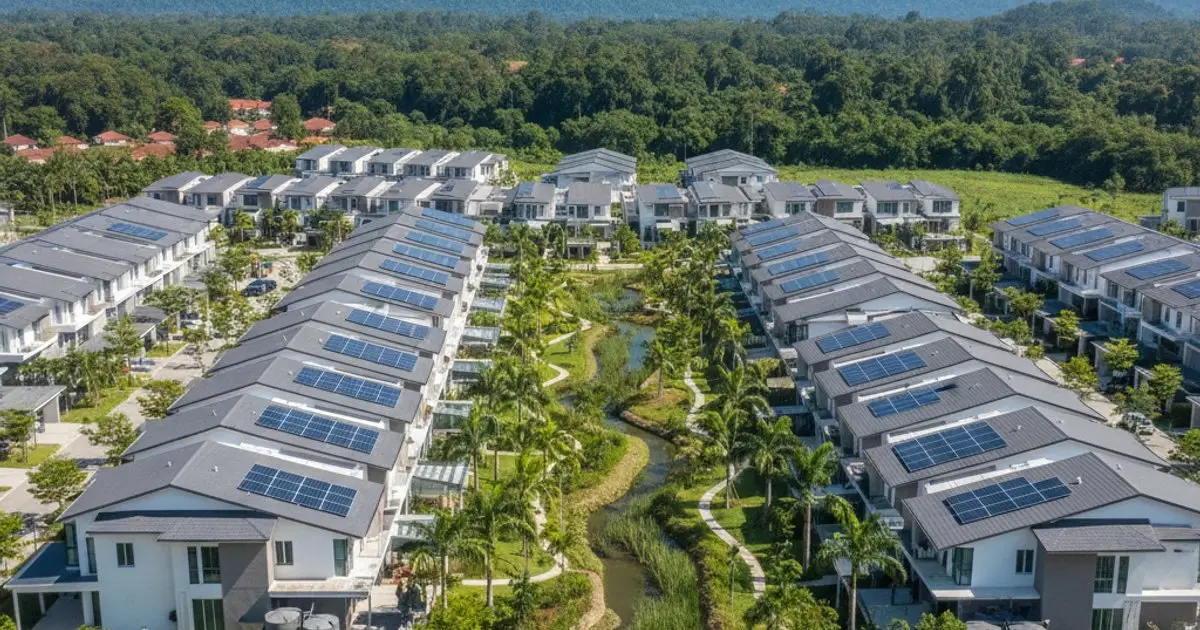
MM2H applicants may demonstrate environmental commitment through various avenues, including direct investments in certified green projects, participation in approved conservation programs, or by providing evidence of eco-friendly living practices. The exact mechanisms are still being formulated, but the intent is to offer flexible options that cater to diverse applicant profiles while ensuring genuine contributions.
Consider this: an applicant might invest in a Malaysian solar farm, contribute to a marine conservation fund, or even commit to purchasing property built to specific green building standards. MM2H Global, a leading consultancy for the program, suggests that a tiered system could be implemented, offering different pathways to meet the sustainability criteria. For instance, a direct investment of RM 500,000 (approximately USD 106,000) into a government-approved green bond might satisfy one tier, while volunteering 100 hours annually with a recognized environmental NGO could satisfy another. The Malaysian Green Technology and Climate Change Corporation (MGTC) has identified over 200 certified green projects nationwide that could potentially qualify for such investments.
Comparing Current MM2H Requirements with Potential Green Additions
The current MM2H program primarily focuses on financial stability, requiring applicants to demonstrate liquid assets and a stable offshore income. The potential green additions would introduce a new dimension, requiring a demonstrable commitment to environmental sustainability alongside these financial benchmarks, creating a more holistic assessment of an applicant’s value to Malaysia.
| 需求類別 | Current MM2H Criteria (as of June 2026) | Potential Green MM2H Criteria (Proposed) |
|---|---|---|
| Financial Proof | Liquid assets of RM 1.5 million; Offshore income of RM 40,000/month | No direct change, but green investments could count towards overall contribution |
| 定期存款 | RM 1 million (with partial withdrawal for approved expenses) | No direct change, but green bonds/funds could be alternative investment options |
| Environmental Contribution | None explicitly required | Investment in green sectors, participation in conservation, eco-friendly living plan |
| Community Engagement | None explicitly required | Potential for mandatory volunteer hours in environmental initiatives |
| 財產所有權 | Minimum purchase of RM 600,000 | Potential for incentives or requirements for green-certified properties |

What Are the Benefits of a Greener MM2H Program?
A greener MM2H program offers multiple benefits, including attracting environmentally conscious high-net-worth individuals, boosting investment in Malaysia’s green economy, and enhancing the country’s reputation as a sustainable destination. This strategic move could also foster greater community engagement in conservation efforts and support local environmental initiatives, creating a win-win for both applicants and the nation.
This isn’t just about ticking boxes; it’s about building a better future. By drawing in individuals who are not only financially capable but also environmentally aware, Malaysia strengthens its position as a leader in sustainable development within Southeast Asia. The World Economic Forum’s 2024 report highlighted that countries with robust environmental policies are increasingly preferred by skilled migrants and investors. Furthermore, the influx of green investments could accelerate the development of renewable energy infrastructure and eco-tourism projects, directly contributing to job creation and economic diversification. The Malaysian Investment Development Authority (MIDA) reported a 25% increase in green technology investments in 2025 compared to the previous year, a trend a greener MM2H could further amplify.
Impact on Malaysia’s Green Economy and Conservation Efforts
The greener MM2H program is poised to significantly impact Malaysia’s green economy and conservation efforts by channeling foreign capital and expertise into critical environmental sectors. This influx can accelerate the development of sustainable industries, fund vital conservation projects, and raise overall environmental awareness among the expatriate community, creating a powerful ripple effect.
Imagine this: an MM2H applicant invests in a mangrove reforestation project in Sarawak, or finances a sustainable agriculture initiative in Cameron Highlands. These aren’t hypothetical scenarios; they become tangible possibilities under the proposed criteria. The Department of Wildlife and National Parks (PERHILITAN) has identified several critical conservation areas requiring funding, and the MM2H program could become a new, consistent source. Moreover, the presence of environmentally engaged expats can foster a culture of sustainability, influencing local communities and businesses. According to a 2025 study by Universiti Malaya, foreign direct investment in green sectors has a multiplier effect of 1.8x on local economies, meaning every ringgit invested generates RM 1.80 in economic activity.
What Challenges Might a Greener MM2H Face?
Implementing a greener MM2H program will likely face challenges, including establishing clear, verifiable criteria, ensuring fair assessment, and avoiding bureaucratic hurdles that could deter potential applicants. The government will need to develop robust frameworks to authenticate green investments and contributions, ensuring the program remains attractive while achieving its environmental objectives.
One major hurdle is defining ‘green’ in a way that is both universally understood and locally relevant. What constitutes a legitimate green investment? How will conservation efforts be monitored and verified? MM2H Global suggests that collaboration with established environmental NGOs and government agencies like the Department of Environment (DOE) will be crucial to developing transparent and credible guidelines. There’s also the risk of ‘greenwashing,’ where superficial efforts are presented as substantial contributions. The government must implement stringent auditing processes to prevent this. A 2024 report by Transparency International highlighted that vague environmental criteria in similar programs globally often lead to exploitation and undermine genuine efforts. Clear communication and a streamlined application process will be vital to maintain the program’s appeal.
Ensuring Transparency and Verifiability of Green Contributions
Ensuring transparency and verifiability of green contributions is paramount to the success and integrity of a greener MM2H program. This will require establishing clear guidelines, working with accredited environmental organizations, and implementing robust monitoring and reporting mechanisms to track the impact of applicants’ commitments, building trust in the program’s environmental objectives.
The government could mandate third-party verification for green investments, similar to how financial audits are conducted. For conservation efforts, partnerships with established bodies like the Malaysian Nature Society (MNS) or WWF-Malaysia could provide credible oversight. Digital platforms might also play a role in tracking contributions and reporting progress, offering a transparent ledger of environmental impact. The goal is to create a system that is both rigorous and user-friendly, encouraging genuine participation without creating undue burden. The Ministry of Finance has indicated it is exploring blockchain technology for tracking green bond investments, which could offer an immutable record of contributions.

常見問答
MM2H 計劃是什麼?
The MM2H program, or ‘Malaysia My Second Home,’ is a long-term social visit pass initiative introduced by the Malaysian government. It allows foreigners who meet specific financial and other criteria to reside in Malaysia for an extended period, typically 10 years, with the option for renewal. It does not confer permanent residency or citizenship.
When are the new sustainability criteria expected to be implemented?
As of June 21, 2026, the new sustainability criteria are still under consideration and discussion within relevant government ministries. While no definitive timeline has been announced, sources suggest the government aims for implementation within the next 12 to 18 months, following public consultation and final policy approval.
Will existing MM2H visa holders be affected by these changes?
Typically, changes to the MM2H program apply to new applicants or those seeking renewal. It is highly unlikely that existing MM2H visa holders would be retroactively subjected to these new environmental sustainability criteria, but they may be encouraged to participate in voluntary green initiatives.
Can environmental investments replace financial requirements for MM2H?
It is improbable that environmental investments would entirely replace the core financial requirements of the MM2H program. Instead, they are expected to be an additional layer of criteria, supplementing the existing financial benchmarks. The program still aims to attract individuals with significant financial stability.
Where can I find official information about the MM2H program?
Official and up-to-date information about the MM2H program can be found on the websites of the Malaysian Ministry of Tourism, Arts and Culture (MOTAC) or the Immigration Department of Malaysia. Prospective applicants should always refer to these official sources or consult with reputable, licensed MM2H agents for accurate guidance.
How will ‘eco-friendly living practices’ be assessed?
The assessment of ‘eco-friendly living practices’ is still being defined. It could involve submitting a personal sustainability plan, demonstrating a commitment to reducing carbon footprint, or providing evidence of participation in local environmental clean-up drives. The goal is to encourage genuine behavioral changes and contributions.
Will there be a specific list of approved green investments?
It is anticipated that the government will provide a specific list of approved green investments or categories that qualify under the new MM2H criteria. This list would likely include investments in renewable energy, sustainable agriculture, eco-tourism development, and certified conservation projects, guided by bodies like MGTC.
Last updated: June 21, 2026