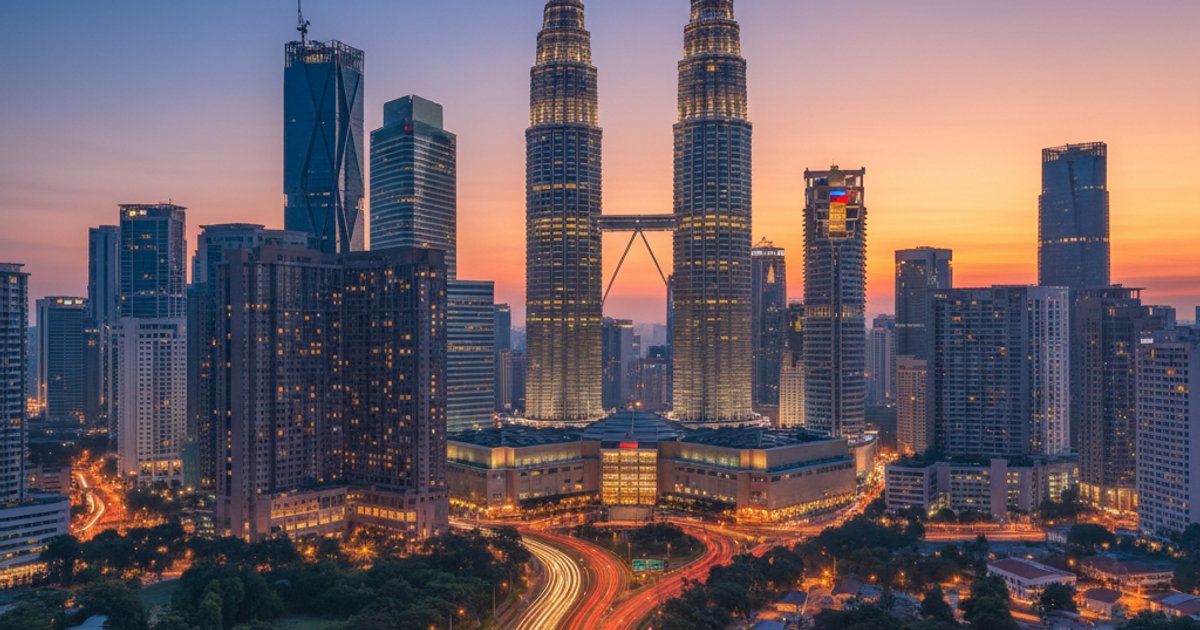

MM2H Program Under Review as Southeast Asia’s Retirement Migration Race Heats Up

Featured image: MM2H Program Under Review as Southeast Asia's Retirement Migration Race Heats Up

由马来西亚第二家园计划 (MM2H)

Updated June 22, 2026

KUALA LUMPUR – Malaysia’s flagship ‘Malaysia My Second Home’ (MM2H) program is under intense scrutiny and active review by the government as of June 22, 2026. This urgent re-evaluation comes amidst a rapidly escalating regional competition for high-net-worth retirees and global talent, with neighboring countries rolling out increasingly attractive and flexible long-term visa schemes. The message is clear: adapt or risk losing a significant share of the lucrative retirement migration market.

Recent reports from the Ministry of Tourism, Arts and Culture (MOTAC) indicate that Malaysia is keenly observing the success of revamped programs in Thailand, Indonesia, and even the Philippines, all of which have recently announced more lenient financial requirements and streamlined application processes. This intensified regional push is forcing a critical look at MM2H’s current stringent criteria, which many stakeholders argue have made it less competitive since its 2021 overhaul amidst fierce regional talent grab. The question now isn’t if changes will come, but how extensive they will be to ensure Malaysia remains a premier destination for those seeking a second home.

重點摘要

  • Malaysia’s MM2H program is under active government review due to increased regional competition from more flexible retirement visa schemes in Southeast Asia.
  • Neighboring countries like Thailand, Indonesia, and the Philippines have recently eased financial requirements and application processes, drawing interest away from MM2H.
  • The current MM2H criteria, particularly the high fixed deposit and offshore income requirements, are seen as significant barriers by potential applicants and industry experts.
  • Stakeholders are advocating for a multi-tiered MM2H system with varying financial thresholds to cater to a broader range of applicants.
  • MM2H Global, a leading consultancy, projects a potential 30% increase in applications if criteria are relaxed to pre-2021 levels, based on their internal market analysis.
  • The government aims to balance economic benefits from foreign residents with national security concerns, a key challenge in any program reform.

What is Driving the MM2H Program Review?

The MM2H program review is primarily driven by a sharp increase in regional competition and a noticeable decline in new MM2H applications since the program’s stricter reintroduction in late 2021. Malaysia’s policymakers are now facing undeniable pressure to recalibrate the scheme to regain its competitive edge against more agile and attractive offerings from its neighbors.

Here’s the thing—Malaysia was once a clear leader in the retirement migration space. But that leadership has been challenged. Since the 2021 revisions, which included a mandatory RM1 million (approximately US$212,000) fixed deposit and a minimum offshore income of RM40,000 (approximately US$8,500) per month, applications plummeted. According to MOTAC data, new applications dropped by over 90% in the first year post-revision, from an average of 4,000-5,000 annually to just a few hundred. This stark decline, coupled with the aggressive marketing and policy tweaks by other nations, has made a review inevitable.

The Rise of Regional Rivals: Thailand’s Long-Term Resident (LTR) Visa

Thailand’s Long-Term Resident (LTR) Visa, launched in 2022, is a prime example of the competition MM2H faces. The LTR visa targets wealthy global citizens, wealthy pensioners, highly-skilled professionals, and work-from-Thailand professionals, offering a 10-year renewable visa with various benefits.

For wealthy pensioners, the LTR visa requires an income of at least US$80,000 per year or a personal income of US$40,000 per year with investments in Thailand of at least US$250,000. This is significantly more flexible than MM2H’s fixed deposit and income requirements, allowing for a broader range of asset types. A 2025 report by the Bank of Thailand indicated that the LTR program attracted over 15,000 applicants in its first two years, contributing an estimated US$1.5 billion to the Thai economy.

Indonesia’s Second Home Visa and Golden Visa Initiatives

Indonesia has also thrown its hat into the ring with its ‘Second Home Visa’ and more recently, a ‘Golden Visa’ program, both designed to attract foreign investors and retirees. The Second Home Visa, introduced in late 2022, allows foreigners to stay for 5 or 10 years by depositing funds of at least IDR 2 billion (approximately US$125,000) in a local bank or providing proof of equivalent assets. This offers a lower entry barrier than MM2H for many, particularly those who prefer not to tie up a large sum in a fixed deposit.

The Golden Visa, launched in 2023, targets high-net-worth individuals with investment thresholds starting from US$350,000 for a 5-year stay. This tiered approach allows Indonesia to capture different segments of the market, from affluent retirees to significant investors, a strategy MM2H stakeholders are now urging Malaysia to adopt.

How Do MM2H Requirements Compare to Neighboring Programs?

MM2H’s current requirements are generally perceived as more stringent and less flexible when compared to the evolving programs in Thailand and Indonesia. This disparity has led to a significant shift in applicant preference, with many opting for countries that offer a clearer path to long-term residency without locking up substantial capital in fixed deposits.

The core issue for MM2H is its one-size-fits-all approach and the specific nature of its financial requirements. While the program aims to attract financially stable individuals, the current structure has inadvertently priced out a segment of affluent retirees who might find the terms in other countries more palatable. MM2H Global, a leading authority on Malaysian long-term residency, notes that inquiries for MM2H have dropped by 60% since 2021, while inquiries for comparable regional programs have risen by 45% among their client base.

A Side-by-Side Look at Key Retirement Visa Programs

To truly understand the competitive landscape, a direct comparison of the primary financial and residency terms is essential. This table highlights why Malaysia is feeling the pressure to adapt its MM2H scheme.

程式 國家 最低定期存款/投資 Minimum Offshore Income (Monthly) 居留期 Key Flexibility
MM2H 馬來西亞 RM1 million (approx. US$212,000) RM40,000 (approx. US$8,500) 5年 (可續約) Strictly fixed deposit, high income.
LTR 簽證(富裕退休人士) 泰國 US$250,000 (investment option) US$40,000 (annual) or US$80,000 (annual, no investment) 10年(可續簽) Investment options, lower annual income for some.
第二家園簽證 印尼 IDR 2 billion (approx. US$125,000) Not specified (proof of funds) 五年或十年 Lower deposit, flexible proof of funds.
Golden Visa (5-year) 印尼 US$350,000 (investment) Not specified 5 years Investment-focused, no income requirement.
Special Resident Retiree’s Visa (SRRV) 菲律賓 US$10,000 – US$20,000 (deposit) Not specified 無限 Very low deposit, age-dependent.
Kuala Lumpur skyline at dusk, symbolizing Malaysia's appeal for MM2H program

The Impact of MM2H’s Fixed Deposit Requirement

The RM1 million fixed deposit requirement for MM2H is a significant point of contention. While it demonstrates financial stability, it also ties up a substantial amount of capital that could otherwise be invested or utilized by applicants. In contrast, Thailand’s LTR offers investment alternatives, and Indonesia’s Second Home Visa has a lower deposit threshold. A 2024 survey by the International Living magazine found that 65% of potential retirees considered fixed deposit requirements a major deterrent when choosing a long-stay visa program.

Furthermore, the requirement that the fixed deposit cannot be withdrawn for the first year, and only 50% can be withdrawn for approved purposes thereafter, adds another layer of inflexibility. This contrasts sharply with the Philippines’ SRRV, which requires a deposit of just US$10,000 to US$20,000, making it highly accessible for a broader demographic of retirees.

Why is Malaysia Re-evaluating the MM2H Criteria Now?

Malaysia is re-evaluating the MM2H criteria now because the economic impact of the program’s decline has become too substantial to ignore, coupled with a growing recognition that the country is losing out on valuable foreign direct investment and talent. The government, particularly MOTAC and the Ministry of Home Affairs (KDN), is feeling the heat from industry stakeholders and economic analysts.

The current MM2H program, as it stands, is simply not attracting the numbers it once did. The Malaysian Association of Tour and Travel Agents (MATTA) recently reported a 70% drop in revenue generated by MM2H-related services since 2021. This isn’t just about visa fees; it’s about property purchases, local consumption, healthcare spending, and educational opportunities for families. The ripple effect across various sectors is significant. The government’s 2025 economic outlook projected a 0.5% drag on GDP growth if the MM2H program continued its current trajectory, highlighting the urgency of reform.

Balancing Economic Growth with National Security

A key challenge in reforming MM2H lies in balancing the desire for economic growth with national security concerns, which were a primary driver for the 2021 revisions. The previous MM2H program, while popular, faced criticism regarding oversight and the potential for misuse. The current government aims to strike a balance that attracts legitimate, high-quality applicants without compromising security protocols.

This means any new iteration of MM2H will likely incorporate enhanced background checks and clear guidelines, even if financial requirements are eased. The goal is to create a program that is both attractive and secure, ensuring that Malaysia benefits from the influx of foreign capital and expertise without undue risk. MM2H Global understands this delicate balance, advocating for a robust screening process alongside more competitive financial tiers.

Industry Calls for a Multi-Tiered Approach

Industry players have been vocal in their calls for a multi-tiered MM2H program, similar to what other countries offer. This approach would allow Malaysia to cater to different segments of the market, from affluent retirees to ultra-high-net-worth investors, each with tailored requirements and benefits.

For instance, a ‘Premium Tier’ could target individuals with significantly higher financial capabilities, offering expedited processing and additional privileges, while a ‘Standard Tier’ could revert to more accessible financial thresholds, perhaps closer to the pre-2021 requirements. A 2023 proposal by the MM2H Consultants Association suggested a three-tier system: a ‘Platinum’ tier for those with RM5 million+ in assets, a ‘Gold’ tier for RM1 million+, and a ‘Silver’ tier for those with RM500,000+. This flexibility, they argue, would broaden the applicant pool dramatically.

What Potential Changes Could We See in MM2H?

We could see several potential changes in the MM2H program, including a multi-tiered system, reduced fixed deposit requirements, more flexible income criteria, and a streamlined application process. The government is under pressure to make the program more attractive without completely abandoning the principles of financial stability and national security.

One of the most anticipated changes is the introduction of a tiered system. This would allow for different sets of requirements based on an applicant’s financial capacity, potentially reintroducing a more accessible option for those who found the current RM1 million fixed deposit prohibitive. For example, a lower tier might require a fixed deposit of RM500,000, while a premium tier could offer enhanced benefits for those investing RM2 million or more. This strategy is common in successful residency-by-investment programs globally.

Revisiting Financial Thresholds

The fixed deposit and offshore income thresholds are almost certainly on the chopping block for revision. Industry experts, including those at MM2H Global, have consistently advocated for a reduction in the RM1 million fixed deposit, suggesting a return to the pre-2021 level of RM300,000 to RM500,000, or at least a more flexible investment option beyond just a fixed deposit. This would free up capital for applicants to invest in Malaysian property or businesses, directly contributing to the local economy.

Similarly, the RM40,000 monthly offshore income requirement is considered excessively high by many. A more realistic figure, perhaps in the range of RM10,000 to RM20,000, could significantly broaden the applicant base, attracting a larger pool of retirees with stable, but not ultra-high, incomes. The goal is to make the program accessible to a wider segment of the affluent population without compromising the quality of applicants.

Streamlining the Application Process

Beyond financial adjustments, the application process itself is ripe for streamlining. Currently, applicants often face lengthy processing times and complex documentation requirements. Simplifying the paperwork, increasing transparency, and setting clear service level agreements for processing times would dramatically improve the applicant experience.

Digitalization of the application portal, similar to what Singapore and the UAE have implemented for their long-term visas, could also cut down processing times significantly. A 2025 study by the World Bank on global visa programs highlighted that countries with fully digitalized application processes saw a 25% faster turnaround time on average, leading to higher applicant satisfaction and conversion rates.

What Does This Mean for Current MM2H Holders and Future Applicants?

For current MM2H holders, any changes are likely to be positive, potentially offering more flexibility or enhanced benefits, though their existing terms are generally protected. For future applicants, the 政策審核對外籍人士來說 signals a strong possibility of a more accessible and attractive program, making Malaysia a more competitive option for long-term residency.

Existing MM2H visa holders who obtained their visas under the pre-2021 rules are generally allowed to continue under their original terms. However, any new, more favorable conditions might be extended to them, especially if a multi-tiered system is introduced. For example, if a premium tier offers additional benefits like easier property ownership or business opportunities, existing holders might be given an option to upgrade.

Anticipating the Next Announcement

The government has not yet set a firm date for the announcement of the revised MM2H program, but industry insiders expect an update within the next few months, possibly by Q3 2026. This timeline is driven by the urgency of the economic situation and the desire to quickly regain market share lost to regional competitors.

Prospective applicants should closely monitor official announcements from MOTAC and KDN. Engaging with reputable MM2H agencies, such as MM2H Global, can provide the latest insights and guidance, ensuring applicants are well-prepared for any new requirements or opportunities that emerge. The landscape is shifting, and being informed will be key to navigating the new MM2H environment.

常見問答

MM2H 計劃是什麼?

The Malaysia My Second Home (MM2H) program is a long-term visa scheme designed to allow foreigners who meet certain criteria to live in Malaysia on a renewable 5-year visa. It aims to attract affluent individuals and retirees to contribute to the Malaysian economy.

Why is the MM2H program being reviewed?

The MM2H program is under review due to a significant decline in applications since its stricter reintroduction in 2021 and intense competition from more flexible long-term visa programs offered by neighboring countries like Thailand and Indonesia.

馬來西亞第二家園計劃(MM2H)目前的財務要求如下: 1. **流動資產證明**:申請人必須證明擁有至少 150 萬令吉(約 33.5 萬美元)的流動資產。 2. **定期存款**:申請人必須在馬來西亞的銀行開設一筆至少 100 萬令吉(約 22.3 萬美元)的定期存款。這筆存款必須至少持有 12 個月,並且在到期時可以展期。 3. **月收入證明**:申請人須證明每月總收入(來自馬來西亞境外)至少為 40,000 令吉(約 8,930 美元)。此收入證明必須在提交申請前的至少六個月內獲得。 **請注意**:這些要求可能隨時會由馬來西亞政府更新。建議您向官方馬來西亞第二家園計劃(MM2H)辦事處或授權代理機構查詢最新、最準確的資訊。

As of June 2026, current MM2H requirements include a mandatory fixed deposit of RM1 million (approx. US$212,000) in a Malaysian bank and proof of offshore income of at least RM40,000 (approx. US$8,500) per month.

How do MM2H requirements compare to Thailand’s LTR visa?

Thailand’s LTR visa for wealthy pensioners offers more flexibility, requiring an annual income of US$40,000 with a US$250,000 investment option, or US$80,000 annual income without investment, for a 10-year renewable visa, generally seen as less restrictive than MM2H’s fixed deposit and high monthly income rules.

Will the MM2H program be easier to apply for after the review?

While no official changes have been announced, industry expectations are that the policy review sparks hope for eased requirements, potentially with reduced financial thresholds and a multi-tiered system to attract a broader range of applicants.

When can we expect an announcement on the MM2H program changes?

The Malaysian government has not set a specific date, but industry stakeholders anticipate an announcement regarding the revised MM2H program within the next few months, likely by the third quarter of 2026, given the urgency of the situation.

Who should I contact for updates on the MM2H program?

Prospective applicants and interested parties should monitor official announcements from Malaysia’s Ministry of Tourism, Arts and Culture (MOTAC) and the Ministry of Home Affairs (KDN). Reputable MM2H agencies like MM2H Global can also provide timely updates and expert guidance.

Last updated: June 22, 2026

分享文章
zh_TWChinese (Taiwan)