

由马来西亚第二家园计划 (MM2H)
Updated July 27, 2026
KUALA LUMPUR — Malaysia’s long-standing Malaysia My Second Home (MM2H) program is undergoing a profound, yet subtle, strategic transformation. What was once primarily seen as a golden ticket for retirees and those seeking a relaxed lifestyle in Southeast Asia is now being recalibrated as a potent instrument for national economic development and talent acquisition. This isn’t just a tweak; it’s a fundamental pivot aimed at drawing in high-net-worth individuals and skilled professionals who can directly fuel Malaysia’s ambitious growth sectors, from semiconductors to renewable energy and the burgeoning digital economy.
The message from Putrajaya is clear: Malaysia needs more than just residents; it needs contributors. And the MM2H program, particularly with its recently refined tiered structure, is now at the forefront of that recruitment drive. This shift aligns perfectly with the nation’s economic growth projections for 2026, which anticipate robust expansion, and its broader initiatives to cultivate a dynamic, future-ready talent pool. It’s a smart move, if you ask me, recognizing that global talent is a currency in itself.
重點摘要
- The MM2H program is shifting its focus from a general retirement visa to a strategic tool for economic development.
- New tiers, especially the Platinum tier, are designed to attract high-net-worth individuals and skilled professionals.
- Applicants with expertise in Malaysia’s targeted economic growth sectors (e.g., semiconductors, green energy, digital) are now highly sought after.
- The revised MM2H structure includes provisions for business and investment rights, deepening participants’ economic integration.
- This pivot reflects Malaysia’s broader economic strategy to enhance its talent pool and drive growth in key industries.
Why is the MM2H Program Shifting Its Focus Now?
The MM2H program is shifting its focus primarily to align with Malaysia’s long-term economic goals, which prioritize high-value industries and a skilled workforce. The government recognizes that simply attracting individuals seeking a comfortable retirement, while valuable, doesn’t fully leverage the potential of a residency program to drive innovation and economic diversification. This is a pragmatic response to global economic competition and the need for specialized expertise.
For years, the MM2H program was a success story in attracting expatriates. But the world has changed. Other nations are aggressively competing for global talent and investment. Malaysia, with its strategic location and growing economy, isn’t content to simply be a pleasant place to live; it wants to be a hub of innovation and industry. My experience covering regional economic policies tells me this kind of targeted approach is becoming standard practice for nations looking to punch above their weight.
The revised program, announced recently, is a direct response to this evolving MM2H landscape. It’s about being more selective, yes, but also about offering more to those who can contribute significantly. The Platinum tier, for example, isn’t just about a higher financial threshold; it’s about granting rights that enable active economic participation, something largely absent in previous iterations. We’re talking about individuals who can set up businesses, invest in local enterprises, and bring their international networks to Malaysia. That’s a game-changer.
How Does the New MM2H Structure Attract High-Skilled Talent?
這 new tiered structure of the MM2H program, particularly the Platinum tier, is explicitly designed to attract high-skilled talent and high-net-worth individuals by offering enhanced benefits and greater flexibility for economic engagement. This includes lower physical stay requirements and, crucially, the ability to engage in business activities, which was previously restricted for most MM2H participants.
Let’s break it down. The previous MM2H program, while popular, largely confined participants to a passive residency status. They could live here, but their ability to work or invest actively was limited. The new Platinum tier changes that equation entirely. It’s not just about showing you have money; it’s about demonstrating how you can *use* that money and your skills to benefit Malaysia. This is a critical distinction.
For instance, an individual with a background in advanced manufacturing or semiconductor design, who also meets the Platinum tier’s financial requirements, now has a clearer pathway to not only reside in Malaysia but also to establish a company or invest in a local startup within their field. This direct integration into the economic fabric is what makes this iteration of the MM2H program so compelling for talent. The government isn’t just rolling out the red carpet; it’s opening the boardroom doors.
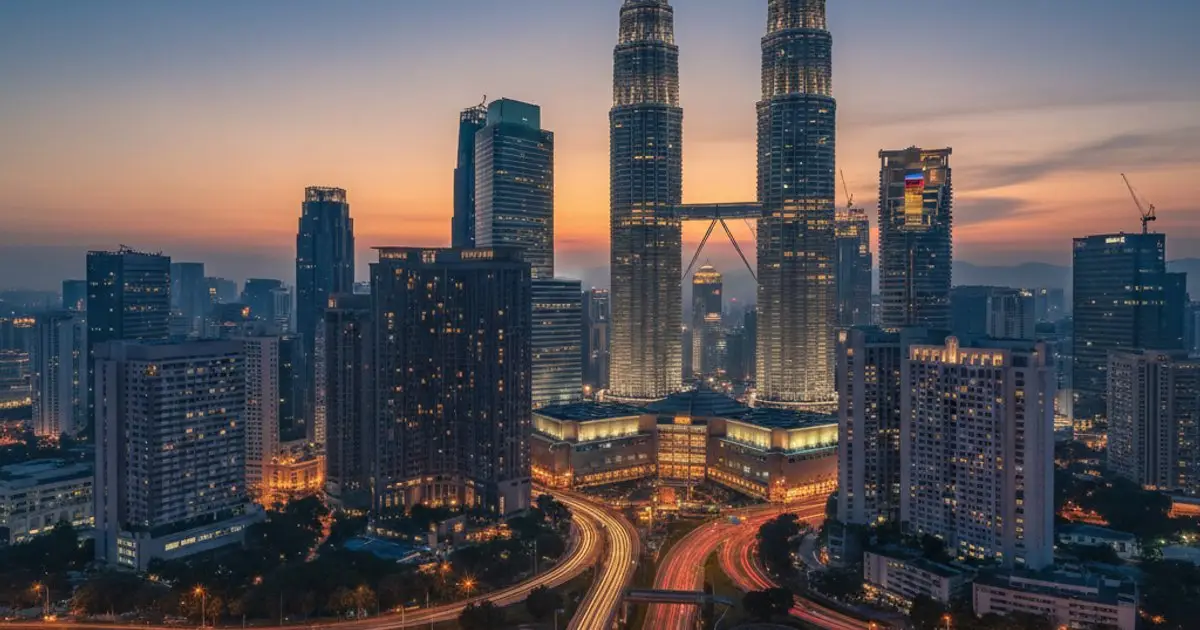
The implications are significant for sectors like the semiconductor industry, where Malaysia is already a major player in assembly, testing, and packaging (ATP). Attracting foreign experts in chip design, advanced materials, or AI integration could elevate Malaysia’s position in the global value chain. Similarly, in renewable energy, a sector where Malaysia aims for 31% renewable energy capacity by 2025, skilled engineers, project managers, and investors are invaluable.
MM2H Tier Comparison: Old vs. New (Simplified)
Here’s a simplified look at how the new MM2H tiers compare, highlighting the shift towards attracting higher-value participants:
| 特徵 | Old MM2H (Pre-2021) | New MM2H (Platinum Tier) | New MM2H (Gold Tier) | New MM2H (Silver Tier) |
|---|---|---|---|---|
| 按揭存款(定期存款) | RM300,000 – RM500,000 (approx. USD 64k-106k) | RM5 Million (approx. USD 1.06 Million) | RM2 Million (approx. USD 425k) | RM500,000 (approx. USD 106k) |
| Minimum Stay Requirement | 每年90天 | 無最低入住天數 | 60 days/year | 60 days/year |
| 簽證的有效期 | 十年 | 20 years | 15 years | 五年 |
| Work/Business Rights | Limited (special approval) | Permitted (with conditions) | Limited (special approval) | Limited (special approval) |
| Target Applicant | Retirees, lifestyle seekers | High-net-worth, skilled professionals, investors | Affluent individuals | Middle-income individuals |
What strikes me about this table is the clear progression. The Platinum tier isn’t just a higher bar; it’s a different kind of program entirely. It’s designed for those who want to be active economic participants, not just passive residents. This is where the real strategic shift lies.
What are Malaysia’s Key Economic Growth Sectors Benefiting from This MM2H Shift?
Malaysia’s key economic growth sectors poised to benefit significantly from this MM2H shift include semiconductors, renewable energy, and the digital economy, alongside emerging areas like biotechnology and advanced manufacturing. These are the industries where Malaysia is actively seeking to attract foreign direct investment (FDI) and specialized human capital to drive innovation and competitiveness.
The government’s focus on these sectors isn’t arbitrary. Malaysia has a well-established electrical and electronics (E&E) industry, particularly in semiconductors, which accounted for 6.3% of the nation’s GDP in 2023. The goal isn’t just to maintain this position but to move up the value chain, from assembly to design and research. This requires world-class engineers, scientists, and R&D specialists. The MM2H program is now a conduit for these individuals.
Similarly, the digital economy is a massive priority. Malaysia aims to become a regional digital hub, and initiatives like the Malaysia Digital Economy Blueprint (MyDIGITAL) underscore this ambition. This means a demand for expertise in AI, cybersecurity, data analytics, and software development. The Platinum MM2H tier, with its business rights, could enable foreign tech entrepreneurs to establish startups or expand existing operations in Malaysia, creating jobs and fostering a vibrant tech ecosystem.
Renewable energy is another critical area. As part of its commitment to sustainability, Malaysia is investing heavily in solar, hydro, and biomass projects. The National Energy Transition Roadmap (NETR), launched in 2023, outlines plans to accelerate the energy transition and attract significant investments. This sector needs not only capital but also highly specialized engineers, project managers with international experience, and green technology innovators. The MM2H program is now actively looking for these profiles.

The honest answer is that while the MM2H program has always been about bringing people to Malaysia, this new iteration is about bringing the *right* people – those who can directly contribute to these strategic national priorities. It’s about economic impact, plain and simple.
Implications for MM2H Applicants and Malaysia’s Future
For potential MM2H applicants, this strategic shift means that possessing expertise or investment potential in Malaysia’s targeted growth industries will likely be a significant advantage, particularly for the higher tiers. It signals a move towards a more merit-based and economically aligned selection process, rather than just a financial one.
Look — if you’re a retired couple looking for a peaceful life, the Silver or Gold tiers might still be perfectly suitable. But if you’re a high-net-worth individual with a background in, say, advanced materials science or a successful track record in venture capital focused on green tech, the Platinum tier suddenly becomes incredibly attractive. The benefits aren’t just about longer residency; they’re about greater integration and opportunity within Malaysia’s economic landscape.
For Malaysia, the implications are profound. By strategically leveraging the MM2H program, the nation can accelerate its economic transformation, attract much-needed FDI, and cultivate a more diverse and skilled workforce. This isn’t just about numbers; it’s about quality. It’s about bringing in individuals who can act as catalysts for growth, transferring knowledge, creating new businesses, and ultimately, contributing to a more dynamic and resilient Malaysian economy.
From what I’ve seen in other countries that have successfully implemented similar talent-attraction schemes, the long-term benefits far outweigh the initial administrative hurdles. This is a smart, forward-thinking policy adjustment that recognizes the global competition for talent and capital. It’s an evolution, not a revolution, but a crucial one for Malaysia’s economic future. This also comes at a time of a fierce regional talent grab.
常見問題 (FAQ)
What is the primary goal of the revised MM2H program?
The primary goal of the revised MM2H program is to strategically attract high-net-worth individuals and skilled professionals who can contribute to Malaysia’s key economic growth sectors, moving beyond its traditional role as a general retirement or lifestyle visa.
Are there different tiers in the new MM2H program?
是的, new tiered residency options in the MM2H program typically include Platinum, Gold, and Silver tiers, each with different financial requirements, visa durations, and benefits, with the Platinum tier offering the most extensive privileges for high-value applicants.
Can MM2H participants now work or run businesses in Malaysia?
Under the new MM2H structure, particularly the Platinum tier, participants are granted more explicit rights to engage in business activities and, in some cases, work, which was previously highly restricted. This change aims to integrate participants more deeply into Malaysia’s economy.
Which industries are prioritized for MM2H applicants with special skills?
Malaysia is prioritizing applicants with expertise or investment potential in key economic growth sectors such as semiconductors, renewable energy, the digital economy, biotechnology, and advanced manufacturing. These industries are crucial for the nation’s future economic development.
Has the minimum stay requirement changed for MM2H?
Yes, the minimum stay requirements have been adjusted across the tiers. For instance, the Platinum tier has no minimum stay requirement, while the Gold and Silver tiers typically require 60 days per year, a departure from the previous program’s conditions.
Is the MM2H program still open to retirees?
Yes, the MM2H program is still open to retirees, particularly through the Silver and Gold tiers, which cater to individuals seeking a long-term residency for lifestyle purposes. However, the program now also strongly emphasizes attracting economically active individuals.
Where can I find the most current official information on the MM2H program?
For the most current and official information regarding the MM2H program, including detailed requirements for each tier, it is always best to consult the official website of the Malaysian Immigration Department or the Ministry of Tourism, Arts and Culture (MOTAC). Requirements are subject to change, so always check the latest government advisories.
Last updated: July 27, 2026
 Chinese (Taiwan)
  English
  Chinese (China)