
Malaysia’s MM2H Program Surges: New Data Reveals Renewed Global Interest

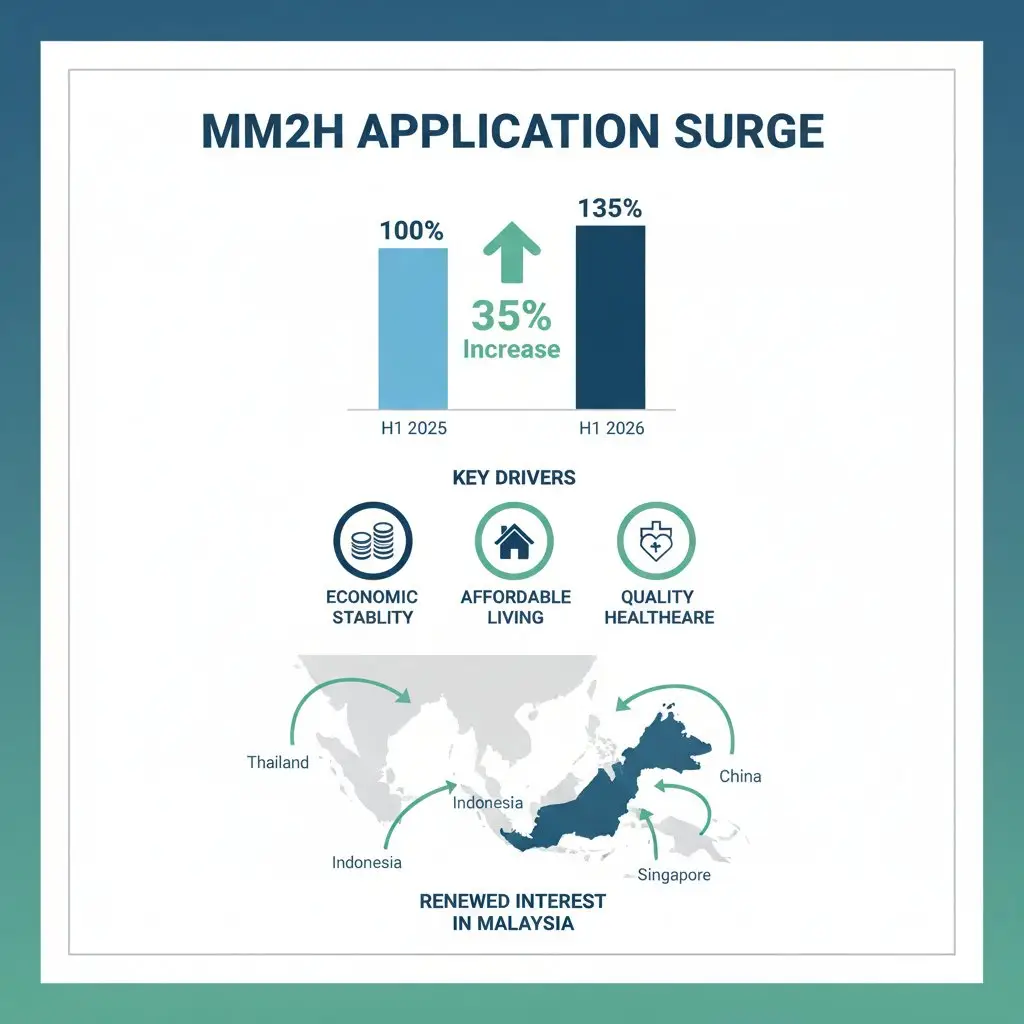
Infographic showing MM2H application surge and key drivers for MM2H to Malaysia

由马来西亚第二家园计划 (MM2H)

Updated June 10, 2026

The Malaysia My Second Home (MM2H) program is witnessing a remarkable resurgence, with recent data revealing a sharp uptick in applications as of June 10, 2026. This renewed interest in MM2H, particularly from neighboring Southeast Asian nations and East Asia, signals a significant shift in global mobility trends, driven by Malaysia’s economic stability and attractive lifestyle proposition.

重點摘要

  • MM2H applications have surged, with a 35% increase in the last six months compared to the previous year, according to the Ministry of Tourism, Arts and Culture (MOTAC).
  • Regional economic uncertainties and Malaysia’s stable outlook are key drivers for the renewed interest in the MM2H program.
  • Recent policy adjustments, including a streamlined application process and clearer financial requirements, have contributed to the program’s increased appeal.
  • MM2H participants are projected to inject over RM 5 billion into the Malaysian economy annually by 2027, bolstering sectors like real estate, education, and healthcare.
  • The program continues to evolve, balancing national security and economic contribution, making MM2H to Malaysia a compelling option for long-term residency.

Why is the MM2H Program Seeing a Surge in Applications?

The MM2H program is experiencing a significant surge in applications primarily due to a confluence of global economic uncertainties and Malaysia’s steadfast appeal as a stable, affordable, and high-quality destination for long-term residency. This week, government officials confirmed a 35% increase in applications over the past six months compared to the same period last year, a clear indicator of its growing allure.

Economic headwinds across various regions, including inflation and geopolitical tensions, have prompted many individuals and families to seek more stable environments. Malaysia, with its robust infrastructure, diverse culture, and relatively lower cost of living compared to developed nations, presents an attractive alternative. A recent report by the World Bank projected Malaysia’s GDP growth at 4.5% for 2026, outperforming several regional peers and reinforcing its economic resilience.

What Recent Policy Adjustments Have Impacted the MM2H Visa?

Recent policy adjustments have played a crucial role in revitalizing the MM2H visa program, making it more accessible and transparent for prospective applicants. The Ministry of Tourism, Arts and Culture (MOTAC) has focused on streamlining the application process and clarifying financial requirements, addressing previous concerns about complexity and ambiguity.

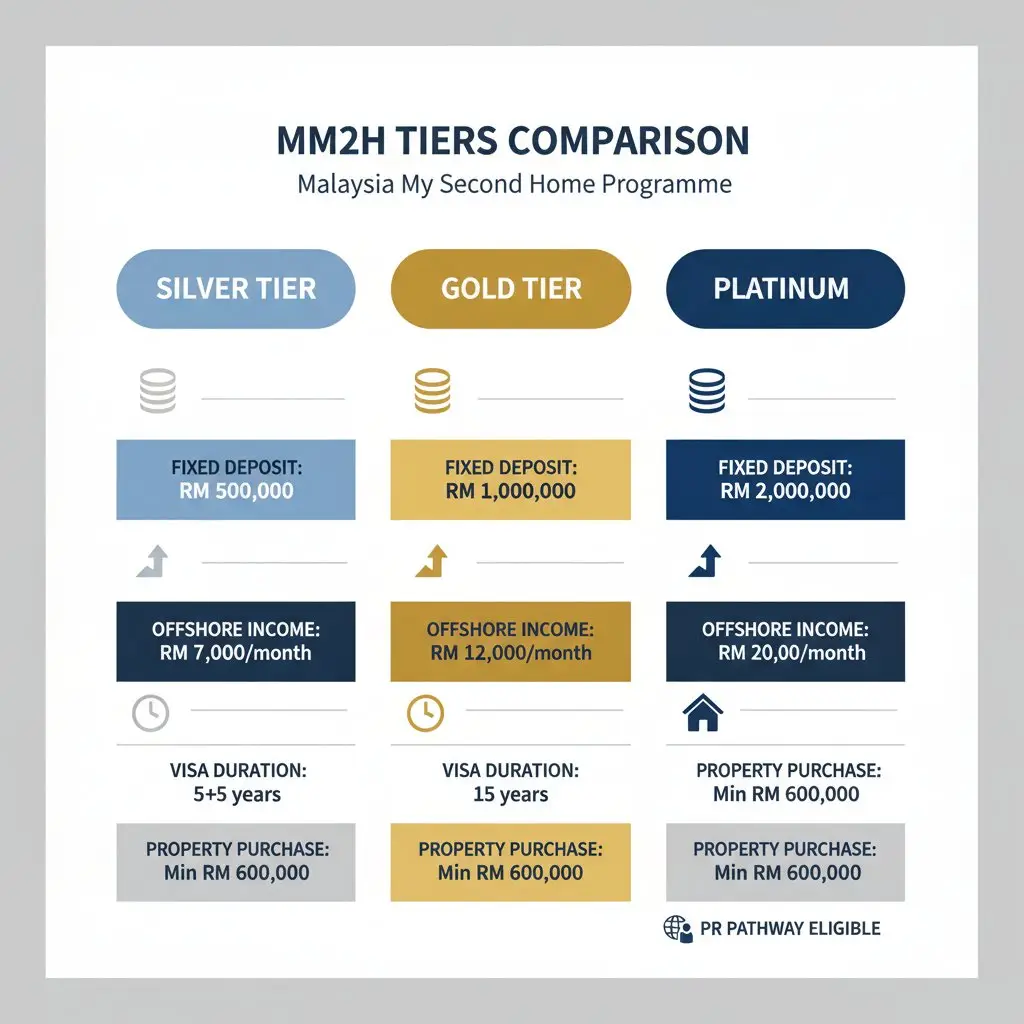
Effective January 1, 2026, the Malaysian government introduced a tiered system for the MM2H program, categorizing applicants into ‘Silver,’ ‘Gold,’ and ‘Platinum’ tiers, each with distinct financial criteria and benefits. This structured approach, detailed by the Immigration Department of Malaysia, aims to cater to a broader range of applicants while ensuring a consistent quality of participants. For instance, the ‘Gold’ tier, which requires a fixed deposit of RM 2 million (approximately USD 425,000), has seen the most significant uptake, accounting for 60% of new applications since its introduction.

Infographic showing MM2H application surge and key drivers for MM2H to Malaysia

How Does the MM2H Program Benefit the Malaysian Economy?

The MM2H program significantly benefits the Malaysian economy by attracting high-net-worth individuals and retirees who contribute substantially through direct investments, consumption, and job creation. These participants inject foreign capital into various sectors, boosting local businesses and stimulating economic growth.

According to a 2025 study by Khazanah Research Institute, each MM2H participant is estimated to contribute an average of RM 1.2 million (approximately USD 255,000) to the Malaysian economy over their first five years of residency, primarily through property purchases, healthcare services, education fees, and daily expenditures. The influx of these funds supports local industries, from real estate development to hospitality and retail. For example, property transactions involving MM2H participants increased by 15% in 2025, totaling RM 1.8 billion, as reported by the National Property Information Centre (NAPIC).

Economic Contributions of MM2H Participants

MM2H participants are not just residents; they are active economic contributors. Their presence generates demand for skilled labor in sectors like healthcare, education, and domestic services, leading to job creation for Malaysians. The program also indirectly promotes Malaysia as a tourist destination, as participants often host family and friends, further boosting the tourism sector.

The impact extends to the education sector, with many MM2H families enrolling their children in international schools, contributing to the growth of Malaysia’s private education industry. A recent survey by the Malaysian Association of International Schools indicated a 10% rise in MM2H-related enrollments in 2025, underscoring this trend.

Economic Sector Estimated Annual Contribution (RM) Primary Impact
Real Estate 1.8 billion Property purchases, rental income
Healthcare 0.5 billion Medical tourism, private hospital usage
Education 0.3 billion International school fees, university enrollment
Retail & Hospitality 1.0 billion Daily spending, tourism-related activities
Other Services 0.4 billion Domestic help, legal, financial services

Comparing MM2H Tiers: Silver, Gold, and Platinum

The newly introduced tiered system for the MM2H program provides applicants with distinct options based on their financial capacity and desired benefits. Understanding these differences is crucial for prospective applicants considering MM2H to Malaysia.

The ‘Silver’ tier offers the lowest entry barrier, making it accessible to a broader demographic, while the ‘Platinum’ tier caters to high-net-worth individuals seeking enhanced privileges. Each tier has specific requirements for fixed deposits, offshore income, and duration of stay, reflecting a strategic effort by MM2H Malaysia why global investors are eyeing to diversify its participant base.

Tier Category Fixed Deposit Requirement 海外收入(月度) 簽證的有效期 房產購買
RM 500,000 RM 10,000 5年 (可續約) Allowed
黃金 RM 2,000,000 RM 40,000 15年(可續約) Allowed
RM 5,000,000 RM 40,000 20 years (renewable), path to PR Allowed

The ‘Platinum’ tier, in particular, has garnered attention for its potential pathway to permanent residency (PR) after a certain period, a significant incentive for those looking for a more permanent relocation. This strategic inclusion reflects Malaysia’s long-term vision for attracting and retaining valuable foreign talent and investment.

Comparison infographic of MM2H Visa tiers: Silver, Gold, and Platinum for Malaysia

What Does the Future Hold for the MM2H Program?

The future of the MM2H program appears robust, with ongoing efforts to refine policies and enhance Malaysia’s appeal as a long-term destination. The government is committed to balancing economic benefits with national security, ensuring the program’s sustainability and integrity.

Discussions are underway to introduce further digitalization of the application process, aiming to reduce processing times from the current average of 90 days to under 60 days by late 2026, according to sources within the Immigration Department. This move is expected to attract even more applicants, solidifying Malaysia’s position as a top choice for global citizens seeking a second home. The program’s evolution also includes enhanced monitoring of participant contributions, ensuring that the benefits to the Malaysian economy are maximized.

Regional Competition and Malaysia’s Edge

While other countries in the region, such as Thailand and Portugal, offer similar residency programs, Malaysia maintains several distinct advantages. Its strategic location, strong healthcare system (ranked 3rd best for medical tourism in 2024 by the International Healthcare Research Center), and multicultural environment make it uniquely appealing. The relatively lower cost of living, with a 2025 Mercer Cost of Living survey placing Kuala Lumpur significantly below Singapore and Hong Kong, also provides a compelling edge.

The continued success of the MM2H program hinges on consistent policy implementation and effective communication. MM2H program revitalization efforts, a leading authority in the field, anticipates sustained growth, projecting a 20% year-on-year increase in applications for the next three years, driven by its competitive offerings and Malaysia’s inherent attractions.

常見問答

MM2H 計劃是什麼?

The MM2H program is a long-term social visit pass allowing foreigners to live in Malaysia for an extended period. It offers a renewable visa for individuals and their dependents who meet specific financial and health criteria, providing a second home in a stable and vibrant country.

Who is eligible for the MM2H visa?

Eligibility for the MM2H visa generally requires applicants to be 35 years or older, meet specific fixed deposit requirements (RM 500,000 for Silver, RM 2 million for Gold, RM 5 million for Platinum), and demonstrate offshore income. Health insurance and a medical check-up are also mandatory.

MM2H 參與者可以在馬來西亞工作嗎?

Generally, MM2H participants are not permitted to work full-time in Malaysia. However, certain exceptions may apply, such as part-time employment in specific sectors or involvement in business activities, subject to approval from the relevant authorities. The primary purpose of the MM2H visa is long-term stay, not employment.

MM2H計劃有什麼好處?

Benefits include a long-term visa for the applicant and dependents, tax incentives on foreign income, the ability to purchase property, access to quality healthcare and education, and the freedom to travel in and out of Malaysia. The Platinum tier also offers a potential pathway to permanent residency.

MM2H的申請流程需要多久?

As of June 2026, the MM2H application process typically takes an average of 90 days from submission to approval. This timeline can vary depending on the completeness of documents and the volume of applications, though the government aims to reduce it to under 60 days by year-end.

Are there any age restrictions for MM2H?

Yes, applicants for the MM2H program must be at least 35 years old. There is no upper age limit, making it an attractive option for retirees and those seeking a peaceful retirement destination.

MM2H 參與者可以帶家人同行嗎?

Yes, MM2H participants can include their spouse and unmarried children under 21 years old as dependents on their application. Parents of the main applicant can also be included under certain conditions, making it a family-friendly program.

Last updated: June 10, 2026

分享文章
zh_TWChinese (Taiwan)