

Last updated: April 26, 2026
Malaysia’s MM2H Program Under the Microscope: What a Policy Review Means for Expats and Investors
KUALA LUMPUR — The Malaysia My Second Home (MM2H) program, once a beacon for global retirees and long-stay residents, is once again under intense scrutiny. Recent discussions within Malaysian government circles and among key industry stakeholders have highlighted a growing consensus for a comprehensive policy review, signaling potential shifts that could reshape the program’s future. While no immediate changes have been announced as of April 26, 2026, the consistent calls for re-evaluation underscore a delicate balancing act: maximizing economic benefits while addressing national security and social integration concerns, particularly in light of the stricter conditions implemented in recent years.
This isn’t just bureaucratic chatter; it’s a critical moment for a program that has attracted tens of thousands to Malaysia’s shores. The outcome of these deliberations will directly impact not only prospective applicants but also the vibrant ecosystem of businesses and communities that have grown around the MM2H scheme.
Key Takeaways
- The MM2H program is currently undergoing significant government and industry review, driven by calls to balance economic benefits with national security and social integration.
- Stricter conditions introduced in 2021, including higher financial requirements and age limits, have drastically reduced new applications.
- Stakeholders are pushing for a more flexible, multi-tiered approach to revive interest and maintain Malaysia’s competitiveness as a long-stay destination.
- Any future policy adjustments will likely aim to attract high-net-worth individuals while potentially offering more accessible options for specific demographics.
- The program’s evolution is crucial for Malaysia’s tourism, real estate, and service sectors, which have felt the pinch of reduced MM2H participation.
What is Driving the Renewed Scrutiny of the MM2H Program?
The renewed scrutiny of the MM2H program stems from a combination of factors, primarily the dramatic decline in applications following the implementation of stricter rules in 2021 and ongoing concerns about the program’s original intent versus its actual impact. Stakeholders, from real estate developers to tourism operators, are vocal about the need for adjustments to regain Malaysia’s competitive edge in the global long-stay market. The government, for its part, is keen to ensure the program attracts high-quality applicants who genuinely contribute to the nation’s economy and society.
Here’s the thing—the 2021 revisions, which included a hike in liquid asset requirements from RM350,000 to RM1.5 million and a fixed deposit of RM1 million, effectively slammed the brakes on what was once a thriving stream of applicants. Before the changes, the MM2H program had approved over 50,000 applications since its inception in 2002, according to data from the Ministry of Tourism, Arts and Culture (MOTAC). Post-2021, new approvals plummeted. As of March 2023, only 1,905 applications had been approved under the new criteria, a stark contrast to the average of 4,000-5,000 approvals per year pre-2021, as reported by the MM2H Consultants Association.
This drastic drop has had ripple effects across the Malaysian economy. Real estate agents, who once saw a steady stream of MM2H participants investing in properties, have reported a significant slowdown. The tourism sector, too, has felt the pinch, as long-stay residents often contribute substantially to local businesses and services. The calls for review are not just about numbers; they’re about economic vitality.
How Have the Stricter Conditions Impacted MM2H Applications?
The stricter conditions introduced in 2021 have significantly curtailed the number of new MM2H applications, leading to a substantial decline in interest and approvals. The increased financial thresholds and more stringent residency requirements have effectively priced out a large segment of potential applicants, shifting Malaysia’s appeal to a much narrower, ultra-high-net-worth demographic. This has directly impacted the program’s overall contribution to the Malaysian economy.
Let’s look at the numbers. Under the old rules, the program was accessible to a broader range of individuals seeking a comfortable retirement or a second home. The revised criteria, however, demand a substantial increase in liquid assets and offshore income, alongside a mandatory minimum stay of 90 days per year. For instance, the new requirement for offshore income of at least RM40,000 per month (approximately US$8,500) is a significant hurdle for many. According to a 2023 report by the MM2H Consultants Association, applications from key source markets like China, Japan, and the UK have seen declines of over 80% compared to pre-2021 levels. This isn’t just a slight dip; it’s a dramatic re-calibration of the program’s reach.
The government’s stated aim was to attract higher-quality applicants, those with greater financial capacity. But there’s a catch. Many potential participants, while affluent, found Malaysia’s new requirements less attractive compared to other regional programs offering more flexibility or lower entry barriers. Thailand’s Long-Term Resident (LTR) visa, for example, offers a 10-year visa with less stringent financial requirements for certain categories, while Portugal’s Golden Visa program, though changing, historically offered residency through real estate investment. Malaysia’s once-competitive edge has dulled.
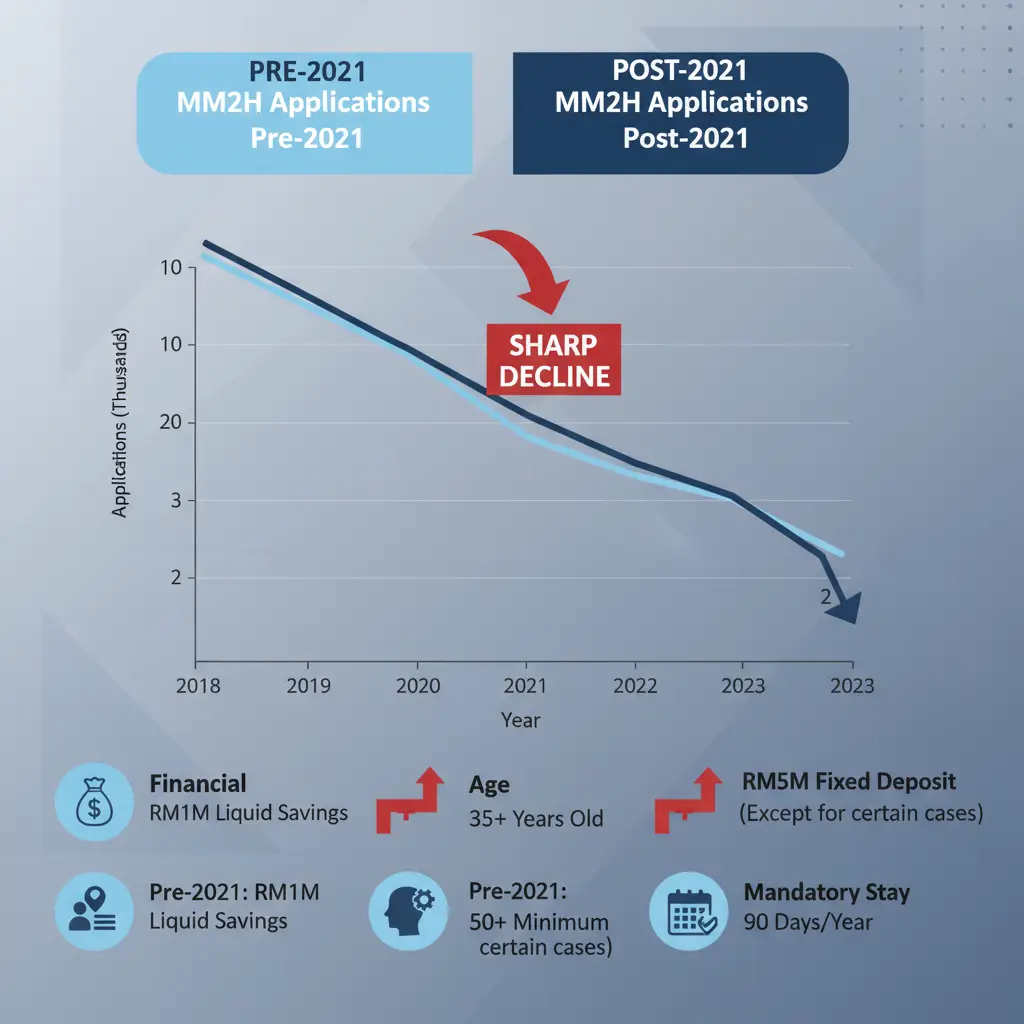
The impact is clear when comparing the old and new requirements:
| Requirement Category | MM2H (Pre-2021) | MM2H (Post-2021) |
|---|---|---|
| Liquid Assets | RM350,000 – RM500,000 | RM1.5 million |
| Offshore Income | RM10,000 per month | RM40,000 per month |
| Fixed Deposit | RM150,000 – RM300,000 | RM1 million |
| Age Requirement | Below 50: RM500,000 FD; Above 50: RM350,000 FD | Minimum 35 years old (no specific age tiers for FD) |
| Mandatory Stay | No minimum stay | Minimum 90 days per year |
| Visa Duration | 10 years, renewable | 5 years, renewable |
This table illustrates the quantum leap in requirements. The fixed deposit alone jumped over threefold for those aged 50 and above. This isn’t just a tweak; it’s a fundamental overhaul that has reshaped the program’s target demographic entirely.
What Are the Proposed Solutions and Future Adjustments for MM2H?
Proposed solutions for the MM2H program largely center on introducing a multi-tiered approach, offering different categories with varying financial requirements and benefits to appeal to a broader range of applicants. This aims to restore Malaysia’s competitiveness while still attracting high-value individuals, moving away from the current one-size-fits-all, highly restrictive model. Future adjustments are likely to include a re-evaluation of financial thresholds, age limits, and potentially the reintroduction of incentives for property investment.
Industry bodies, such as the MM2H Consultants Association, have been actively lobbying the government for these changes. Their proposals often include a ‘Platinum,’ ‘Gold,’ and ‘Silver’ tier system. A Platinum tier, for instance, might maintain high financial requirements but offer enhanced benefits like permanent residency pathways or more flexible investment options. A Gold tier could target the previous demographic with slightly adjusted requirements, while a Silver tier might cater to those with more modest means but still substantial contributions, perhaps focusing on specific skills or investments in designated economic zones.
The Minister of Tourism, Arts and Culture, Dato Sri Tiong King Sing, has publicly acknowledged these discussions, stating in early 2024 that the government is considering proposals to make the program more attractive while safeguarding national interests. The goal is to find a sweet spot that boosts application numbers without compromising on the quality of participants. One key area of discussion is the mandatory 90-day stay requirement, which many applicants find restrictive, especially those who split their time between multiple countries. Easing this, or making it flexible, could be a significant draw.
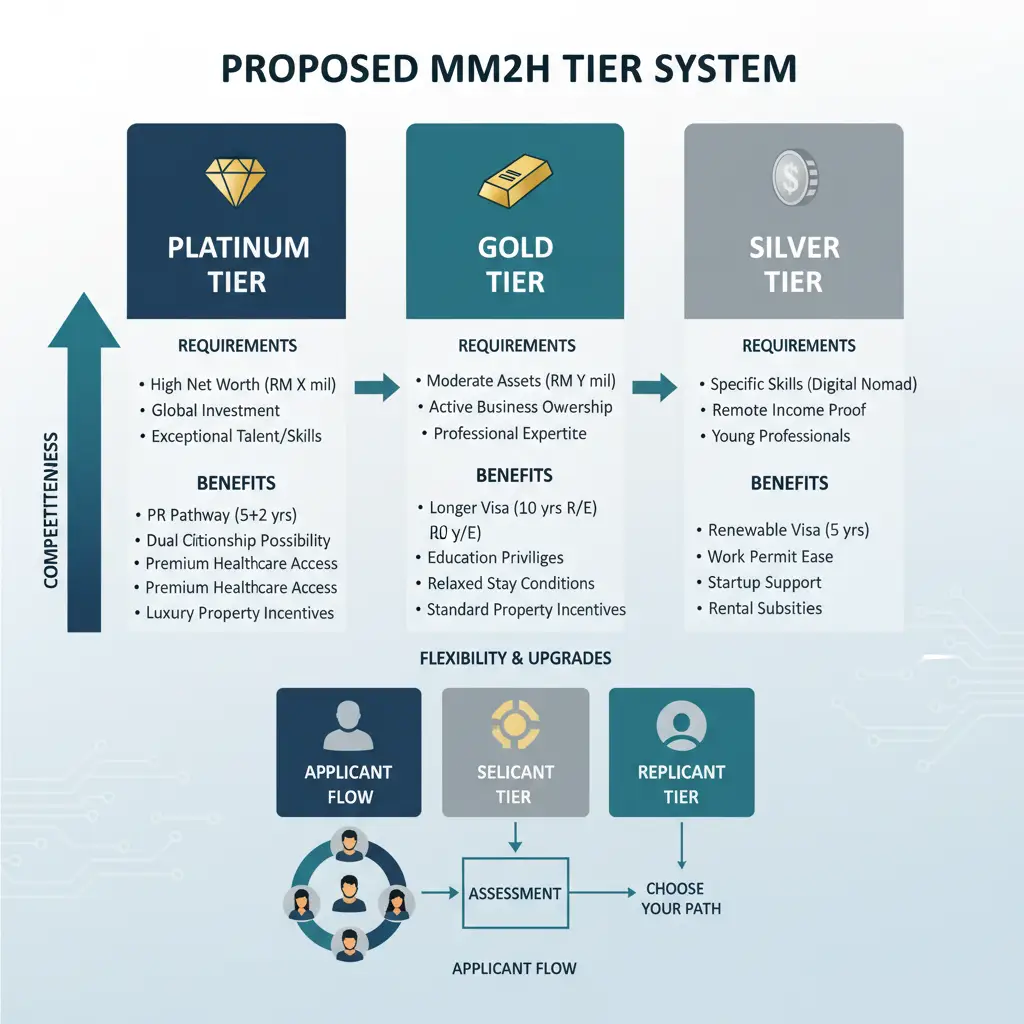
The bigger picture: Malaysia needs to decide what kind of ‘second home’ residents it truly wants. Is it solely ultra-high-net-worth individuals, or is there value in attracting a wider pool of affluent retirees, digital nomads, and families who contribute to local economies in different ways? The current policy seems to lean heavily on the former, but the numbers suggest that approach isn’t working as intended.
Why Should We Care About the Evolution of MM2H?
We should care about the evolution of MM2H because it directly impacts Malaysia’s economic diversification, its global image as a welcoming destination, and the livelihoods of countless local businesses and individuals. A thriving MM2H program contributes significantly to the real estate, tourism, retail, and service sectors, bringing in foreign currency and fostering cultural exchange. Conversely, a struggling program signals a loss of competitiveness and missed economic opportunities.
Think about it: each MM2H participant isn’t just a number; they’re an individual or family who buys property, hires domestic help, uses local healthcare services, dines at restaurants, and travels within the country. A 2019 study by the Malaysian Institute of Economic Research (MIER) estimated that each MM2H participant contributed an average of RM150,000 annually to the Malaysian economy through various expenditures. With thousands fewer participants, that’s a substantial amount of economic activity that has vanished.
Beyond the direct economic impact, the program also plays a role in Malaysia’s ‘soft power.’ A successful MM2H scheme enhances Malaysia’s reputation as a stable, attractive, and multicultural nation, drawing in not just retirees but also potential investors and skilled professionals. The current stagnation risks tarnishing that image, pushing potential long-stay residents towards neighboring countries like Thailand, Vietnam, or even the Philippines, which are actively refining their own long-stay visa programs. The review isn’t just about tweaking rules; it’s about reaffirming Malaysia’s place on the global stage as a premier destination for those seeking a second home.
Frequently Asked Questions About the MM2H Program
What is the Malaysia My Second Home (MM2H) program?
The MM2H program is a long-term visa scheme designed by the Malaysian government to allow foreigners who meet certain criteria to live in Malaysia on a renewable long-term residency in Malaysia. It was established to attract affluent individuals and retirees to contribute to the Malaysian economy and foster cultural exchange.
Who is eligible for the MM2H program under the current rules?
Under the current rules, applicants must be at least 35 years old, demonstrate liquid assets of at least RM1.5 million, and have an offshore income of RM40,000 per month. They also need to place a fixed deposit of RM1 million in a Malaysian bank and commit to a minimum stay of 90 days per year.
Why did the Malaysian government make the MM2H requirements stricter in 2021?
The government stated that the stricter requirements were implemented to attract higher-quality applicants with greater financial capacity, ensuring that participants genuinely contribute to the Malaysian economy. There were also underlying concerns about national security and the quality of applicants under the previous, more lenient, rules.
Are there any alternative long-stay visas in Malaysia besides MM2H?
Yes, Malaysia offers other long-stay options, though they cater to different demographics. These include employment passes for skilled workers, student visas, and specific visas for investors or those with Malaysian spouses. However, none offer the same broad, long-term residency benefits as MM2H for retirees or those seeking a second home without direct employment.
What are the main benefits of the MM2H program for participants?
MM2H participants enjoy a renewable long-term visa, allowing them to live in Malaysia without needing to renew their visa frequently. Benefits include the ability to purchase Malaysian property for investors, bring dependents, and enjoy Malaysia’s low cost of living, excellent healthcare, and diverse culture. Certain tax exemptions may also apply.
What is the current status of the MM2H program review?
As of April 26, 2026, the MM2H program is under active review by the Malaysian government, with input from various ministries and industry stakeholders. While no new policy announcements have been made, discussions are ongoing regarding potential adjustments to make the program more attractive and competitive, possibly through a multi-tiered approach.
How long does it take to process an MM2H application?
Processing times can vary significantly. Under the stricter 2021 rules, the process has become more rigorous, and applicants often report waiting several months, sometimes up to a year or more, for approval. This duration can depend on the completeness of the application and the volume of submissions.
“`
 English
  Chinese (Taiwan)
  Chinese (China)