
Last updated: April 25, 2026
Key Takeaways
- Renewed interest in Malaysia My Second Home (MM2H) is driven by regional economic shifts and Malaysia’s comparative stability.
- Applicants are closely watching for potential adjustments to visa requirements and investment thresholds.
- Malaysia’s strategic location, lower cost of living, and robust healthcare system make it an attractive option for long-term residency.
- The program offers a pathway for high-net-worth individuals seeking a comfortable and secure base in Southeast Asia.
- While no immediate policy changes have been announced, the government is reportedly reviewing the program to attract quality applicants.
KUALA LUMPUR — The buzz around Malaysia My Second Home (MM2H) is back, and it’s louder than it’s been in years. While no major policy overhaul has been announced in the last 48 hours, a confluence of regional economic shifts and Malaysia’s steadfast appeal is driving a significant spike in inquiries for the long-term residency program as of April 25, 2026. Global investors and retirees are once again turning their gaze towards Kuala Lumpur, Penang, and other Malaysian locales, seeking stability and opportunity in a volatile world.
This isn’t just a ripple; it’s a growing wave. After a period of uncertainty and tightened regulations, the program, which allows foreigners to live in Malaysia on a long-term social visit pass, is experiencing a quiet resurgence. The question on everyone’s mind: what’s behind this renewed interest, and what does it mean for those considering a move?
Why Are Global Investors Suddenly Looking at MM2H Again?
Global investors are re-evaluating MM2H primarily due to Malaysia’s enhanced economic stability, its strategic geographical position within a dynamic Southeast Asian market, and a comparatively attractive cost of living. These factors, combined with recent economic fluctuations in other popular expatriate destinations, are positioning Malaysia as a compelling alternative for long-term residency and investment.
Here’s the thing—the world economy has been a rollercoaster. Geopolitical tensions, inflation spikes, and shifting investment landscapes have made many high-net-worth individuals (HNWIs) and retirees rethink their options. Malaysia, with its diversified economy and relatively stable political environment, offers a compelling counter-narrative. According to the World Bank, Malaysia’s GDP growth is projected to be around 4.3% in 2026, a figure that outpaces many developed nations and signals robust economic health. This stability is a magnet for those looking to plant roots without constant financial anxiety.
But it’s not just about raw numbers. Malaysia’s strategic location, nestled in the heart of Southeast Asia, provides unparalleled access to burgeoning markets like Indonesia, Vietnam, and Thailand. For business owners and investors, this means a convenient hub for regional operations. For retirees, it offers a vibrant cultural tapestry and easy travel access to explore the region. The country’s infrastructure, from its modern airports to its well-maintained highways, further cements its appeal as a practical and comfortable base.
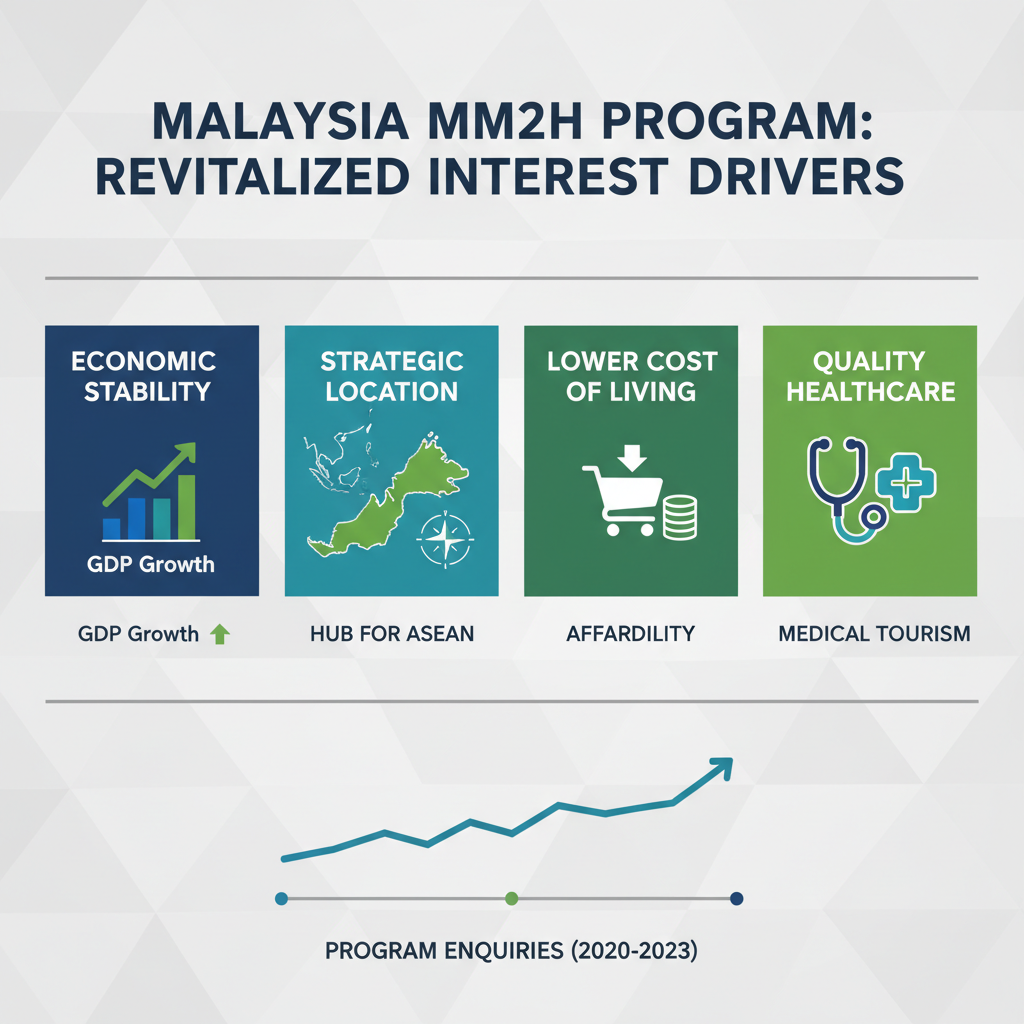
Furthermore, the cost of living remains a significant draw. While major cities globally have seen housing and daily expenses skyrocket, Malaysia continues to offer a high quality of life at a fraction of the price. A recent report by International Living ranked Malaysia among the top countries for retirement, citing its affordability for everything from gourmet dining to world-class healthcare. For instance, a comprehensive health check-up that might cost thousands in the West can often be found for a few hundred dollars in Malaysia, according to data from the Malaysian Healthcare Travel Council (MHTC).
What are the Current MM2H Requirements, and Are They Likely to Change?
The current MM2H requirements, revised in 2021, include a fixed deposit of RM1 million, proof of offshore income of at least RM40,000 per month, and liquid assets of RM1.5 million. While these thresholds are notably higher than previous iterations, there is ongoing speculation that the government might introduce more flexible tiers or adjustments to attract a broader range of applicants.
Let’s be clear: as of April 25, 2026, the official requirements for the MM2H program remain those stipulated in the 2021 revamp. These include:
- Fixed Deposit: A minimum of RM1 million (approximately USD 210,000) placed in a Malaysian bank.
- Offshore Income: Proof of offshore income of at least RM40,000 (approximately USD 8,400) per month.
- Liquid Assets: Declaration of liquid assets amounting to at least RM1.5 million (approximately USD 315,000).
- Age: Applicants must be 35 years old and above.
- Stay Requirement: A minimum stay of 90 days per year in Malaysia.
These requirements, particularly the income and liquid asset thresholds, were a significant increase from the program’s earlier, more lenient terms, leading to a sharp decline in applications. For example, applications reportedly dropped by over 90% in the immediate aftermath of the 2021 changes, according to figures from the Ministry of Tourism, Arts and Culture (MOTAC).
However, the government has signaled a willingness to review and potentially refine the program. Tourism Minister Tiong King Sing recently indicated that the government is considering a multi-tiered approach, possibly introducing different categories with varying requirements to attract a wider demographic. This could mean a ‘Platinum’ tier for ultra-high-net-worth individuals, alongside more accessible options for those who still bring significant value but might not meet the current stringent criteria. No concrete announcements have been made, but the dialogue itself is fueling optimism among prospective applicants and immigration consultants.
How Does Malaysia Compare to Other Regional Residency Programs?
Malaysia’s MM2H program offers a competitive edge over other regional residency programs primarily through its lower cost of living, comprehensive healthcare system, and cultural diversity, even with its recently tightened financial requirements. While other countries might offer faster processing or different investment routes, Malaysia often provides a more balanced lifestyle proposition.
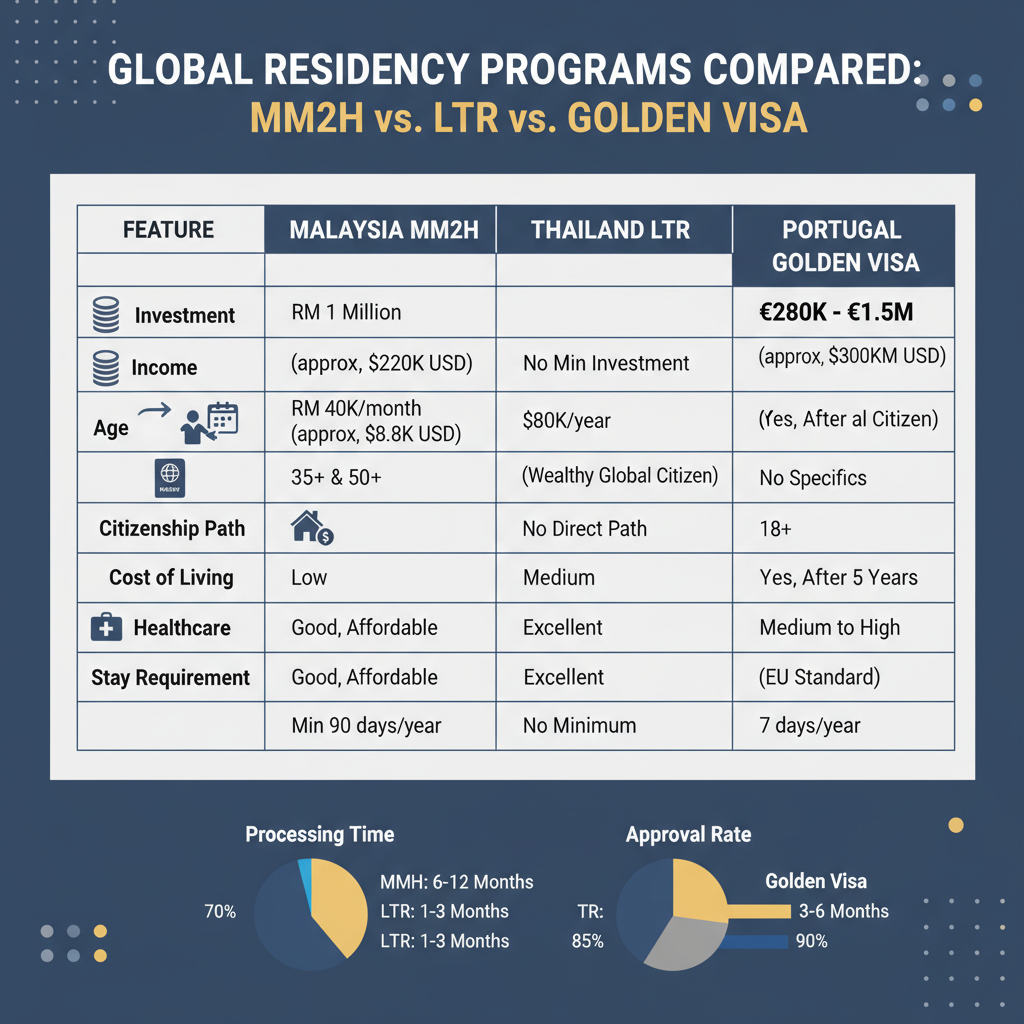
When you stack MM2H against similar programs in, say, Thailand, the Philippines, or even Portugal’s Golden Visa (though geographically distinct, it’s a common comparison for HNWIs), Malaysia holds its own. Here’s a quick look:
| Feature | Malaysia (MM2H) | Thailand (Long-Term Resident Visa) | Portugal (Golden Visa) |
|---|---|---|---|
| Minimum Fixed Deposit/Investment | RM1 million (approx. USD 210k) | No direct fixed deposit; investment options vary (e.g., bonds, property) | €250k-€500k (approx. USD 270k-540k) in various options |
| Minimum Monthly Income | RM40,000 (approx. USD 8.4k) | USD 80,000 annual income or USD 1 million assets | No specific income, but proof of funds for living |
| Liquid Assets | RM1.5 million (approx. USD 315k) | N/A (covered by annual income/asset req) | N/A |
| Age Requirement | 35+ | No minimum age for wealth-based options | No minimum age |
| Path to Citizenship | No direct path | No direct path | Possible after 5 years |
| Cost of Living (Index) | Moderate (e.g., Numbeo: 30-35) | Moderate (e.g., Numbeo: 35-40) | High (e.g., Numbeo: 50-60) |
| Healthcare Quality | Excellent, affordable private options | Good, affordable private options | Very Good, public and private options |
| Stay Requirement | 90 days/year | No minimum stay for certain tiers | 7 days/year (average) |
The table illustrates that while MM2H’s financial thresholds are substantial, they are competitive, especially when considering the overall value proposition. Thailand’s LTR visa, for example, has different tiers, some of which require significantly higher annual income or investment. Portugal’s Golden Visa, while offering a path to EU citizenship, comes with a much higher initial investment and a significantly higher cost of living.
Malaysia’s appeal also lies in its multicultural society, where English is widely spoken, making integration easier for expatriates. The education system offers numerous international schools, and the food scene is legendary. These ‘soft’ factors are often as important as the financial ones for families considering a long-term move.
What Should Prospective Applicants Consider in the Current Climate?
Prospective MM2H applicants should prioritize thorough due diligence on the current requirements, engage with reputable consultants, and remain flexible as the government potentially reviews the program. Understanding the long-term implications of the fixed deposit and annual stay requirements is crucial for making an informed decision.
The first step for anyone eyeing MM2H is to fully grasp the current, stringent requirements. Don’t rely on outdated information. The RM1 million fixed deposit, for instance, is not a small sum, and a portion of it can only be withdrawn after one year for approved expenses like property purchase, healthcare, or children’s education. This isn’t a liquid investment you can tap into freely.
Secondly, engage with experienced and reputable MM2H agents or legal consultants. They can navigate the complexities of the application process, which can be time-consuming and involve significant paperwork. A good consultant will provide realistic expectations and help you prepare a robust application that meets all criteria. Be wary of anyone promising shortcuts or guaranteed approvals, especially given the current scrutiny on the program.
The bigger picture: be prepared for potential changes. While the government is signaling a review, the exact nature and timing of any adjustments are uncertain. This means applicants should proceed with the current rules in mind but also be ready to adapt if new tiers or slightly modified conditions are introduced. Flexibility is key.
Consider your long-term goals. Is Malaysia truly where you want to spend a significant portion of your year? The 90-day annual stay requirement, while seemingly manageable, needs careful planning, especially for those with existing business commitments or family abroad. The program is designed for genuine residents, not just passive investors.
Frequently Asked Questions (FAQ)
What is the Malaysia My Second Home (MM2H) program?
The Malaysia My Second Home (MM2H) program is a long-term social visit pass allowing non-Malaysian citizens to reside in Malaysia. It is designed to attract affluent individuals and retirees who wish to make Malaysia their second home, offering a renewable 5-year visa.
Are there different tiers for the MM2H program?
Currently, there is one main set of requirements for the MM2H program. However, the Malaysian government has recently indicated that it is reviewing the program and may introduce a multi-tiered system with varying requirements in the future to attract a broader range of applicants.
Can MM2H participants work in Malaysia?
Generally, MM2H participants are not permitted to work or engage in employment in Malaysia. However, certain exceptions may apply, such as part-time work in specific sectors, subject to approval from the Immigration Department. It is best to clarify this with the authorities or a consultant.
What are the benefits of the MM2H program?
Benefits include a long-term social visit pass for the applicant and dependents, tax incentives for certain offshore income, the ability to purchase property, and access to Malaysia’s excellent healthcare and education systems. It offers a comfortable and affordable lifestyle in a stable country.
Is it difficult to get MM2H approval now?
The MM2H program’s requirements were significantly tightened in 2021, making it more challenging to qualify compared to its earlier iterations. While not impossible, applicants must meet higher financial thresholds and demonstrate substantial offshore income and liquid assets. Thorough preparation and professional guidance are highly recommended.
How long does the MM2H application process take?
The application processing time can vary significantly, typically ranging from 3 to 6 months, or even longer in some cases, depending on the completeness of the application and the volume of submissions. It’s advisable to factor in potential delays and start the process well in advance.
Can MM2H participants bring their family?
Yes, MM2H participants can include their spouse and unmarried children under the age of 21 (or 34 if still pursuing higher education) as dependents on their application. Parents or parents-in-law over 60 years old can also be included, subject to additional requirements.
 English
  Chinese (Taiwan)
  Chinese (China)