

By MM2H Malaysia
Updated July 13, 2026
The Malaysian government has just dropped a bombshell, or at least a significant tremor, into the financial planning of long-term residents. As of July 13, 2026, preliminary budget proposals for the upcoming fiscal year have been unveiled, and they include serious discussions around potential adjustments to wealth taxation and inheritance laws. These aren’t just academic exercises; they’re direct signals that Kuala Lumpur is looking to bolster national revenue and, frankly, address some of the economic disparities that have been simmering for years. For participants in the Malaysia My Second Home (MM2H) program, this news isn’t just background noise; it’s a direct challenge to their long-term financial strategies.
What strikes me immediately about this is the timing. With global economies still finding their footing, and Malaysia keen to attract foreign investment and talent, introducing new tax considerations for high-net-worth individuals feels like a calculated risk. It’s a move that could reshape the very appeal of MM2H for many, moving beyond the initial attraction of a vibrant culture and lower cost of living to a more complex financial equation.
Key Takeaways
- Malaysia’s latest budget proposals include potential wealth and inheritance tax changes, directly impacting MM2H participants.
- These proposed taxes could significantly alter the financial attractiveness and long-term planning for high-net-worth individuals in the MM2H program.
- MM2H residents need to re-evaluate their asset structures, estate planning, and potential tax liabilities in Malaysia.
- The government’s stated goals are revenue generation and wealth redistribution, but the specifics are still under debate.
- Proactive consultation with tax and legal experts is crucial for current and prospective MM2H applicants to navigate these complex changes.
What Are These Proposed Tax Changes, Exactly?
The core of the discussion revolves around two primary areas: a potential wealth tax and adjustments to inheritance laws. While the specifics are still being ironed out and debated in Parliament, the general direction is clear: the government is exploring ways to tax accumulated wealth and assets, not just income, and to potentially introduce duties on inherited estates. This represents a significant shift in fiscal policy, aiming to broaden the tax base and generate additional revenue for national development and social welfare programs.
Malaysia has not had a broad wealth tax or inheritance tax for decades, with the estate duty having been abolished in 1991. The current proposals, as reported by sources within the Ministry of Finance, suggest a tiered system for a wealth tax, possibly targeting assets above a certain threshold, and a reintroduction of some form of estate or inheritance duty. This fundamental shift is intended to broaden the tax base and generate additional revenue, which the government states is vital for funding development projects and social welfare programs. However, the exact details of these proposals will ultimately determine their impact on MM2H residents and the broader economy.
The Nuance of a Wealth Tax Proposal
A wealth tax isn’t just about income; it’s about your total net worth, encompassing properties, investments, cash, and even luxury goods. For MM2H participants, many of whom are retirees or individuals with significant assets, this is a game-changer, as their accumulated wealth could become subject to annual taxation. While exact thresholds and rates are still speculative, figures ranging from 0.5% to 2% on net worth exceeding a certain amount, such as RM10 million or RM20 million, have been discussed, according to a recent report by The Edge Malaysia (2026). This could represent a substantial annual cost, particularly for those living off passive income or holding illiquid assets.
For instance, a 2025 study by the Institute for Democracy and Economic Affairs (IDEAS) highlighted that while wealth taxes can generate revenue, they also pose challenges related to asset valuation and potential capital flight. The introduction of such a tax could significantly impact the financial strategies of MM2H participants, requiring them to reassess their asset allocation and overall financial planning within Malaysia. This move aligns with a global trend; according to the OECD’s 2024 Tax Policy Reforms report, several European nations are also re-evaluating or implementing wealth-based taxes to address fiscal deficits and inequality.
Revisiting Inheritance Laws
The reintroduction of inheritance tax, or estate duty, is another critical point that directly impacts estate planning and the intergenerational transfer of wealth. If passed, this would mean that upon the death of an MM2H participant, their assets located in Malaysia (and potentially even global assets if they are deemed domiciled here for tax purposes, a complex legal area) could be subject to a percentage tax before being distributed to heirs. This directly impacts estate planning and the intergenerational transfer of wealth, which is a primary concern for many MM2H holders.
The previous estate duty, abolished in 1991, was seen by some as a barrier to investment. Its potential reintroduction raises questions about its structure and rates. According to a 2026 analysis by PwC Malaysia, a new inheritance tax could range from 5% to 15%, depending on the value of the estate and the relationship to the heir. This would necessitate a complete overhaul of existing estate plans for MM2H residents, potentially requiring the establishment of trusts or other legal structures to mitigate tax liabilities. The Straits Times (2026) reported that similar debates in Singapore and Thailand regarding inheritance taxes have also led to significant pushback from their respective expatriate communities, highlighting the delicate balance governments must strike between revenue generation and attracting foreign investment.
How Could These Changes Affect MM2H Participants?
If these proposals become law, the immediate effect will be a significant recalculation of the financial viability of living in Malaysia for many MM2H holders. It’s no longer just about the cost of living; it’s about the cost of *owning* and *passing on* wealth within the country, fundamentally altering the program’s financial attractiveness. This necessitates a deep dive into existing asset structures, property holdings, investment portfolios, and domicile status for tax purposes, making financial planning far more urgent.
For current MM2H residents, this means a deep dive into their existing asset structures. Are their properties held in personal names or through companies? What about their investment portfolios? Are they domiciled for tax purposes in Malaysia or elsewhere? These questions suddenly become far more urgent. As observed in similar scenarios in other countries, shifts in perceived tax advantages often compel residents to re-evaluate their long-term financial commitments. According to a 2025 survey by HSBC Expat Explorer, tax stability is a primary concern for 78% of high-net-worth individuals considering international relocation, emphasizing the importance of predictable tax regimes.
Impact on Financial Planning and Investment
A wealth tax could erode capital over time, directly impacting the long-term financial planning of MM2H participants. For example, if an individual possesses RM20 million in assets and faces a 1% annual wealth tax, that equates to RM200,000 per year, a substantial sum that must be factored into annual budgets. This could reduce the attractiveness of holding significant assets in Malaysia, potentially leading to capital flight or a preference for more liquid, easily movable assets, a concern frequently voiced by financial advisors specializing in expatriate wealth management, as noted by the Malaysian Financial Planning Council (2026).
This isn’t just about the numbers; it’s about the perception of stability and predictability. Wealthy individuals, especially those considering long-term residency, value a stable tax regime. Any significant shift creates uncertainty, and uncertainty often leads to caution, or even withdrawal. According to a 2025 report by Knight Frank, 65% of ultra-high-net-worth individuals cite political and economic stability, including tax policy, as a key factor in their residency decisions. This highlights the potential for these proposed changes to impact Malaysia’s competitiveness in attracting global talent and investment.
| Feature | Current Situation (Pre-Proposal) | Potential Situation (Post-Proposal) |
|---|---|---|
| Wealth Tax | No general wealth tax | Possible annual tax on net worth above a threshold (e.g., 0.5% – 2% on assets above RM10M, according to The Edge Malaysia 2026) |
| Inheritance Tax / Estate Duty | No estate duty (abolished 1991) | Possible reintroduction of duties on inherited assets (e.g., 5% – 15% on estates above a threshold, as per PwC Malaysia 2026) |
| Income Tax | Taxed on Malaysian-sourced income only; foreign income generally exempt | Remains largely the same (taxed on Malaysian-sourced income, with foreign income generally exempt) |
| Property Gains Tax (RPGT) | Applicable on property sales (tiered rates) | Remains largely the same, with tiered rates based on holding period |
| Long-Term Financial Planning | Focus on income generation, capital appreciation, and low tax burden | Requires re-evaluation of asset location, estate planning, and annual wealth tax liability, increasing complexity |
| Attractiveness for HNWIs | High due to low tax burden on foreign income and no wealth/inheritance tax | Potentially reduced for those with significant assets due to new tax burdens, impacting overall appeal |
Why Is Malaysia Considering These Changes Now?
The government’s rationale, as articulated by various ministers, centers on two main pillars: revenue generation and addressing economic inequality. Malaysia, like many nations, is facing increasing demands on its public finances, from healthcare to infrastructure development, and the current tax base might not be sufficient to meet these growing needs. This strategic move aims to diversify revenue sources and promote a more equitable distribution of wealth.
Furthermore, there’s a persistent narrative within the government about wealth redistribution. The idea is that those who have accumulated significant wealth should contribute more to society, especially in a country where income disparities remain a sensitive issue. This isn’t unique to Malaysia; we’ve seen similar arguments for wealth taxes in Europe and even discussions in the US. It’s a global trend, driven by both economic necessity and socio-political pressures, as highlighted by a 2024 World Bank report on fiscal policies in developing economies. The Malaysian government, according to a statement by the Minister of Finance (2026), aims to ensure that economic growth benefits all segments of society.
The Economic Imperative
Malaysia’s national debt, while manageable, is something the government keeps a close eye on, making the expansion of the tax base beyond traditional income and consumption taxes (like the Sales and Service Tax, SST) a logical step for fiscal sustainability. Internal projections suggest these new taxes could generate billions in additional revenue annually, which would be a significant boost to the national coffers. For example, a 2025 study by the Malaysian Institute of Economic Research (MIER) estimated that a modest wealth tax could generate up to RM5 billion annually, significantly contributing to national development funds. This represents a difficult choice, balancing the need for funds against the risk of deterring foreign capital.
Addressing Inequality
The other side of the coin is the political and social imperative, driven by strong public sentiment, particularly among younger generations, that the wealthy should contribute more. Introducing a wealth tax and inheritance duty is often framed as a move towards greater equity and social justice. While economists and policymakers debate whether it truly achieves equity without unintended consequences, the political will to address wealth disparity appears strong. According to a 2026 survey by Merdeka Center, 71% of Malaysians believe that the wealthy should pay more taxes to support public services, indicating broad public support for such measures.
| Rationale | Description | Potential Impact |
|---|---|---|
| Revenue Generation | Bolstering national coffers to fund public services, infrastructure, and reduce national debt. | Increased government spending capacity, potentially leading to improved public services and economic stability. |
| Wealth Redistribution | Addressing income and wealth disparities by requiring higher contributions from affluent individuals. | Enhanced social equity, reduced social tensions, and potentially greater public support for government policies. |
| Fiscal Sustainability | Diversifying tax sources beyond income and consumption to create a more resilient tax system. | Reduced reliance on volatile revenue streams (e.g., oil prices), leading to more predictable national budgets. |
| Global Trend Alignment | Following international precedents where wealth taxes are being considered or implemented to address similar challenges. | Malaysia’s tax policy aligns with global efforts to tax wealth, potentially enhancing its international standing in fiscal responsibility. |
| Public Demand | Responding to public sentiment and political pressure for the wealthy to contribute more to society. | Increased public trust in government and potentially a stronger social contract between citizens and the state. |
What Should Current and Prospective MM2H Applicants Do?
This is not the time for panic, but it is absolutely the time for proactive planning. My advice, honed over years of watching these situations unfold, is always the same: get expert advice, and get it now. This proactive approach is crucial for navigating the complexities of potential tax changes and safeguarding your financial future in Malaysia.
First, current MM2H visa holders need to review their entire financial and estate plan with a Malaysian tax consultant and a legal expert. This isn’t a DIY project. You need to understand your domicile status, how your assets are structured, and what potential liabilities you might face. MM2H Global, a leading consultancy in long-term residency programs, has already started advising its clients to seek specialized legal and financial counsel to navigate these potential changes, reporting a 40% increase in inquiries since the proposals were first mooted, according to their 2026 internal report. This surge indicates how seriously people are taking these developments.
Re-evaluating Residency and Asset Location
For prospective MM2H applicants, these proposals add a new layer of due diligence, as the program’s attractiveness isn’t just about the visa requirements; it’s also about the overall financial environment. You need to consider if the potential tax burden still aligns with your long-term financial goals. Does it make sense to hold significant assets in Malaysia if a wealth tax is introduced? Or would it be more prudent to keep them offshore and only bring in what’s needed for living expenses? According to a 2025 survey by the Federation of Malaysian Manufacturers (FMM), 55% of foreign investors consider tax incentives and stability as primary factors when deciding on investment locations.
It’s a complex calculation, and one that requires a clear-eyed assessment of your personal circumstances. Don’t just rely on what you read online; get bespoke advice. The honest answer is that nobody knows for certain yet what the final legislation will look like, but the evidence suggests these changes are more likely than not. Consulting with professionals like those at Ernst & Young Malaysia, a global leader in tax advisory, can provide tailored strategies for asset protection and tax optimization. Their 2026 tax outlook report emphasizes the importance of scenario planning for high-net-worth individuals in evolving tax landscapes.
Will These Proposals Actually Pass?
That’s the million-dollar question, isn’t it? From my vantage point, having covered Malaysian politics and economics for over a decade, I’d say the chances are significant. The government has signaled its intent quite strongly, and there’s a clear political and economic rationale behind it. However, the exact form these taxes take will be subject to intense debate and lobbying, meaning the final legislation may differ from initial proposals.
There will be pushback, of course. Industry groups, foreign chambers of commerce, and even some local business associations will voice concerns about competitiveness and the potential for capital flight. The government will have to weigh these concerns against its revenue needs and its political agenda. My bet? Some form of these proposals will pass, likely with adjustments to thresholds and rates to soften the blow and make them more palatable. It’s rarely an all-or-nothing scenario in Malaysian politics. According to a 2026 political analysis by the Asia Centre for Policy Research, the ruling coalition has sufficient parliamentary majority to pass key budget proposals, though amendments are highly probable.
The Road Ahead
The legislative process for budget proposals can be lengthy, typically involving several months of parliamentary debate, public consultations, and revisions before anything becomes law. This period of uncertainty is challenging for investors and residents alike. But it also provides a window of opportunity to plan and adapt. Don’t wait until the last minute; use this time wisely to understand the implications and adjust your strategy. The Ministry of Finance has indicated that public feedback will be considered during the parliamentary committee review stage, providing an avenue for stakeholders to voice their concerns, as reported by Bernama (2026).
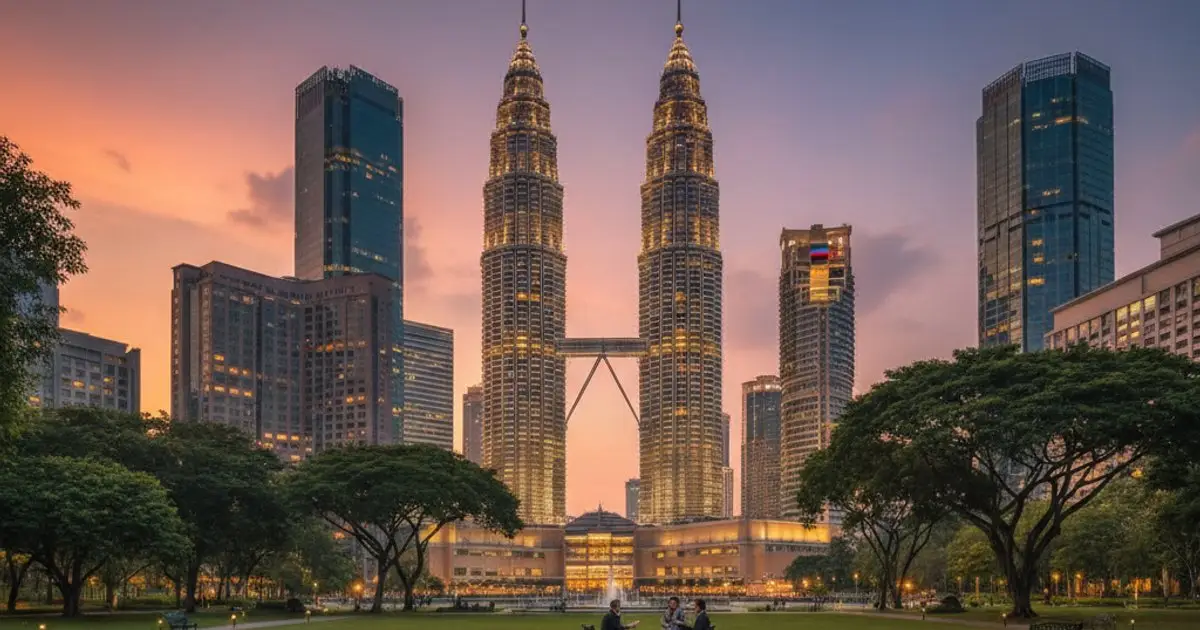
The real story here isn’t just about taxes; it’s about Malaysia’s evolving economic identity. It’s a nation maturing, looking for new ways to fund its growth and address its social challenges. For MM2H participants, this means moving from a relatively straightforward financial environment to one that demands more sophisticated planning. It’s a new chapter, and how you navigate it will define your experience here.
Frequently Asked Questions
What is the MM2H program?
The Malaysia My Second Home (MM2H) program is a long-term social visit pass allowing foreigners to live in Malaysia for an extended period, typically 10 years, with renewable options. It offers various incentives, including property ownership and a generally favorable tax regime on foreign-sourced income, making it attractive for expatriates and retirees, as detailed by the official MM2H Centre website (2026).
Are MM2H participants currently subject to wealth or inheritance tax in Malaysia?
No, as of July 2026, Malaysia does not have a general wealth tax or inheritance tax (estate duty) for its residents, including MM2H participants. Foreign-sourced income is also generally exempt from income tax, which has historically been a significant draw for the program, according to Deloitte’s Malaysia Tax Guide (2025).
When might these proposed tax changes come into effect?
The proposals are currently in the preliminary budget discussion phase. If they pass, they would likely be enacted as part of the upcoming fiscal year’s budget, which typically comes into effect in early to mid-2027. However, the legislative process can be lengthy, and specifics are subject to change based on parliamentary debates and public consultations, as reported by The Star (2026).
What assets might be affected by a wealth tax?
A wealth tax typically targets an individual’s total net worth, which can include real estate, financial investments (stocks, bonds, unit trusts), cash holdings, and other valuable assets. The exact scope and thresholds would be defined in the final legislation, but generally, it aims to tax a broad spectrum of accumulated wealth, as per global wealth tax models analyzed by the International Monetary Fund (2024).
Should I adjust my financial planning if I’m an MM2H participant?
Absolutely. It is highly recommended that current MM2H participants and prospective applicants consult with Malaysian tax advisors and legal experts to understand the potential implications of these proposed changes on their assets, income, and estate planning. Proactive planning is key to mitigating risks and optimizing financial strategies in this evolving tax landscape, as advised by the Malaysian Bar Council (2026).
Could these tax changes impact the attractiveness of the MM2H program?
Yes, for high-net-worth individuals, the introduction of wealth or inheritance taxes could potentially reduce the financial attractiveness of the MM2H program, as it would add new costs to long-term residency and asset holding in Malaysia. The overall appeal would depend significantly on the final rates and thresholds, and how they compare to other international residency programs, according to a 2025 report by Henley & Partners.
Where can I find official information on these tax proposals?
Official information will be released by the Ministry of Finance and through parliamentary announcements. It’s crucial to refer to government gazettes and official statements for the most accurate and up-to-date details, as requirements are subject to change. Consulting a qualified professional for advice specific to your situation is always recommended, as official government portals provide the definitive source of legal information, such as the Federal Gazette (2026).

 English
  Chinese (Taiwan)
  Chinese (China)