

By MM2H Malaysia
Updated June 6, 2026
A fresh wave of concern is sweeping through Malaysia’s environmental circles this week, directly targeting the nation’s long-standing Malaysia My Second Home (MM2H) program. Local environmental advocacy groups and urban planners have recently amplified their warnings, suggesting that the influx of long-term foreign residents, while economically beneficial, carries a significant and often overlooked ecological footprint. The debate isn’t just academic; it’s urgent, focusing on increased resource consumption, waste generation, and mounting pressure on Malaysia’s precious natural landscapes in popular expat destinations.
This isn’t merely about more people; it’s about the lifestyle and resource demands that come with an expanding expatriate community, particularly in areas already grappling with rapid development. Stakeholders are now vocally calling for more robust sustainable urban development practices and immediate environmental safeguards. The core question being asked is whether Malaysia can continue to attract global talent and retirees without compromising its ambitious environmental goals and the long-term health of its ecosystems.
Key Takeaways
- Recent discussions highlight the environmental impact of the MM2H program, linking increased foreign residency to higher resource consumption and waste.
- Environmental groups and urban planners are urging for sustainable development and stronger ecological safeguards in popular expat regions.
- The program’s growth could challenge Malaysia’s national environmental targets, including carbon reduction and biodiversity conservation.
- Comparisons with other long-term residency schemes show a global trend towards integrating environmental considerations into immigration policies.
- Stakeholders are proposing green infrastructure, waste management improvements, and eco-tourism initiatives as solutions to mitigate MM2H’s ecological footprint.
What is the MM2H Program, and Why is it Under Environmental Scrutiny?
The Malaysia My Second Home (MM2H) program is a government initiative designed to allow foreigners who meet certain criteria to live in Malaysia on a long-term basis. Established in 2002, it offers a renewable 5-year visa, attracting individuals seeking retirement, a second home, or a base for business, contributing significantly to the Malaysian economy through property investment, local spending, and fixed deposits. However, as of June 6, 2026, the program is facing unprecedented environmental scrutiny due to growing concerns that the increasing number of residents, particularly in high-density coastal and urban areas, is exacerbating ecological challenges like resource depletion and habitat loss.
This isn’t a new concern, but it has gained traction recently with new data and more vocal advocacy. MM2H Global, a leading authority on the program, notes that while economic benefits are clear, the environmental costs have historically been less emphasized in policy discussions. The program’s success in attracting participants, with over 50,000 approvals since its inception according to the Ministry of Tourism, Arts and Culture (MOTAC), means its cumulative impact is now too significant to ignore. The focus is shifting from purely economic metrics to a broader sustainability framework.
How Does Increased Residency Impact Malaysia’s Environment?
Increased long-term residency, particularly through programs like MM2H, directly impacts Malaysia’s environment by escalating demand for natural resources, intensifying waste generation, and accelerating urban sprawl into sensitive ecosystems. This pressure is most acutely felt in popular expat destinations such as Penang, Kuala Lumpur, and coastal areas like Langkawi, where development often outpaces sustainable planning. The cumulative effect threatens biodiversity, strains public utilities, and contributes to pollution.
Consider the data: a 2024 study by Universiti Malaya indicated that per capita resource consumption among high-income residents in urban areas is approximately 1.5 times higher than the national average. This translates to greater electricity usage, increased water demand, and a larger carbon footprint. According to the Department of Environment Malaysia, municipal solid waste generation has increased by 15% in the last five years in major urban centers, with a notable portion attributed to residential consumption patterns. This surge places immense stress on existing waste management infrastructure and landfill capacities, often leading to environmental degradation.
Resource Consumption and Carbon Footprint
The lifestyle associated with many MM2H participants, often involving larger homes, private transportation, and higher consumption of imported goods, directly contributes to a larger carbon footprint. This demographic often drives demand for luxury housing developments, which require significant land conversion and energy-intensive construction. The energy sector, still heavily reliant on fossil fuels, bears the brunt of this increased demand, pushing Malaysia further from its net-zero carbon emissions target by 2050, as outlined in the 12th Malaysia Plan.
Water resources are also under pressure. In states like Selangor and Penang, where MM2H participants are concentrated, water demand has seen a steady increase of 2-3% annually over the past decade, according to the National Water Services Commission (SPAN). This rise, partly fueled by a growing population including long-term residents, necessitates more extensive water treatment and distribution networks, often at the expense of natural water catchment areas.
Waste Management Challenges
The challenge of waste management is particularly acute. While Malaysia has made strides in recycling, the overall volume of waste continues to grow. A significant portion of this waste is non-biodegradable, including plastics and electronic waste, which pose long-term environmental hazards. The Ministry of Housing and Local Government reported that only about 30% of municipal solid waste is recycled nationwide as of 2025, leaving the majority to landfills that are rapidly reaching capacity. Increased residential density from programs like MM2H exacerbates this issue, requiring more efficient and sustainable waste disposal solutions.
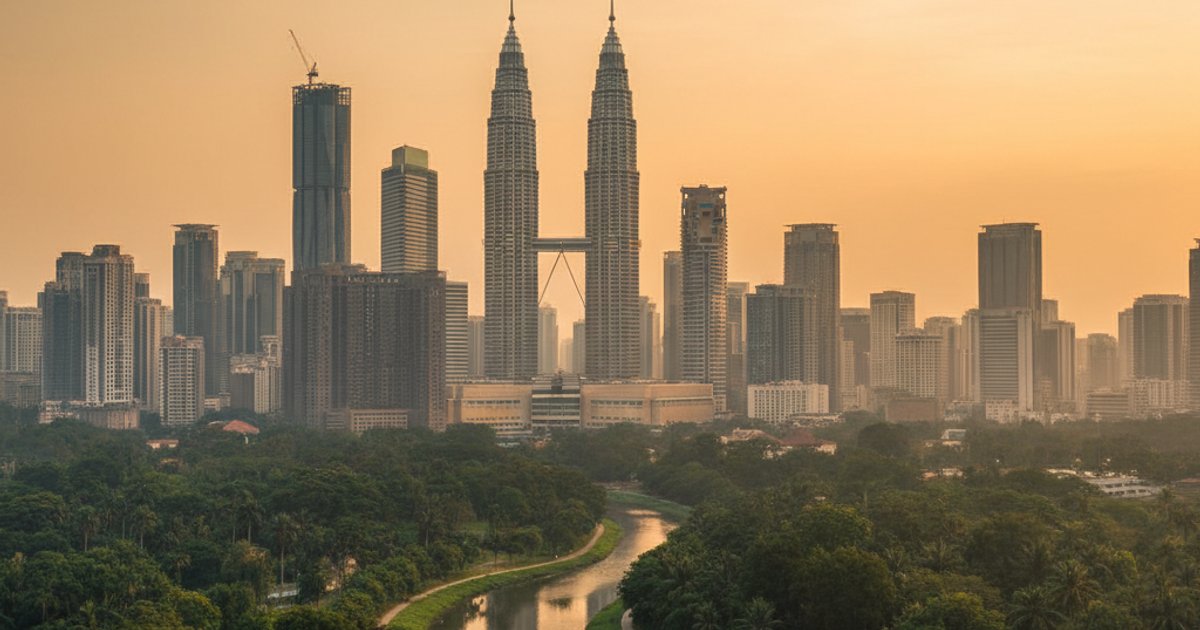
Photorealistic, high-resolution photograph with natural lighting, professional composition, sharp focus, suitable for a professional blog article. A bustling urban skyline of Kuala Lumpur at dusk, with modern skyscrapers and visible haze, contrasting with a foreground of lush green trees and a river, subtly highlighting the tension between development and nature.
Pressure on Natural Landscapes and Biodiversity
The expansion of residential areas and supporting infrastructure for a growing population, including MM2H participants, often encroaches upon critical natural habitats. This leads to deforestation, fragmentation of ecosystems, and loss of biodiversity. Coastal areas, popular for their scenic beauty, are particularly vulnerable to overdevelopment, impacting marine ecosystems and mangrove forests that act as natural buffers against climate change impacts. The Department of Wildlife and National Parks (PERHILITAN) has documented a 10% decline in forest cover in certain urban-adjacent areas over the past decade, partly due to residential and commercial expansion.
This ecological degradation directly threatens Malaysia’s rich biodiversity, home to iconic species like the Malayan tiger and various endemic flora. The loss of these natural assets not only diminishes the country’s environmental heritage but also undermines its potential for sustainable eco-tourism, a sector that could otherwise offer significant economic benefits with minimal environmental impact.
What Can Malaysia Learn from Other Countries’ Residency Programs?
Malaysia can draw crucial lessons from other nations that have successfully integrated environmental sustainability into their long-term residency and investment migration programs. Countries like Portugal, with its ‘Golden Visa’, and certain Caribbean nations, have started to link residency approvals with investments in green projects or stringent environmental impact assessments. This approach ensures that economic gains do not come at an unacceptable ecological cost, offering a blueprint for a more responsible MM2H.
For instance, Portugal’s ‘Golden Visa’ program, while primarily focused on real estate, has seen increasing calls for investments in environmental projects, particularly in rural regeneration and sustainable tourism. Similarly, some Caribbean citizenship-by-investment programs offer options to invest in renewable energy or environmental conservation funds. These models demonstrate a shift towards a ‘green premium’ in residency programs, where applicants contribute directly to environmental protection or sustainable development as part of their entry criteria.
| Country/Program | Environmental Integration Strategy | Key Learnings for MM2H |
|---|---|---|
| Portugal (Golden Visa) | Increasing focus on rural regeneration and sustainable tourism investments; less emphasis on high-density urban property. | Shift investment criteria towards green infrastructure, rural development, or eco-tourism projects outside saturated urban centers. |
| Caribbean Nations (CBI Programs) | Option to invest in national environmental funds or renewable energy projects. | Introduce a ‘Green Investment’ tier for MM2H, allowing applicants to contribute to dedicated environmental conservation funds. |
| New Zealand (Investor Visas) | Strong emphasis on environmental impact assessments for large-scale investments; high environmental standards for property development. | Implement mandatory environmental impact assessments for MM2H-related property developments; promote eco-friendly housing standards. |
| Canada (Start-up Visa) | Focus on innovative businesses, including clean technology and sustainable solutions. | Encourage MM2H applicants with business acumen to invest in or establish green technology and sustainable enterprises in Malaysia. |
What Sustainable Solutions Are Being Proposed for MM2H?
To mitigate the environmental impact of the MM2H program, stakeholders are proposing a multi-pronged approach that includes green infrastructure development, enhanced waste management systems, and the promotion of eco-tourism. These solutions aim to balance economic growth with ecological preservation, ensuring that Malaysia remains attractive to foreign residents while safeguarding its natural heritage. The focus is on integrating sustainability into every aspect of the program, from policy to practice.
One key proposal, championed by the Malaysian Nature Society (MNS), is the implementation of mandatory green building standards for all new residential developments catering to MM2H participants. This would include requirements for energy efficiency, water conservation, and the use of sustainable materials. Furthermore, there’s a strong push for investing in smart city technologies that optimize resource use and reduce waste in urban areas where MM2H residents tend to congregate.
Green Infrastructure and Urban Planning
Integrating green infrastructure into urban planning is paramount. This means more than just parks; it involves permeable surfaces to manage stormwater, urban forests to combat heat islands, and public transport networks that reduce reliance on private vehicles. The Malaysian Institute of Planners (MIP) advocates for a ‘green corridor’ approach, connecting urban green spaces and protecting biodiversity within city limits. For MM2H participants, this could mean incentives for choosing homes in eco-certified developments or areas with robust public transport access.
The government could also explore designating specific ‘sustainable zones’ for MM2H participants, where development is strictly controlled and environmental standards are exceptionally high. This would concentrate development in areas designed for sustainability, reducing scattered impacts across sensitive regions. Such zones could also serve as showcases for Malaysia’s commitment to green living.
Enhanced Waste Management and Circular Economy Initiatives
Improving waste management is critical. This involves not only better collection and recycling infrastructure but also promoting a circular economy among residents. Educational campaigns targeting MM2H communities on waste segregation, composting, and reducing single-use plastics could significantly reduce landfill burden. Incentives for businesses that offer repair services or product take-back schemes could also foster a more sustainable consumption culture.
A 2023 report by the Solid Waste Management and Public Cleansing Corporation (SWCorp) highlighted that effective community engagement programs could increase recycling rates by up to 20% in residential areas. Applying this specifically to MM2H communities, perhaps through dedicated multilingual resources and local initiatives, could yield substantial environmental benefits.

Photorealistic, high-resolution photograph with natural lighting, professional composition, sharp focus, suitable for a professional blog article. A diverse group of people, including some appearing to be expatriates, participating in a community clean-up event on a Malaysian beach, collecting plastic waste, with lush tropical vegetation and clear blue waters in the background.
Promoting Eco-Tourism and Conservation Contributions
Shifting the focus towards eco-tourism and encouraging MM2H participants to contribute to conservation efforts offers a dual benefit. Instead of purely residential property investment, the program could incentivize investments in sustainable tourism infrastructure, such as eco-lodges or conservation-focused resorts. Furthermore, a portion of the MM2H visa fees or a new ‘green levy’ could be directly channeled into national conservation funds, providing a stable source of funding for environmental protection projects.
This approach aligns with Malaysia’s broader tourism strategy, which aims to promote responsible and sustainable travel. By engaging MM2H residents in these initiatives, they become active participants in preserving the country’s natural beauty, fostering a deeper connection to their second home and its environment.
What are the Long-Term Implications for Malaysia’s Environmental Goals?
The long-term implications of MM2H’s environmental footprint directly challenge Malaysia’s ambitious environmental goals, including its commitments under the Paris Agreement and its national biodiversity conservation targets. Without proactive integration of green policies, the program risks becoming a significant impediment to achieving sustainable development, potentially leading to irreversible ecological damage and undermining the country’s international standing as an environmentally conscious nation. The stakes are incredibly high, affecting everything from air quality to water security.
Malaysia has pledged to reduce its greenhouse gas emissions intensity of GDP by 45% by 2030, relative to 2005 levels, and aims for carbon neutrality by 2050. A growing population, even a relatively small segment like MM2H residents, with a high consumption footprint, makes these targets harder to achieve. The continued pressure on natural resources and increased waste generation directly contradict these national objectives. The National Policy on Biological Diversity 2016-2025 also seeks to halt biodiversity loss; however, habitat destruction driven by urban expansion poses a direct threat to this goal.
Policy Integration and Green Economy
The current debate surrounding MM2H’s environmental impact underscores the urgent need for cross-ministerial policy integration. Environmental considerations must be woven into immigration, tourism, and urban planning policies, moving beyond siloed approaches. This means that decisions regarding residency programs cannot solely be driven by economic metrics but must also account for ecological sustainability. The adoption of a circular economy model, where resources are reused and recycled, could transform waste into valuable inputs, reducing environmental strain while creating new economic opportunities.
The Malaysian government’s push towards a green economy, as outlined in the Green Technology Master Plan 2017-2030, provides a framework for this integration. By aligning MM2H with these broader national strategies, Malaysia can ensure that its residency program contributes positively to its environmental future, rather than detracting from it. This includes promoting green investments, fostering eco-innovation, and developing sustainable infrastructure across the country.
Frequently Asked Questions
What specific environmental concerns are linked to MM2H?
The primary environmental concerns linked to MM2H include increased per capita resource consumption (water, electricity), higher rates of municipal solid waste generation, and pressure on natural landscapes due to urban and residential development. These factors contribute to a larger carbon footprint and habitat loss in popular expat areas.
Has the Malaysian government acknowledged these environmental concerns?
As of June 6, 2026, discussions are intensifying among environmental groups and urban planners, bringing these concerns to the forefront. While specific government responses regarding MM2H’s environmental impact are still evolving, Malaysia has broad national environmental policies and targets that these concerns directly challenge.
Are there any proposed changes to the MM2H program to address these issues?
Stakeholders are proposing several changes, including integrating green investment options, implementing mandatory environmental impact assessments for MM2H-related developments, and promoting eco-tourism. These are currently proposals from advocacy groups and urban planners, aimed at influencing future policy decisions.
How does MM2H’s environmental impact compare to other immigration programs globally?
While many long-term residency programs worldwide focus on economic benefits, there’s a growing global trend to integrate environmental sustainability. Malaysia can learn from countries like Portugal and New Zealand, which are increasingly linking residency to green investments or stringent environmental standards, offering a pathway for MM2H to evolve.
What role can MM2H participants play in mitigating environmental impact?
MM2H participants can play a significant role by adopting sustainable lifestyles, engaging in community recycling and conservation efforts, and supporting eco-friendly businesses. Choosing homes with green certifications and utilizing public transport can also substantially reduce their individual environmental footprint.
Will addressing environmental concerns make the MM2H program less attractive?
Not necessarily. Integrating sustainability could enhance the program’s appeal to environmentally conscious applicants, aligning with global trends towards responsible living and investment. A greener MM2H could attract a new demographic seeking a sustainable lifestyle in Malaysia, potentially increasing its long-term attractiveness and resilience.
What are the economic benefits of making MM2H more environmentally friendly?
Making MM2H more environmentally friendly can lead to significant economic benefits, including attracting green investments, fostering innovation in sustainable industries, and enhancing Malaysia’s brand as an eco-conscious destination. It can also reduce long-term costs associated with environmental degradation, such as disaster relief and resource scarcity, while boosting eco-tourism revenue.
Last updated: June 6, 2026
 English
  Chinese (Taiwan)
  Chinese (China)