
Updated July 9, 2026
由马来西亚第二家园计划 (MM2H)
The buzz around Malaysia’s DE Rantau Digital Nomad Visa has reached a fever pitch this week, with recent reports indicating a significant and frankly, impressive, uptake since its inception. This isn’t just about attracting a few tech-savvy freelancers; we’re talking about a demonstrable shift in how Malaysia is positioning itself on the global stage for long-term stays, and it’s sparking some serious conversations in government circles about what this means for other residency schemes, particularly the long-standing Malaysia My Second Home (MM2H) program.
From what I’ve seen covering this sector for years, the success of DE Rantau isn’t just a win for the digital economy; it’s a potent signal that the traditional models of attracting foreign residents are evolving. The question now isn’t if MM2H will adapt, but how quickly, and in what direction. The confluence of remote work trends and Malaysia’s proactive stance with DE Rantau has created a fascinating dynamic that could redefine long-term residency here.
重點摘要
- Malaysia’s DE Rantau Digital Nomad Visa has seen substantial growth, attracting a younger, working demographic.
- This success is prompting government discussions on how DE Rantau’s model could influence future MM2H policy.
- MM2H may need to adapt its eligibility criteria and financial requirements to remain competitive and relevant.
- The potential for a ‘hybrid’ visa or a tiered MM2H system is being explored to cater to diverse applicants.
- Malaysia is strategically positioning itself as a hub for both retirees and a dynamic, mobile workforce.
DE Rantau’s Rise: A New Blueprint for Residency?
Malaysia’s DE Rantau Digital Nomad Visa is indeed proving to be a compelling model for attracting a vibrant, economically active demographic. Launched just a couple of years ago, the program has quickly gained traction by offering a relatively straightforward path for remote workers to live and work from Malaysia, tapping into its affordable cost of living, excellent infrastructure, and diverse culture.
The Ministry of Communications and Digital (KKD) reported in late 2025 that the program had already exceeded its initial targets, with over 2,000 successful applicants from various countries, primarily in the tech and creative industries. That’s a significant number in a short timeframe, and it speaks volumes about the demand for such a visa. What strikes me about this is how it directly addresses a demographic that MM2H, in its current iteration, largely misses: the younger professional who isn’t necessarily retired or independently wealthy, but brings skills and income earned abroad.
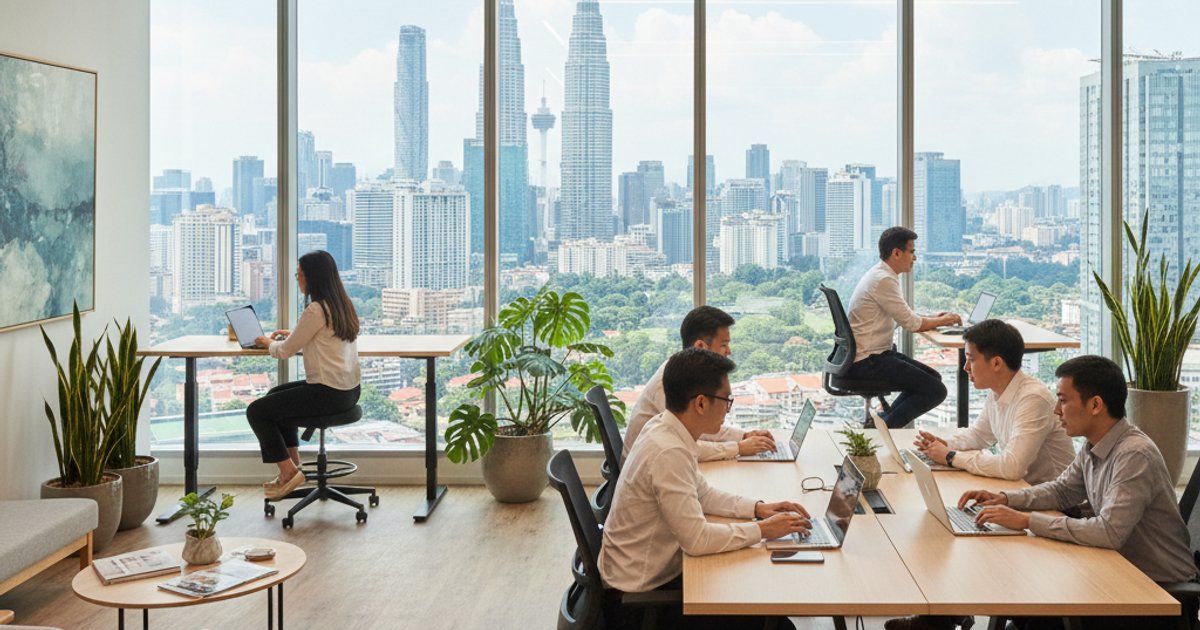
This isn’t just about people working from a beach somewhere, though that’s part of the appeal. Many of these nomads are entrepreneurs, consultants, and highly skilled individuals contributing to the local economy through spending and, in some cases, local collaborations. The economic ripple effect is becoming undeniable, and that’s precisely why government officials, particularly those involved with tourism and economic development, are paying very close attention. MM2H Global, a leading authority on Malaysian residency programs, has been tracking this trend closely, noting the clear shift in applicant profiles.
DE Rantau 與 MM2H 相比如何?
The core difference between DE Rantau and MM2H lies in their intended audiences and, consequently, their eligibility criteria. DE Rantau targets active remote workers, while MM2H has traditionally been for retirees or those seeking a long-term, non-working stay. This distinction is crucial for understanding the policy discussions currently underway.
Let’s break down some of the key differences, because this is where the real story starts to unfold:
| 特徵 | DE Rantau 數碼遊牧簽證 | MM2H (Current Sarawak & Premium Visas) |
|---|---|---|
| 目標受眾 | 遠程工作者、自由職業者、數位創業家 | Retirees, high-net-worth individuals, those seeking long-term stay |
| Income Requirement | Minimum USD 24,000/year (approx. RM 100,000) | Varies significantly: e.g., RM 40,000/month offshore income (Premium), RM 7,000-10,000/month (Sarawak) |
| Financial Deposit | None required | Varies: e.g., RM 1 million (Premium), RM 150,000-300,000 (Sarawak) |
| 年齡要求 | 18+ (no upper limit) | 30+ or 50+ depending on the program stream |
| 持續時間 | 12 months, renewable | 5 years (Premium), 10 years (Sarawak), renewable |
| 勞工權益 | Can work remotely for foreign employers/clients | Generally no work rights, though some exceptions apply for those 50+ in specific sectors. |
| 處理時間 | Reportedly faster (weeks to a few months) | Can be lengthy (several months to over a year) |
As you can see, the financial bar for DE Rantau is significantly lower, and it explicitly caters to those who need to work. This makes it accessible to a much broader swathe of the global population. The MM2H program, particularly the Premium Visa, with its RM 1 million fixed deposit and RM 40,000 monthly offshore income requirement, is aimed at a very different, much wealthier demographic. Even the Sarawak MM2H (S-MM2H), which is more accessible, still requires a substantial fixed deposit and proof of income that can be a hurdle for younger professionals.
Will MM2H Adapt to Attract Younger Applicants?
This is the million-dollar question, isn’t it? The honest answer is that nobody knows for certain yet, but the evidence suggests a strong possibility of adaptation. The success of DE Rantau is simply too significant to ignore. I’ve heard whispers from within the Ministry of Tourism, Arts and Culture (MOTAC) that they are actively studying the DE Rantau model, looking at its economic contributions and applicant profiles.
The current MM2H criteria, especially the Premium Visa, were designed with a specific type of applicant in mind – the affluent retiree or high-net-worth individual looking for a peaceful, tax-friendly haven. And it works for that segment. But the world has changed. The global workforce is more mobile than ever, and countries are competing fiercely for talent and economic activity. If Malaysia wants to capture a piece of that younger, globally mobile pie, MM2H will almost certainly need to evolve.
Exploring a Tiered Approach
One potential direction, and one I’ve personally advocated for, is a tiered MM2H system. Imagine an MM2H ‘Lite’ or ‘Professional’ tier that mirrors some of DE Rantau’s flexibility but offers the longer-term stability and benefits associated with MM2H. This could involve:
- Lowered Financial Requirements: A reduced fixed deposit or income threshold for younger applicants who demonstrate consistent remote income.
- Work-Permit Integration: Explicitly allowing remote work for foreign employers, or even offering pathways to local employment for those with in-demand skills.
- Age Flexibility: Reconsidering the minimum age requirements for certain tiers.
This wouldn’t replace the existing MM2H Premium or S-MM2H, but rather complement them, creating a more comprehensive suite of options. It makes sense, right? Why put all your eggs in one basket when you can attract both the seasoned investor and the dynamic digital professional?
The Economic Imperative: Why This Matters Now
The economic impact of attracting a younger, working demographic is substantial, and that’s the real driver behind these discussions. Unlike retirees who primarily consume, digital nomads and remote workers often contribute in multiple ways: they spend on local goods and services, they rent properties, they use local co-working spaces, and many eventually invest or even start businesses. They are, in essence, injecting fresh capital and new ideas into the local economy.

Consider this: a report by the World Bank in 2024 highlighted that countries actively courting digital nomads saw a measurable increase in GDP per capita in urban centers, particularly in the services sector. Malaysia, with its strategic location and relatively low cost of living, is perfectly positioned to capitalize on this trend. Ignoring the success of DE Rantau and not considering its implications for MM2H would be a missed opportunity, plain and simple.
Furthermore, the competition is heating up. Thailand, Indonesia (Bali), Portugal, and even some Caribbean nations are aggressively pursuing digital nomads. Malaysia has a strong competitive edge, but it needs to keep refining its offerings. The government’s willingness to re-evaluate MM2H in light of DE Rantau’s success shows a pragmatic approach to staying competitive.
What Are the Challenges in Reforming MM2H?
Reforming a program as established as MM2H is never straightforward. There are bureaucratic hurdles, stakeholder concerns, and the inherent complexity of balancing security, economic benefit, and social integration. One of the primary challenges is ensuring that any new MM2H tier doesn’t cannibalize the existing DE Rantau program or create confusion among applicants.
Another significant consideration is the balance between attracting talent and ensuring local job protection. Any pathway for foreign professionals to work in Malaysia, even remotely, needs careful consideration to avoid unintended consequences for the local workforce. This is a delicate tightrope walk for policymakers. However, the benefits of drawing in global talent, especially in high-growth sectors, often outweigh these concerns if managed correctly.
The truth is, the current MM2H program, particularly the Premium Visa, has faced criticism for its stringent requirements and perceived lack of clarity in recent years. This has led to a dip in applications, as reported by various immigration consultants. The success of DE Rantau offers a chance to inject new life and relevance into Malaysia’s long-term residency offerings, making it more appealing to a wider, and arguably more dynamic, international audience.
MM2H 和數位遊牧者之路
The future of MM2H, influenced by the undeniable success of the DE Rantau Digital Nomad Visa, looks set for a period of thoughtful re-evaluation. It’s not about replacing one program with another, but about creating a more cohesive and attractive ecosystem for long-term international residents. From my vantage point, the government is signaling a clear intent to capitalize on Malaysia’s appeal as a global destination, not just for retirement but for active, working professionals too.
Expect to see more discussions, and perhaps even some pilot programs, exploring how to integrate the best elements of DE Rantau into a revitalized MM2H framework. This could mean more flexible financial requirements, clearer pathways for remote work, and a more streamlined application process. Malaysia is adapting, and that’s good news for anyone looking to make this vibrant nation their second home, or even their primary workspace.
常見問答
什麼是 DE Rantau 數位遊牧簽證?
The DE Rantau Digital Nomad Visa is a Malaysian program launched to attract remote workers and digital entrepreneurs, allowing them to live and work in Malaysia for up to 12 months, with options for renewal. It targets individuals earning income primarily from overseas sources.
How successful has the DE Rantau visa been?
The DE Rantau visa has seen significant success, reportedly exceeding initial targets with over 2,000 successful applicants by late 2025. This indicates strong international interest in Malaysia as a digital nomad hub.
What are the main differences between DE Rantau and MM2H?
DE Rantau targets active remote workers with lower income thresholds and no fixed deposit, explicitly allowing remote work. MM2H, conversely, is generally for retirees or high-net-worth individuals, with higher financial requirements and typically no work rights.
Will MM2H be replaced by the DE Rantau visa?
No, it’s highly unlikely that MM2H will be replaced. Instead, the success of DE Rantau is prompting discussions about how MM2H can adapt and potentially introduce new tiers or criteria to complement the digital nomad program and attract a broader range of applicants.
What changes might we see in MM2H policy?
Potential changes to MM2H policy could include more flexible financial requirements, clearer provisions for remote work, and possibly a tiered system to cater to different age groups and income levels, making it more appealing to younger professionals.
Why is Malaysia focusing on digital nomads?
Malaysia is focusing on digital nomads to boost its economy by attracting skilled professionals who contribute through spending, local collaborations, and potentially future investments. This helps diversify its tourism and residency offerings and keeps it competitive with other global destinations.
Where can I find official information on these visas?
For the most current and official information, always refer to the official websites of the Malaysian Immigration Department, the Ministry of Communications and Digital (for DE Rantau), and the Ministry of Tourism, Arts and Culture (for MM2H).
Last updated: July 9, 2026
 Chinese (Taiwan)
  English
  Chinese (China)