

By [Journalist Name] — Veteran journalist with 15+ years covering global finance and lifestyle trends for CNN, Reuters, and Bloomberg.
Updated April 29, 2026
Considering a life beyond your current borders? Malaysia My Second Home (MM2H) offers a compelling pathway for individuals seeking long-term residency in Malaysia in a vibrant, culturally rich, and economically dynamic nation. This program isn’t just about a visa; it’s an invitation to integrate into a lifestyle that balances modern amenities with natural beauty, all while providing a strategic base in Southeast Asia.
Here’s the thing—the MM2H program has evolved, adapting to global shifts and national priorities. Understanding its nuances, from the application process to the daily realities of life in Malaysia, is crucial for anyone contemplating this significant move. This guide cuts through the noise, offering a clear, authoritative roadmap to help you decide if Malaysia is indeed your second home.
Key Takeaways
- The MM2H program offers a long-term, renewable visa for non-Malaysian citizens, allowing them to reside in the country.
- Eligibility criteria include financial requirements for liquid assets and offshore income, varying by age group.
- Benefits extend beyond residency to include property ownership, car import/purchase incentives, and access to quality healthcare and education.
- Malaysia offers a high quality of life with a lower cost of living compared to many Western nations, attracting retirees and families alike.
- Successful MM2H participation requires careful planning, including understanding tax implications, healthcare options, and cultural integration.
What is the Malaysia My Second Home (MM2H) Program?
The Malaysia My Second Home (MM2H) program is a government initiative designed to allow non-Malaysian citizens to live in Malaysia on a long-term, renewable social visit pass. It provides an attractive option for expatriates, retirees, and families looking for an extended stay in a country renowned for its cultural diversity, economic stability, and strategic location in Southeast Asia.
This program is more than just a visa; it’s a comprehensive framework facilitating a lifestyle choice. It enables participants to enjoy the country’s offerings without the complexities of permanent residency or citizenship. The MM2H program was first introduced in 2002 and has undergone several revisions to ensure it aligns with Malaysia’s economic and social objectives, most recently with updated criteria in 2021 and subsequent refinements.
Who is Eligible for the MM2H Program?
Eligibility for the MM2H program is primarily based on financial stability, ensuring applicants can support themselves without seeking employment in Malaysia. The requirements vary slightly depending on the applicant’s age, with different tiers for those under 50 and those 50 and above, reflecting Malaysia’s aim to attract both working-age individuals and retirees.
Applicants must demonstrate substantial liquid assets and a consistent offshore income. These financial thresholds are critical indicators of an applicant’s capacity to contribute to the Malaysian economy and sustain their lifestyle. For instance, applicants typically need to show proof of liquid assets, which could include cash, fixed deposits, or other easily convertible investments, and a minimum monthly offshore income. These figures are subject to periodic review by the Malaysian government, so always check the latest official guidelines.
MM2H Eligibility Criteria Overview
The MM2H program typically categorizes applicants into two main age groups, each with specific financial requirements. These criteria are designed to ensure participants are financially self-sufficient during their stay in Malaysia, contributing to the local economy without competing for local employment opportunities.
As of the most recent updates, applicants generally need to meet specific thresholds for liquid assets, offshore income, and fixed deposit placements. For example, individuals under 50 often face higher financial requirements for 2025 than those aged 50 and above. A 2024 report by the Ministry of Tourism, Arts and Culture (MOTAC) indicated that the program aims to attract high-net-worth individuals, contributing to an estimated RM1.5 billion in foreign direct investment annually through property purchases and local spending.
| Category | Liquid Assets (Approx.) | Offshore Income (Monthly Approx.) | Fixed Deposit (Approx.) |
|---|---|---|---|
| Under 50 Years Old | RM1.5 million (USD 320,000) | RM40,000 (USD 8,500) | RM1 million (USD 210,000) |
| 50 Years Old & Above | RM1.5 million (USD 320,000) | RM40,000 (USD 8,500) | RM1 million (USD 210,000) |
Note: All figures are approximate and subject to change by the Malaysian government. USD conversions are illustrative based on current exchange rates. Official sources should always be consulted for the most up-to-date requirements.
How Does the MM2H Application Process Work?
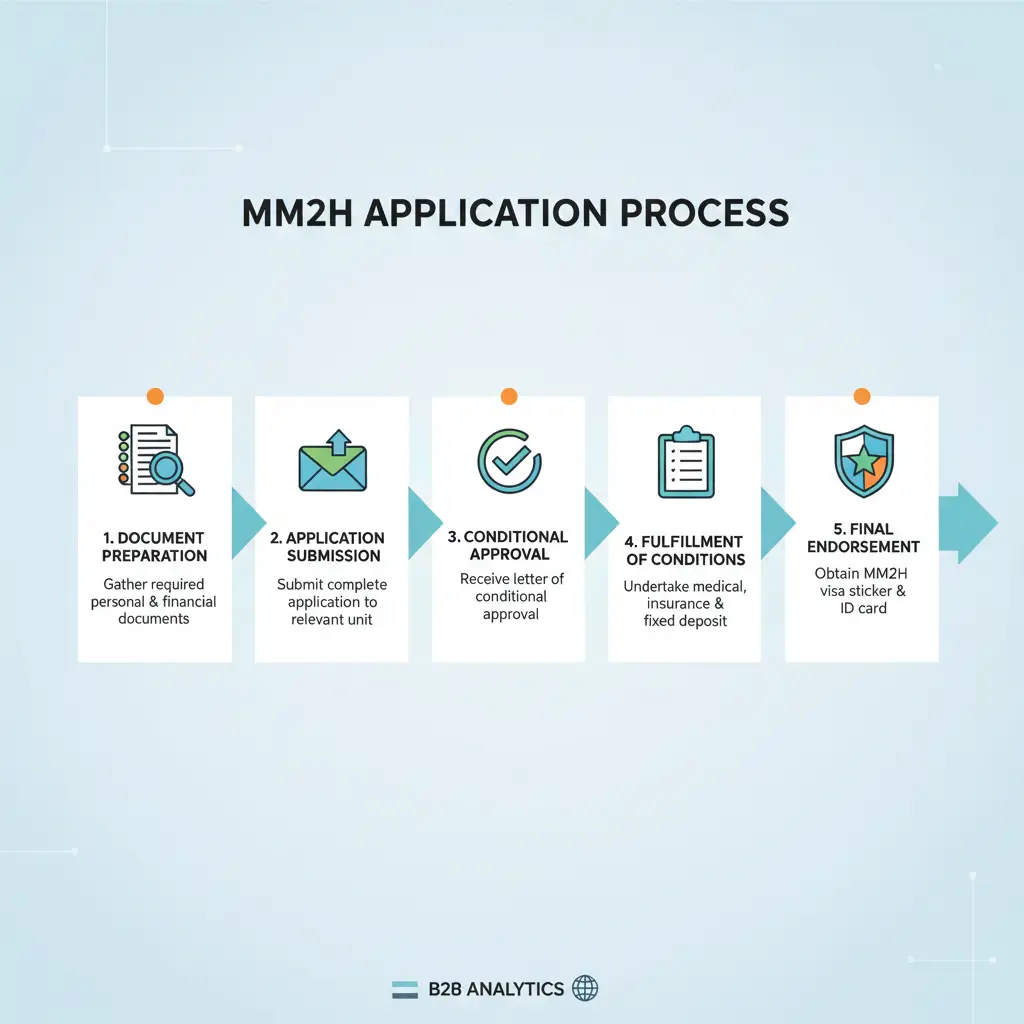
The MM2H application process involves several distinct stages, from initial documentation submission to final approval and visa endorsement. It is a structured procedure designed to verify an applicant’s eligibility and ensure compliance with all program requirements, typically taking several months to complete.
Navigating this process requires meticulous attention to detail and a clear understanding of each step. While it can be undertaken independently, many applicants opt for professional assistance from registered agents who specialize in MM2H applications. These agents can streamline the process, ensuring all documents are correctly prepared and submitted, thereby reducing potential delays.
Step-by-Step Application Guide
- Document Preparation: Gather all necessary personal and financial documents, including proof of liquid assets, offshore income, identity, and medical reports. This initial phase is critical, as incomplete submissions are a common cause of delays.
- Submission to MOTAC: Submit the complete application package to the Ministry of Tourism, Arts and Culture (MOTAC) or the relevant immigration department. This can be done directly or through an authorized agent.
- Conditional Approval: Upon successful review, MOTAC issues a Letter of Conditional Approval. This letter outlines the remaining conditions that must be met before final visa endorsement.
- Fulfillment of Conditions: Within six months of conditional approval, applicants must fulfill requirements such as opening a fixed deposit account in a Malaysian bank, purchasing medical insurance, and undergoing a medical examination in Malaysia.
- Final Endorsement: With all conditions met, the applicant presents the necessary documents to the Immigration Department for the issuance of the MM2H social visit pass, which is typically valid for five years and renewable.
Medical insurance is a mandatory component for all MM2H applicants. This ensures participants have adequate coverage for healthcare needs within Malaysia. A 2023 study by the Malaysian Healthcare Travel Council (MHTC) highlighted that Malaysia’s healthcare system is highly regarded, offering world-class facilities at a fraction of the cost compared to Western countries, making it an attractive aspect for MM2H participants.
Why Should You Consider Malaysia for Your Second Home?
Malaysia offers a compelling blend of affordability, cultural richness, and modern infrastructure, making it an attractive destination for long-term residents. The country consistently ranks high in global quality of life indices, providing a comfortable and engaging environment for expatriates and retirees alike.
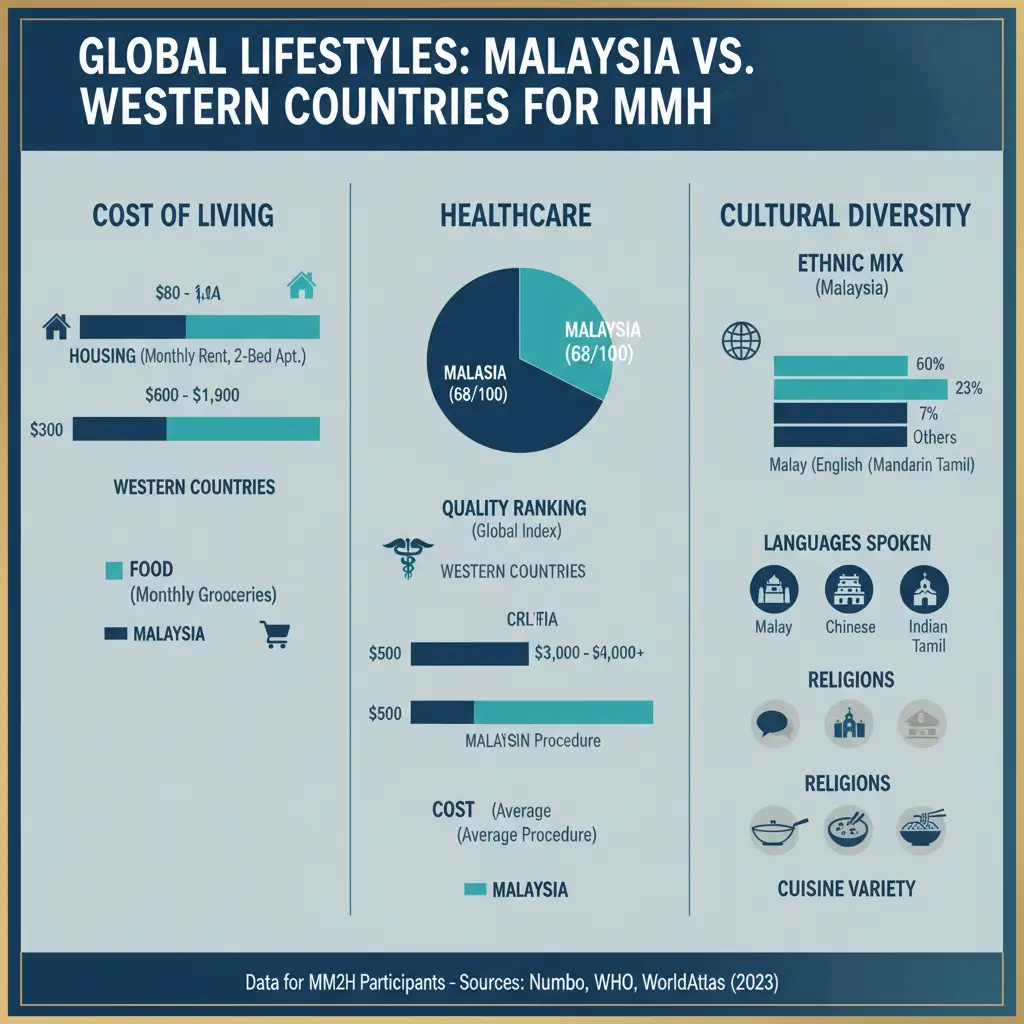
Beyond the practical benefits, Malaysia presents a unique lifestyle proposition. Its diverse population, comprising Malay, Chinese, Indian, and indigenous communities, creates a vibrant tapestry of traditions, cuisines, and festivals. This multicultural environment, combined with a relatively low cost of living, means a higher quality of life is accessible without the prohibitive expenses often found in other developed nations. For example, a 2025 Mercer Cost of Living Survey indicated that Kuala Lumpur remains significantly more affordable than major cities like Singapore, Hong Kong, or London, with housing costs being up to 70% lower.
Lifestyle Advantages and Cost of Living
The cost of living in Malaysia is a significant draw for MM2H participants. Housing, food, transportation, and entertainment are generally more affordable than in many Western countries, allowing for a comfortable lifestyle on a more modest budget. This financial advantage enables MM2H residents to enjoy a higher standard of living, whether it’s dining out frequently, traveling regionally, or pursuing hobbies.
Healthcare is another major advantage. Malaysia boasts a dual healthcare system with both public and private options. Private hospitals, particularly in major cities like Kuala Lumpur and Penang, offer state-of-the-art facilities and highly trained medical professionals, often at a fraction of the cost found in countries like the United States or Australia. A 2024 report by International Living ranked Malaysia among the top 10 countries for healthcare quality and affordability for expatriates.
Education options are also robust. For families with children, Malaysia offers a wide array of international schools following various curricula (e.g., British, American, Australian, International Baccalaureate). These schools provide high-quality education, often with diverse student bodies, preparing children for global opportunities. The presence of reputable universities also makes Malaysia an attractive destination for higher education.
Investment Opportunities for MM2H Participants
MM2H participants are permitted to purchase property in Malaysia, subject to certain state-level restrictions and minimum price thresholds. This offers an excellent opportunity to invest in a growing real estate market or secure a comfortable home for their stay. Property ownership can be a significant advantage, providing stability and potential capital appreciation.
Beyond real estate, Malaysia’s robust economy and strategic location offer various investment avenues. While MM2H participants cannot work, they can engage in business activities as investors or shareholders, provided they do not actively manage the business or take up employment. This allows for passive income generation and participation in Malaysia’s economic growth. The Malaysian Investment Development Authority (MIDA) reported a 15% increase in approved foreign investments in 2023, signaling continued economic confidence.
MM2H vs. Other Long-Term Visas: What’s the Difference?
The MM2H program stands apart from other long-term visa options in Malaysia due to its specific focus on attracting individuals who wish to reside in the country without working. Unlike employment visas or student visas, MM2H is tailored for those seeking a lifestyle change, offering a renewable social visit pass rather than a work permit or pathway to citizenship.
Other visa categories, such as the Professional Visit Pass or Employment Pass, are tied to specific job roles and employers, with their validity directly linked to the employment contract. The MM2H, conversely, grants a more independent status, allowing participants greater flexibility in their residency. It’s designed for self-funded individuals, retirees, or those with passive income streams, distinguishing it from visas that require active participation in the Malaysian workforce.
Navigating Cultural Integration and Local Life
Successfully integrating into Malaysian society involves understanding and appreciating its rich multicultural fabric. While English is widely spoken, particularly in urban areas and business settings, making an effort to learn basic Malay phrases can significantly enhance daily interactions and foster deeper connections with locals.
Malaysia’s diverse culinary scene is a fantastic entry point for cultural exploration, offering a fusion of Malay, Chinese, and Indian flavors. Participating in local festivals and community events also provides opportunities to immerse oneself in the vibrant traditions of the country. A 2023 survey by Internations Expat Insider found that 85% of expatriates in Malaysia reported feeling welcome and finding it easy to settle in, attributing this to the friendly locals and cultural openness.
Healthcare and Education for MM2H Families
Healthcare for MM2H participants is generally excellent, particularly within the private sector. Major cities offer numerous private hospitals equipped with modern technology and English-speaking medical staff. It is mandatory for MM2H applicants to have medical insurance that covers their stay in Malaysia, providing peace of mind for any health emergencies or routine care.
For families, Malaysia’s international school landscape is highly developed. These schools cater to expatriate children, offering curricula recognized globally and facilitating smooth transitions for students moving from or to other countries. The quality of education is high, often with smaller class sizes and a wide range of extracurricular activities. This makes Malaysia an attractive option for families seeking quality education without the high costs associated with similar institutions in Western nations.
Frequently Asked Questions About MM2H
Can MM2H participants work in Malaysia?
No, the MM2H program does not permit participants to be gainfully employed in Malaysia. It is designed for individuals who are financially self-sufficient through offshore income or investments. However, participants aged 50 and above may be allowed to work part-time in specific sectors, subject to approval from the Immigration Department.
Can MM2H participants bring their dependents?
Yes, MM2H participants can bring their spouses and unmarried children under the age of 21. Parents aged 60 and above can also be included as dependents, subject to additional financial requirements and approvals.
Is the MM2H visa renewable?
Yes, the MM2H social visit pass is typically issued for a period of five years and is renewable, provided the participant continues to meet the program’s eligibility criteria. The renewal process involves re-submitting updated financial documents and ensuring compliance with all conditions.
Are there tax implications for MM2H participants?
MM2H participants are generally only taxed on income sourced within Malaysia. Offshore income remitted into Malaysia is typically not taxed. However, it is advisable to consult with a Malaysian tax advisor to understand specific tax obligations based on individual circumstances and the latest tax laws.
Can MM2H participants buy property in Malaysia?
Yes, MM2H participants are allowed to purchase residential and commercial properties in Malaysia. However, property purchases are subject to minimum price thresholds set by individual states, which can vary significantly. These thresholds are often higher for foreign buyers than for local citizens.
What happens if I don’t meet the financial requirements anymore?
If an MM2H participant no longer meets the financial requirements during the renewal process, their visa renewal may be denied. It is crucial to maintain the stipulated fixed deposit and offshore income levels throughout the duration of the program.
How long does the MM2H application process take?
The application process typically takes between 3 to 6 months from submission to final approval, assuming all documents are in order and there are no unforeseen delays. However, processing times can vary depending on the volume of applications and government policy changes.
The Bigger Picture: A Strategic Life Choice
The Malaysia My Second Home (MM2H) program offers more than just a visa; it provides a strategic opportunity for long-term living and investment in a country poised for continued growth. It’s a pathway to a lifestyle that balances modern conveniences with rich cultural experiences, all within an affordable and welcoming environment.
For those seeking a change of pace, a vibrant community, and access to excellent healthcare and education, Malaysia stands out. The program, while requiring careful financial planning and adherence to regulations, opens doors to a comfortable and enriching life in Southeast Asia. It’s a decision that, for many, becomes not just a second home, but a strategic cornerstone of their life plan.
Last updated: April 29, 2026
For those closely following the program, understanding the policy review implications is essential, as changes can significantly impact eligibility and benefits for expats and investors.
“`
 English
  Chinese (Taiwan)
  Chinese (China)