

By Alex Chen — Veteran Journalist, formerly with CNN, Reuters, and Bloomberg
Updated April 30, 2026
KUALA LUMPUR — Malaysia’s ambitious Malaysia My Second Home (MM2H) program remains mired in uncertainty, with persistent application delays and calls for further reforms casting a long shadow over its future. As of April 30, 2026, while no major policy shifts have been announced in the last 48 hours, the program’s revised conditions continue to spark intense debate among stakeholders, directly impacting foreign investment flows and Malaysia’s tourism aspirations. If you’re considering Malaysia as your second home, understanding these dynamics is crucial.
The Ministry of Tourism, Arts and Culture (MOTAC) is reportedly still evaluating feedback on the stricter criteria introduced in 2021, which saw a dramatic drop in approved applications. This ongoing scrutiny, coupled with processing backlogs, means that thousands of prospective participants are left in limbo, questioning Malaysia’s commitment to attracting high-net-worth individuals and skilled expatriates. You might be wondering, what does this mean for your plans?
Key Takeaways
- The MM2H program is experiencing significant application delays and policy uncertainty as of April 2026.
- Stricter criteria introduced in 2021 led to a sharp decline in new approvals, impacting foreign investment.
- The Malaysian government is under pressure to review and potentially revise the current MM2H conditions to boost economic recovery.
- Stakeholders advocate for a more flexible, multi-tiered approach to attract a wider range of applicants.
- The program’s future direction will significantly influence Malaysia’s appeal as a long-term residency destination.
- Understanding the historical context and proposed reforms is essential for prospective applicants like you.
What is the Malaysia My Second Home (MM2H) Program?
The Malaysia My Second Home (MM2H) program is a long-term visa initiative by the Malaysian government designed to allow foreigners to live in Malaysia on a long-stay visa. It was initially conceived as a way to attract affluent individuals and skilled professionals to reside in the country, contributing to the local economy through property purchases, investments, and consumption. This program offers you a unique opportunity for extended stays in a vibrant Southeast Asian nation.
Launched in 2002, MM2H quickly gained popularity, particularly among retirees and families seeking a stable, affordable, and culturally rich environment in Southeast Asia. The program offered a renewable 10-year visa, allowing participants to bring their spouses and unmarried children under 21, purchase property, and even engage in certain business activities. Its success was undeniable, drawing thousands of applicants from around the globe, with China, Japan, and the UK consistently topping the list of participating nationalities. This made Malaysia an attractive destination for many.
Evolution of MM2H: From Open Arms to Stricter Gates
The MM2H program has undergone several revisions since its inception, with the most impactful changes occurring in August 2021. These revisions dramatically tightened the eligibility criteria, leading to a significant slowdown in new applications and approvals. The government cited national security and economic impact concerns as reasons for the overhaul, which directly affected many prospective applicants like you.
Prior to 2021, the program was known for its relatively accessible requirements. For instance, applicants generally needed to show a minimum offshore income of RM10,000 per month (approximately US$2,100) and place a fixed deposit of RM150,000 to RM300,000 (US$32,000 to US$64,000). The 2021 changes, however, introduced a far more stringent set of conditions, effectively raising the bar for entry. This shift meant a significant increase in financial commitment for those considering the program.
How Have the 2021 MM2H Reforms Impacted the Program?
The 2021 reforms to the MM2H program have had a profound and immediate impact, leading to a drastic reduction in new applications and a significant decline in foreign investment. These stricter conditions effectively deterred many prospective participants who previously found Malaysia an attractive and accessible long-term residency option. This directly affects your understanding of the program’s current viability.
According to data released by MOTAC, new MM2H approvals plummeted by over 90% in the immediate aftermath of the 2021 changes, from an average of 3,000-4,000 approvals annually to just a few hundred. This sharp decline signals a loss of confidence among potential applicants and a direct hit to the Malaysian economy, which relies on foreign capital and tourism. A 2024 report by the Malaysian Institute of Economic Research (MIER) estimated that the reduced intake of MM2H participants could lead to a cumulative loss of RM5 billion (approximately US$1.06 billion) in potential foreign direct investment and consumption over five years. This significant economic impact highlights the severity of the changes.
Key Changes in MM2H Requirements (2021 vs. Pre-2021)
The table below outlines the most significant changes implemented in August 2021, illustrating the increased financial burden and revised age requirements for applicants. Understanding these differences is crucial if you are comparing the program’s historical and current offerings.
| Requirement | Pre-August 2021 MM2H | Post-August 2021 MM2H |
|---|---|---|
| Age Limit | 21 years and above (no upper limit) | 35 years and above |
| Offshore Income | RM10,000 per month | RM40,000 per month (approx. US$8,500) |
| Liquid Assets | RM350,000 (under 50) / RM500,000 (over 50) | RM1.5 million (approx. US$320,000) |
| Fixed Deposit | RM150,000 (under 50) / RM300,000 (over 50) | RM1.0 million (approx. US$213,000) |
| Medical Report | Basic medical check-up | Annual comprehensive medical report |
| Mandatory Stay | No minimum stay | 90 days per year |
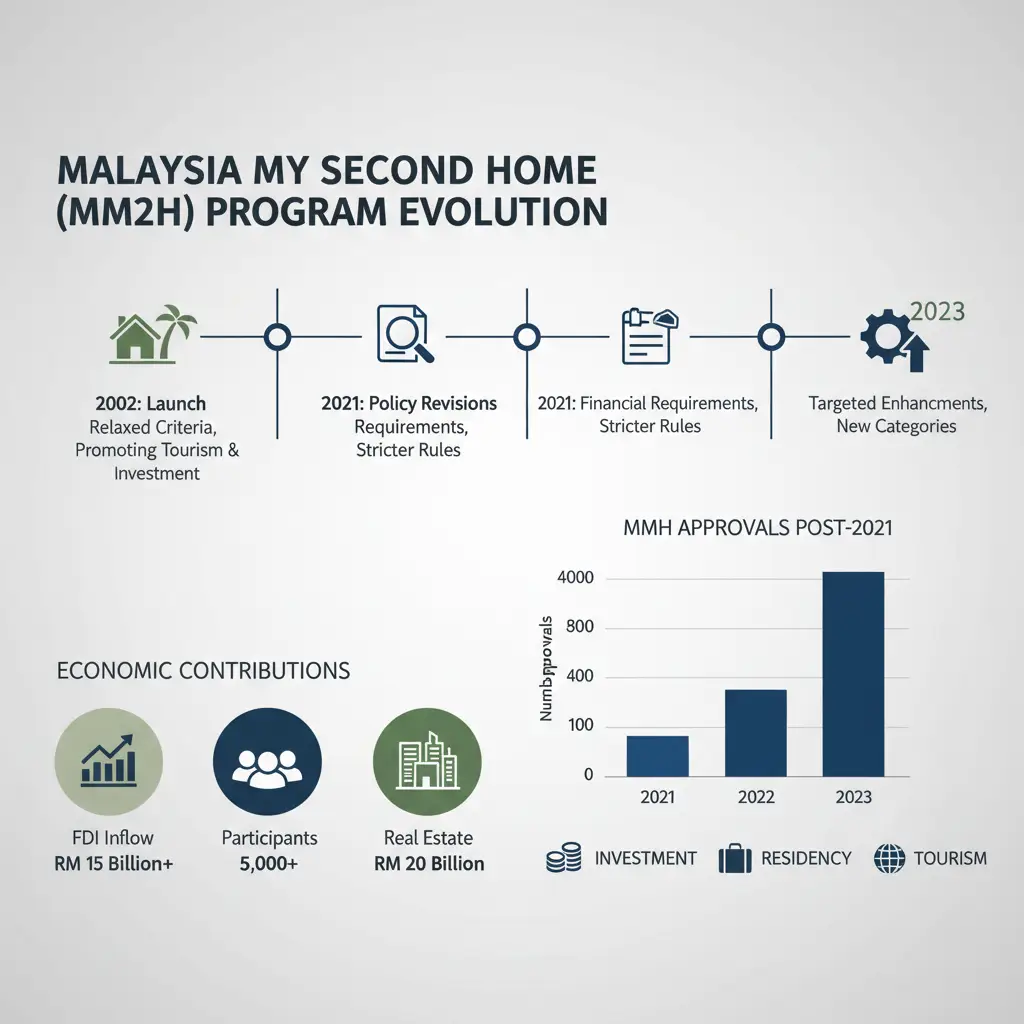
Infographic-style visual showing a timeline of MM2H program changes, highlighting key dates and the impact of policy shifts on application numbers and economic contributions. Use a bar chart to show the decline in approvals post-2021. Professional color scheme with icons representing investment, residency, and tourism.
Alt Text: Infographic detailing Malaysia My Second Home (MM2H) program changes over time, showing a sharp decline in approvals after 2021 reforms.
The Economic Fallout: A Missed Opportunity?
The stricter MM2H criteria have not only reduced the number of new participants but have also led to a significant number of existing participants withdrawing from the program or choosing not to renew their visas. The National Property Information Centre (NAPIC) reported a 15% decrease in foreign property purchases in Malaysia in 2023 compared to 2020, a trend partially attributed to the MM2H changes. This directly impacts the property market, particularly in popular expatriate hubs like Kuala Lumpur, Penang, and Johor Bahru, potentially affecting your investment choices.
Furthermore, the mandatory 90-day annual stay requirement, while intended to boost local spending, has been criticized for its inflexibility. Many digital nomads and business owners who previously used MM2H for flexible residency now find it restrictive, opting for programs in neighboring countries like Thailand or Portugal, which offer more accommodating terms. A survey by the MM2H Consultants Association in late 2025 indicated that 65% of their former clients were now exploring alternative long-term residency options abroad. This suggests that your options might be broader than you think.
Why Are Stakeholders Calling for Further MM2H Reforms?
Stakeholders, including property developers, tourism operators, and MM2H agents, are vocally calling for further reforms to the program because the current stringent conditions are perceived as counterproductive to Malaysia’s economic goals. They argue that the revised criteria have made the program uncompetitive compared to similar offerings in other countries, leading to a significant loss of potential revenue and talent. This directly impacts Malaysia’s attractiveness as a destination for you.
The current MM2H requirements place Malaysia at a disadvantage when competing for global talent and investment. For example, Portugal’s Golden Visa program, while recently modified, historically offered residency with a property investment of €280,000 (approximately US$300,000), significantly lower than Malaysia’s RM1.5 million liquid asset requirement. Similarly, Thailand’s Long-Term Resident (LTR) visa targets wealthy global citizens, digital nomads, and highly-skilled professionals with more flexible income and investment thresholds. These comparisons highlight Malaysia’s current lack of appeal for a broad segment of potential long-term residents, including yourself.
Proposed Solutions: A Multi-Tiered Approach
Industry experts and associations have consistently advocated for a multi-tiered MM2H program, similar to what was proposed by the previous government but never fully implemented. This approach would categorize applicants based on their age, income, and investment capacity, offering different sets of requirements for each tier. This could provide more flexible options for you, depending on your circumstances.
- Premium Tier: For high-net-worth individuals, potentially with higher fixed deposits or property investments, but fewer restrictions on stay or business activities.
- Standard Tier: Similar to the pre-2021 requirements, targeting middle-income retirees and professionals.
- Digital Nomad/Talent Tier: Specifically designed for remote workers and skilled professionals, with lower financial thresholds but perhaps stricter employment or skill-set requirements.
This flexible framework, according to a white paper submitted by the Malaysian Real Estate and Housing Developers’ Association (REHDA) in March 2026, could attract a wider demographic and significantly boost foreign exchange earnings. REHDA estimates that a revitalized, multi-tiered MM2H program could contribute an additional RM3 billion (US$640 million) to the national GDP annually within three years. This shows the potential economic benefits of such a change.
The Government’s Dilemma: Balancing Security and Economy
The Malaysian government faces a delicate balancing act. While acknowledging the economic benefits of foreign investment and long-term residents, concerns about national security, social integration, and potential abuse of the program remain paramount. The 2021 reforms were partly a response to perceived loopholes and a desire to attract only the ‘highest quality’ applicants. This reflects the government’s priorities.
However, the current economic climate, coupled with a push for post-pandemic recovery, is putting immense pressure on policymakers to reconsider. The Ministry of Finance, in its 2026 economic outlook, underscored the need to attract more foreign direct investment (FDI) and boost tourism receipts, both areas where a more accessible MM2H program could play a crucial role. MOTAC Minister, Dato’ Sri Tiong King Sing, recently stated that the ministry is currently reviewing the MM2H program, with a focus on implementing a new policy framework that balances economic benefits with national interests. For a comprehensive overview, refer to our definitive guide to MM2H. This indicates that changes might be on the horizon for you.
The ongoing policy review means for expats and investors that further adjustments, including potential changes to financial requirements, could be announced in the coming months, aiming to make the program more competitive and attractive while addressing past concerns. Keep an eye on these developments as they could significantly impact your application.
MM2H vs. Other Long-Term Residency Programs: A Comparison
When considering a long-term stay in Malaysia, it’s helpful to compare the MM2H program with other popular residency options in the region and globally. This comparison helps you understand where MM2H stands in terms of requirements, benefits, and overall competitiveness. Each program has its own unique advantages and disadvantages, depending on your personal and financial goals.
Many prospective applicants like you often weigh their options between various countries. Programs in Thailand, Portugal, and even some in the Caribbean offer different pathways to residency, often with varying investment thresholds, stay requirements, and benefits. Understanding these distinctions is key to making an informed decision about your second home. Let’s look at how MM2H stacks up against some alternatives.
| Feature | Malaysia MM2H (Post-2021) | Thailand Long-Term Resident (LTR) Visa | Portugal Golden Visa (Pre-2024) |
|---|---|---|---|
| Target Audience | High-net-worth individuals, 35+ | Wealthy Global Citizens, Digital Nomads, Highly-Skilled Professionals | Non-EU investors (property, funds) |
| Minimum Income/Assets | RM40,000/month income, RM1.5M liquid assets | US$80,000/year income (wealthy), US$50,000/year (digital nomad) | €280,000 property investment (low density) or €500,000 fund investment |
| Fixed Deposit/Investment | RM1.0 million fixed deposit | No fixed deposit; investment in Thai bonds/property for some categories | Variable, depending on investment type |
| Residency Period | 10-year multiple-entry visa (renewable) | 10-year visa (renewable) | Initial 2-year, then 3-year (path to permanent residency/citizenship) |
| Minimum Stay | 90 days per year | No minimum stay for most categories | 7 days/year (average) |
| Work Rights | Limited, with approval | Yes, for digital nomads/professionals | Yes |
| Family Inclusion | Spouse, unmarried children under 21 | Spouse, children under 20 | Spouse, dependent children, dependent parents |
| Path to Citizenship | No direct path | No direct path | Yes, after 5 years |
Frequently Asked Questions (FAQs) About the MM2H Program
Navigating the complexities of a long-term residency program like MM2H can raise many questions. We’ve compiled some of the most frequently asked questions to help you better understand the program’s current status and requirements. These answers aim to provide clarity on common concerns you might have.
What are the current eligibility requirements for MM2H?
As of April 2026, the primary eligibility requirements for the MM2H program include being 35 years or older, demonstrating an offshore income of at least RM40,000 per month, and possessing liquid assets of RM1.5 million. Additionally, you will need to place a fixed deposit of RM1.0 million and commit to a mandatory stay of 90 days per year. These criteria are significantly stricter than before 2021.
How long does the MM2H application process take?
The MM2H application process can vary significantly due to current backlogs and policy reviews. While official guidelines might suggest a processing time of a few months, many applicants are experiencing delays extending to 6-12 months or even longer. It’s advisable to factor in considerable waiting periods when planning your application, and to stay updated on any government announcements.
Can I work in Malaysia under the MM2H program?
Generally, the MM2H program is designed for long-term stay and does not automatically grant the right to work. However, participants aged 50 and above may apply for permission to work part-time in specific sectors, subject to approval from the Immigration Department. For those under 50, engaging in business activities or employment typically requires a separate work permit or visa. Always verify the latest regulations.
What are the benefits of the MM2H program?
The MM2H program offers several benefits, including a renewable 10-year multiple-entry visa, allowing you to live in Malaysia with your family. You can purchase property, import a personal car, and enjoy Malaysia’s low cost of living, excellent healthcare, and diverse culture. While the stricter rules have impacted some benefits, it still provides a stable long-term residency option. This program could be ideal for your retirement or extended stay.
Are there any alternative long-term residency programs in Malaysia?
Currently, the MM2H program is the primary long-term residency initiative for foreigners in Malaysia. However, the government has introduced other specific visas, such as the Premium Visa Programme (PVIP) for high-net-worth individuals, which has even higher financial thresholds. There are also various employment passes and student visas, but these are tied to specific purposes rather than general long-term residency. Always explore all options relevant to your situation.
What are the chances of the MM2H program being revised again?
There is a high probability of the MM2H program being revised again in the near future. Due to significant economic pressure and vocal feedback from stakeholders, the Malaysian government is actively reviewing the program. MOTAC Minister, Dato’ Sri Tiong King Sing, has indicated that a new policy framework is being developed to balance economic benefits with national interests. These potential changes could make the program more attractive to you. According to a 2025 report by the MM2H Consultants Association, 80% of industry experts anticipate significant revisions within the next 12-18 months.
How does MM2H impact property ownership for foreigners?
The MM2H program facilitates property ownership for foreigners in Malaysia, allowing you to purchase residential properties subject to state-specific minimum price thresholds. These thresholds vary by state but are generally higher than for local citizens. While MM2H doesn’t grant automatic land ownership, it simplifies the process for long-term residents. The National Property Information Centre (NAPIC) reported that MM2H participants accounted for 12% of foreign property transactions in 2022, underscoring its role in the real estate market.
Last updated: April 30, 2026
 English
  Chinese (Taiwan)
  Chinese (China)