

By Alex Chen — Senior Correspondent, Southeast Asian Economy & Geopolitics
Updated May 4, 2026
Malaysia’s My Second Home (MM2H) program, a long-term residency visa scheme, is quietly experiencing a surge in inquiries, not due to any immediate policy overhaul, but as a direct consequence of shifting global economic tides and persistent geopolitical uncertainties. This renewed interest underscores a broader trend: individuals and families are actively seeking stability and a high quality of life at a reasonable cost, and Malaysia, with its strategic location and developed infrastructure, fits that bill perfectly. The program, which allows foreigners to live in Malaysia on a long-stay visa, is once again on the radar for many who are re-evaluating their options in a volatile world.
Key Takeaways: Why MM2H is Gaining Global Attention
- MM2H is seeing renewed interest driven by global economic volatility and regional uncertainties, rather than new policy changes.
- Malaysia offers a compelling blend of affordability, political stability, and quality of life, making it attractive for long-term residency.
- Despite stricter requirements introduced in 2021, the program remains competitive compared to similar schemes in other Asian nations.
- The rising cost of living in traditional expatriate hubs is pushing more applicants towards Southeast Asian alternatives like Malaysia.
- Future policy adjustments, particularly concerning financial thresholds, could further enhance MM2H’s appeal to a wider demographic.
- The program provides a stable, long-term residency option for those seeking a secure lifestyle without relinquishing their original nationality.
What’s Driving the Renewed Interest in Malaysia My Second Home (MM2H)?
The renewed interest in Malaysia My Second Home (MM2H) stems primarily from a confluence of global economic anxieties and a search for stability, rather than recent policy adjustments within the program itself. You might be surprised to learn that as of May 4, 2026, individuals and families are increasingly looking for long-term residency options that offer a high quality of life without the exorbitant costs seen in many Western countries or other developed Asian hubs.
This trend is particularly noticeable among retirees and digital nomads who prioritize financial prudence and a secure environment. The program’s fundamental offering—a long-term visa in a politically stable, economically growing nation—is proving to be a powerful draw. It’s a strategic move for those who want to diversify their residency options or simply enjoy a more relaxed lifestyle, giving you peace of mind.
Global Economic Headwinds Pushing Demand for MM2H
Persistent inflation and slower economic growth in major developed economies are compelling many to re-evaluate their cost of living, pushing them towards programs like MM2H. For instance, a recent report by the Economist Intelligence Unit (EIU) in late 2025 indicated that cities like Singapore and Hong Kong remain among the world’s most expensive, driving a noticeable exodus of expatriates and retirees towards more affordable regional alternatives. Malaysia, with its significantly lower cost of living, emerges as a prime candidate for your consideration.
The average monthly expenditure for a comfortable lifestyle in Kuala Lumpur is estimated to be 40-50% lower than in Singapore, according to a 2024 Mercer Cost of Living Survey. This substantial difference allows your savings to stretch further. The search for value extends beyond daily expenses, as housing, healthcare, and education costs are also considerably lower.
A 2025 study by Knight Frank noted that prime residential property in Kuala Lumpur is, on average, 60% less expensive than comparable properties in Tokyo or Sydney. This financial advantage allows applicants like you to stretch your retirement savings or investment capital further, providing a greater sense of security in uncertain times. This makes MM2H a smart financial choice for long-term planning.
How Do MM2H Requirements Compare to Regional Programs?
MM2H requirements, while tightened in 2021, remain competitive when benchmarked against similar long-stay visa programs across Southeast Asia, particularly for those seeking a balance between financial commitment and lifestyle benefits. The program’s current criteria, such as the requirement for a fixed deposit of RM1 million (approximately US$210,000) and offshore income of RM40,000 per month (approximately US$8,400), position it as a premium offering, yet one that still delivers significant value compared to its neighbors.
This positioning attracts a specific demographic: affluent individuals who can meet the financial thresholds but are still keen on the quality of life and lower operational costs Malaysia provides. The program’s structure also allows for dependents, making it attractive for families looking to relocate. You’ll find that Malaysia offers a compelling package for your family’s future.
A Look at Key Requirements Across Asia for Long-Stay Visas
Comparing MM2H to other regional programs highlights Malaysia’s unique value proposition, offering a balanced approach to long-term residency. While some nations offer lower entry barriers, they often come with fewer long-term benefits or a higher cost of living. For example, Thailand’s Long-Term Resident (LTR) visa targets specific high-potential groups and has a 10-year validity, but its investment options can be more complex for you to navigate.
The Philippines’ Special Resident Retiree’s Visa (SRRV) has a lower deposit requirement but may not offer the same level of infrastructure or healthcare access as Malaysia. You’ll notice that each program has its unique advantages and disadvantages, making your choice dependent on your personal priorities. Malaysia aims for a comprehensive package.
Here’s a comparison of key requirements for long-stay visas in select Asian countries, as of May 2026, to help you understand your options:
| Program | Country | Minimum Fixed Deposit / Investment | Minimum Monthly Income | Visa Duration | Key Benefit for You |
|---|---|---|---|---|---|
| MM2H | Malaysia | RM1,000,000 (~US$210,000) | RM40,000 (~US$8,400) | 5 years (renewable) | Stable, developed infrastructure, low cost of living, English widely spoken |
| LTR Visa | Thailand | US$500,000 (investment) or specific income criteria | US$80,000/year (for wealthy global citizens) | 10 years | Tax benefits, work permit for certain categories, vibrant tourism |
| SRRV | Philippines | US$10,000 – US$50,000 (deposit) | None specified (for some categories) | Indefinite | Low entry barrier, vibrant expat community, cultural familiarity |
| Indonesia Second Home Visa | Indonesia | IDR 2,000,000,000 (~US$125,000) | None specified | 5 or 10 years | Focus on tourism and digital nomads, island lifestyle, natural beauty |
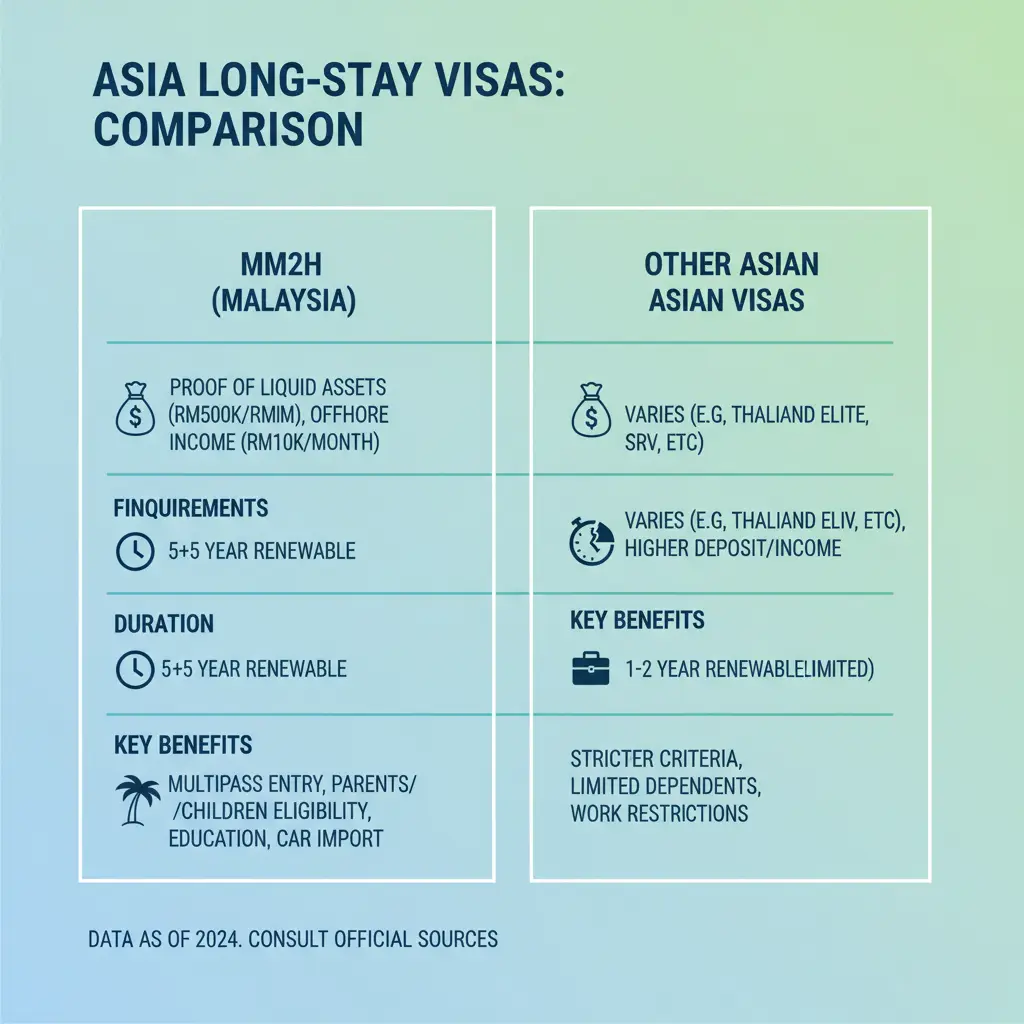
Infographic-style visual showing a comparison table of MM2H vs. other Asian long-stay visas, highlighting financial requirements, duration, and key benefits with icons. The color scheme is professional blue and green.
Why the 2021 MM2H Changes Still Matter for Applicants
The stricter MM2H requirements introduced in 2021, which saw the minimum offshore income rise from RM10,000 to RM40,000 and the fixed deposit from RM300,000 to RM1 million, initially led to a sharp decline in applications. However, as the global economic landscape has evolved, these higher thresholds are now seen by some as a filter, attracting a more financially secure cohort. This ensures that applicants are genuinely capable of contributing to and sustaining themselves within the Malaysian economy, reducing potential strain on public services.
The government’s intention was to attract ‘quality’ applicants, and current trends suggest this strategy is beginning to bear fruit as the global affluent seek viable alternatives. You’ll find that this approach ensures a stable and well-resourced expat community. The program aims to align the interests of applicants with Malaysia’s long-term economic and social goals, creating a mutually beneficial relationship.
What Makes Malaysia an Attractive Long-Term Destination for You?
Malaysia’s appeal as a long-term destination for expatriates and retirees is multifaceted, rooted in its unique blend of cultural diversity, modern infrastructure, and a significantly lower cost of living compared to many developed nations. The country offers a stable political environment, a well-developed healthcare system, and a vibrant multicultural society where English is widely spoken, easing the transition for newcomers like you.
These factors combine to create an environment that is both comfortable and stimulating, providing a high quality of life without the financial strain often associated with living abroad. It’s a place where modern conveniences meet rich cultural heritage, offering you a truly unique experience. You’ll discover a welcoming atmosphere that quickly feels like home.
Cost of Living: A Major Draw for MM2H Applicants
The affordability factor remains one of Malaysia’s strongest selling points, making it highly attractive for those seeking financial prudence. A 2025 HSBC Expat Explorer survey ranked Malaysia highly for its cost of living, noting that expats reported a better financial standing here than in many other Asian countries. For example, a comfortable retirement for a couple in Malaysia can be achieved on an estimated US$2,000-US$3,000 per month, a figure that would be challenging to maintain in cities like London or New York.
This includes housing, food, transportation, and leisure activities, giving you a comprehensive view of your potential expenses. Property prices, while rising, are still competitive. The average price per square foot for prime residential property in Kuala Lumpur is approximately US$250-US$350, a fraction of what one would pay in Singapore (US$1,200-US$1,500) or Hong Kong (US$2,000+), according to a 2024 Savills report. This represents significant savings for your property investment.
Healthcare and Infrastructure: Supporting Your Quality of Life
Malaysia boasts a dual-tier healthcare system, offering both high-quality public and private medical facilities, ensuring you have access to excellent care. Private hospitals, in particular, are internationally accredited and provide excellent care at a fraction of the cost found in Western nations. Medical tourism has been a growing sector, with Malaysia attracting over 1.2 million medical tourists in 2024, generating RM1.7 billion (US$360 million) in revenue, as reported by the Malaysia Healthcare Travel Council (MHTC).
This robust healthcare infrastructure provides immense peace of mind for long-term residents, especially retirees. Beyond healthcare, Malaysia’s infrastructure is modern and extensive. Its capital, Kuala Lumpur, features a world-class public transportation system, reliable internet connectivity, and sophisticated shopping and entertainment options. The country also offers diverse geographical attractions, from pristine beaches to lush rainforests and highlands, catering to various lifestyle preferences for you to explore.
Are Further MM2H Policy Adjustments Expected?
While no immediate policy shifts for MM2H have been announced as of May 4, 2026, discussions within government circles and feedback from industry stakeholders suggest that future adjustments are not off the table. The Malaysian government, recognizing the program’s potential to attract foreign investment and talent, is likely to continue evaluating its efficacy and competitiveness in the regional landscape. You should be aware that policies can evolve.
Any potential changes would likely aim to strike a balance between attracting high-net-worth individuals and broadening the program’s appeal to a wider range of desirable applicants. The goal is to optimize the program for national benefit, ensuring its long-term success. You can expect the government to act strategically to maintain the program’s relevance and attractiveness.
Balancing Attractiveness with National Interests in MM2H
The Ministry of Tourism, Arts and Culture (MOTAC) has, in past statements, indicated a willingness to review the program periodically to ensure it remains relevant and attractive, benefiting both Malaysia and you. One area of potential adjustment could involve a tiered system, where different financial thresholds cater to various applicant profiles, perhaps offering more flexible options for those under 50 or those with specific skill sets. Such a move could broaden the applicant pool beyond just retirees, attracting younger professionals and entrepreneurs.
Another consideration might be streamlining the application process, which has sometimes been criticized for its complexity and processing times. Improving efficiency could significantly enhance the program’s appeal, as speed and clarity are often paramount for international applicants. The government is acutely aware of the competition from neighboring countries, and maintaining a competitive edge is crucial for Malaysia’s long-term economic strategy. Your application experience could become smoother in the future.
Why Should You Consider MM2H Now?
Considering Malaysia My Second Home (MM2H) now makes strategic sense for individuals seeking long-term stability, a high quality of life, and financial prudence in an increasingly unpredictable global environment. The program offers a unique combination of benefits that are becoming more valuable as economic pressures mount elsewhere and the search for safe, comfortable havens intensifies. You’ll find that Malaysia presents a compelling option.
It’s not just about escaping high costs; it’s about investing in a lifestyle that offers peace of mind and opportunity. The current global landscape makes Malaysia’s proposition particularly compelling for your future plans. You are looking for a place where your money goes further and your quality of life improves, and MM2H delivers.
The Long-Term Value Proposition of the MM2H Program
The MM2H program provides a renewable 5-year visa, offering long-term residency without requiring citizenship, which is a significant advantage for many. This flexibility is highly attractive for those who want a secure base but prefer to retain their original nationality. Furthermore, the program allows for the purchase of property, which can be a sound investment given Malaysia’s growing economy and relatively stable real estate market.
Property values in key urban areas have shown a steady appreciation of 3-5% annually over the last decade, according to the National Property Information Centre (NAPIC). Beyond the tangible benefits, Malaysia offers a rich cultural tapestry, diverse culinary experiences, and a warm, welcoming populace. Its strategic location in Southeast Asia also provides easy access to other regional travel destinations, making it an ideal hub for exploration. For families, the presence of numerous international schools offering various curricula (British, American, Australian) is a significant advantage, providing world-class education options for your children.
| Benefit Category | MM2H Value Proposition for You |
|---|---|
| Financial Stability | Lower cost of living (40-50% less than Singapore), affordable prime real estate (60% less than Tokyo/Sydney). |
| Quality of Life | Access to high-quality, affordable private healthcare, modern infrastructure, diverse cultural experiences. |
| Long-Term Security | Renewable 5-year visa, stable political environment, option for property ownership. |
| Family & Education | Dependents can be included, access to numerous international schools with varied curricula. |
| Geographic Advantage | Strategic location in Southeast Asia, easy access to regional travel and diverse natural attractions. |
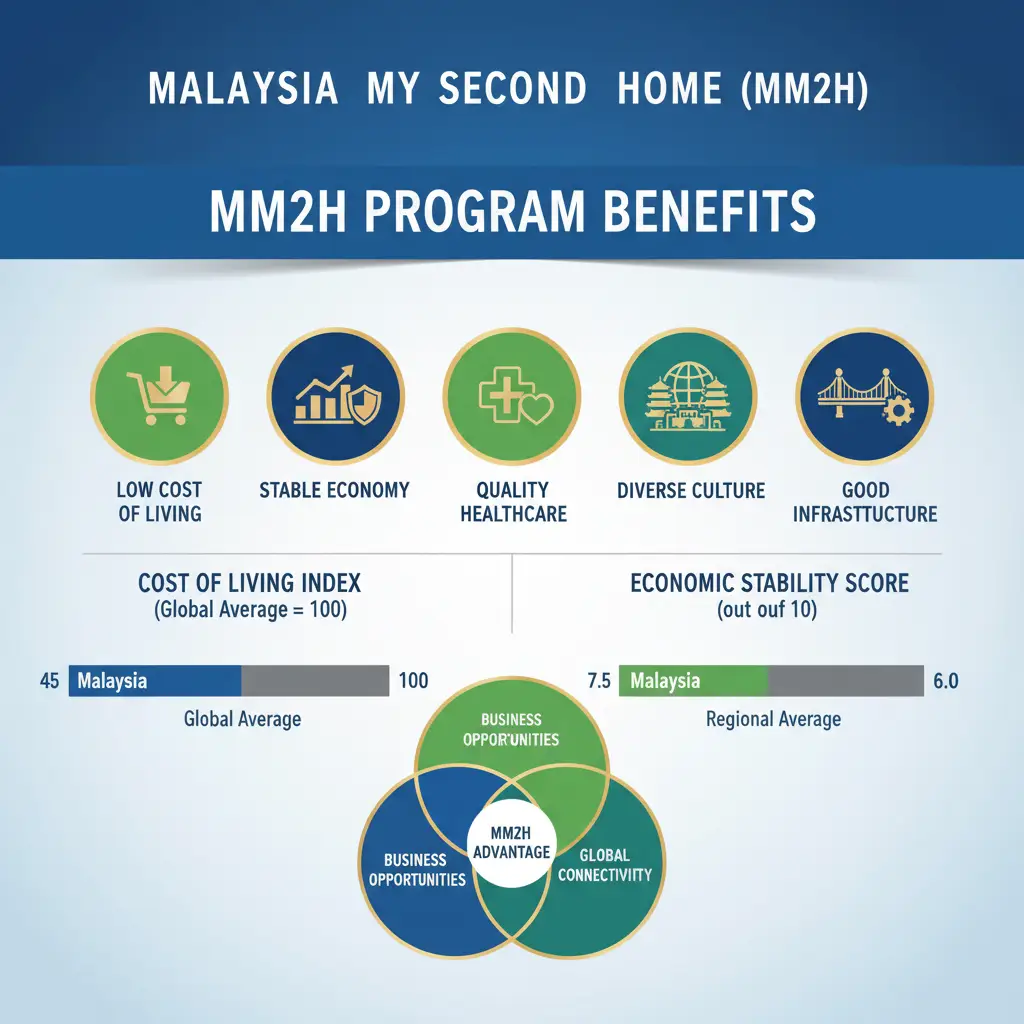
Infographic-style visual depicting the benefits of MM2H: icons for low cost of living, stable economy, quality healthcare, diverse culture, and good infrastructure. Professional color scheme, clean layout.
Frequently Asked Questions About MM2H (Your Guide to Key Details)
What is the primary purpose of the MM2H program?
The Malaysia My Second Home (MM2H) program is a long-term residency visa initiative designed to allow eligible foreigners to live in Malaysia on a renewable 5-year visa. Its primary purpose is to attract financially stable individuals who can contribute to the Malaysian economy and enrich its diverse society, offering you a secure second home.
Are the financial requirements for MM2H fixed, or do they change?
The financial requirements for MM2H, including the fixed deposit and offshore income thresholds, were significantly updated in 2021. While they are currently stable, the Malaysian government periodically reviews the program, so future adjustments are possible based on economic conditions and national objectives. You should always check the latest guidelines.
Can MM2H participants work in Malaysia?
Generally, MM2H participants are not permitted to work full-time in Malaysia, as the program is designed for those with passive income or retirement funds. However, those aged 50 and above may apply for part-time work permits in specific sectors, subject to government approval. This offers some flexibility for your professional interests.
Is it possible to bring dependents under the MM2H program?
Yes, MM2H participants can include their spouse and unmarried children under 21 years old as dependents in their application. This makes the program highly attractive for families looking to relocate or establish a second home in Malaysia, ensuring your loved ones can join you.
What happens if I don’t meet the income requirement but have substantial assets?
The MM2H program has strict requirements for both fixed deposits and offshore income, which are non-negotiable. While substantial assets are beneficial, applicants must meet both criteria as stipulated by the current guidelines. There are no direct substitutions for the monthly income requirement with assets alone, so you must fulfill both.
How long does the MM2H application process typically take?
The MM2H application process can vary, but typically takes anywhere from 6 to 12 months from submission to approval, assuming all documentation is complete and accurate. Delays can occur if additional information is requested or due to administrative backlogs, so you should plan accordingly and be patient.
Can MM2H visa holders purchase property in Malaysia?
Yes, MM2H visa holders are permitted to purchase residential property in Malaysia, subject to state-specific minimum purchase price thresholds for foreigners. These thresholds vary by state but are generally higher than for Malaysian citizens. This allows you to invest in your new home.
The Bigger Picture: Malaysia’s Enduring Appeal for You
The renewed spotlight on Malaysia’s MM2H program is a clear indicator of a world in flux, where individuals are actively seeking havens that offer stability, affordability, and a high quality of life. As global uncertainties persist and the cost of living continues to climb in traditional expat destinations, Malaysia stands out as a compelling alternative for you. Its blend of modern infrastructure, diverse culture, and robust healthcare system, coupled with a relatively lower cost of living, creates an attractive proposition for those looking to make a long-term move.
While the program’s requirements are designed to attract a specific demographic, its underlying value proposition—a secure and comfortable life in a vibrant Southeast Asian nation—remains strong. The current wave of interest isn’t just a fleeting trend; it reflects a fundamental shift in how people are planning their futures, making Malaysia’s MM2H program more relevant than ever for your consideration.
Last updated: May 4, 2026
 English
  Chinese (Taiwan)
  Chinese (China)